How Carmen Sample Turned a Lifelong Mission to Help Others Into a Thriving Enterprise
Monday, September 21, 2026
Carmen Sample’s rise to running an enterprise of companies and properties worth USD48 million was not exactly conventional. Nor was it exactly planned. Sample Supports was born out of necessity and from a lifelong desire and interest to support those who need it most.
Sample’s calling to help people stems from the example her parents set.
“From Vietnam vets to single moms to convicted criminals who recently got out of prison, my parents would open our doors and home to people my mom met and sponsored in Alcoholics Anonymous. I watched them provide stability and comfort to people in need,” she explains. “I think because of that I was more sensitive to struggles people were going through.”
And that desire to help deepened with age. In middle school, Sample received a humanitarian award for starting a social circle for students with disabilities. In college, Sample worked in group homes for teens in foster care and people with serious cognitive disabilities. After she married, she and her husband became a host home for a woman with fetal alcohol syndrome.
But Sample knew she could do more.
So, the licensed therapist went back to school and earned a master’s degree in social work, becoming a licensed clinical social worker. In 2010, she started Sample Supports around a philosophy of supporting the whole person, not just the disability. What began with 24/7 residential care grew into an integrated organization offering behavioral and mental health services, day programs, employment support and more. Today, the Colorado-based organization employs more than 400 people and provides constant services to more than 600 individuals.
Serving is her priority
Even though Sample Supports has grown exponentially over the past 16 years, Sample’s driving mission has remained the same: “We’re going to do whatever it takes to support people with disabilities in our community.”
This was evident from Day 1 when Sample Supports was only in the business of residential care. Within weeks of accepting one of her first clients, Sample received a call saying the young man’s day program, where he spent his days learning skills and socializing with others, was dropping him.
“He’s too hard, we can’t do it,” program administrators told her. The decision left the young man, who had a history of behavioral challenges, with nowhere to go during the day, putting his residential placement at risk. Instead of searching for a new day provider, Sample got approval from the state to add a day program to Sample Supports and hired a team, all within a matter of days.
Most business owners don’t realize what a consistent asset our workers with disabilities are. … Every industry has turnover, but the individuals we work with are some of the most loyal and consistent people you will ever find. They each have unique talents that when harnessed, can be an incredible partnership.
”
— Carmen Sample, Founder of Sample Supports
share
Word spread. Families who had been turned away elsewhere began coming, and the company experienced many years of rapid growth.
Sample admits it’s challenging to accommodate clients with extreme needs. “That is what we do,” she says. “Whether it is aggression, mental health needs or concerning behaviors, we find a way to make it work.”
Shifting from social worker to CEO
As Sample, a YPO member since 2017, scaled her business, she had to make the transition from full-time social worker to full-time CEO, redirecting her focus so her company could grow and serve more people in her community.
“My mindset really had to shift into being, ‘I’m no longer working with the individuals. All I do is find good social workers, support that talent and train them to be business leaders,” Sample says.
CEO Sample uses her social work training to build a culture based on systems, supports and relationships. That has helped Sample Supports buck the industry’s 60% average turnover rate.
She has also embraced female leaders, but not intentionally. “I just hired the most capable people for the job, and often they were women,” she explains.
All in the family
Both of Samples’ parents were entrepreneurs.
“I watched them work together to build businesses from the ground up and make hard decisions,” Sample says. “They never complained about a boss because they never had one. I’m glad my kids will have that memory of me, too.”
Sample gives credit to her husband, Mark, for help making the enterprise a success.
“I’m lucky to have a wonderful spouse who steps up with our four kids when I need to go into a work blackhole,” she says. “And the fact that he’s quite brilliant with investing money has been instrumental in our success.”
Sample considers the financial success of the businesses a happy accident. “It has always been a fun side effect of work I deeply enjoy. I’m grateful my husband has been so steadfast in investing in properties in the background because my focus has always been on the operational detail and business growth.”
Part of that focus is keeping 100% control of the business, not bringing in outside investors.
“It’s been meaningful for me to build it on my own, with the team I choose to work with,” she says.
That decision has allowed Sample to scale and create on her own terms, without the pressure of investors or a board of directors.
“I ultimately call the directional shots, and I own it from start to finish,” Sample explains. “There is no way I would have been motivated to build what I did if I had to run every decision by someone else or gain outside approval.”
The YPO impact
Sample’s involvement in YPO has helped her navigate the practical challenges of being at the helm of multiple companies, from structuring loans and acquiring new businesses, to navigating uncertain economic conditions. Most importantly, she says, YPO has changed how she thinks about her role as an owner and CEO.
She strives to “work on the business, not in the business,” she explains. “YPO taught me that I have to build systems, develop teams and step out of it to gain the perspective to lead. That’s given me clarity.”
Her YPO community also pushes Sample to consider a question that can easily get lost in the demands of entrepreneurship: What kind of life is she building alongside the business?
“I can become obsessive,” Sample acknowledges. “YPO has reminded me to take a break to have fun, too.”
Her family and new hobbies help her, or as she puts it, “force her,” to keep perspective and enjoy life. For self-care, she has taken up painting murals and crocheting.
“If I’m not typing, I’m crocheting,” she jokes. “My hands are not idle.”
Inclusion as competitive advantage
Over the past 16 years, Sample has followed her heart and her head, and built something uncommon: a profitable, independently owned portfolio of businesses and properties that create meaningful employment and support for people with disabilities while demonstrating that inclusion can be a competitive advantage.
Every industry struggles to find people able to perform certain niche jobs with consistency, explains Sample, but the answer may be employing someone with disabilities.
“Most business owners don’t realize what a consistent asset our workers with disabilities are,” she says. “Every industry has turnover, but the individuals we work with are some of the most loyal and consistent people you will ever find. They each have unique talents that when harnessed, can be an incredible partnership.”
YPO taught me that I have to build systems, develop teams and step out of it to gain the perspective to lead. That’s given me clarity.
”
— Carmen Sample, Founder of Sample Supports
share
Sample shares the story of a young man with severe autism who has worked on their accounting team for more than a decade. “He is an integral part of what we do, and his consistency and attention to detail is something we have yet to find with anyone else.”
What’s next?
Sample is now turning to creating a foster care program and earlier intervention for young people who might otherwise fall through the cracks, including those in the underserved special needs LGBTQ+ community.
“We’re getting young adults at 18, when they’ve been through years of hardship, and we see behaviors in full force,” Sample says. Her hope is to get those individuals services sooner and faster, to address those needs throughout adolescence, before they turn 18.
Once again, Sample is determined to help. By identifying unmet needs and finding sustainable ways to address them, she continues to grow Sample Supports in unconventional ways, demonstrating that purpose and profitability do not have to be at odds.
Peace Is Negotiated: Leadership Lessons From the Front Lines of Conflict
Tuesday, September 15, 2026
Deep into the Colombian jungle, Christoph von Toggenburg was on a boat, with just his driver as his companion, when he came upon hundreds of armed fighters from the Revolutionary Armed Forces of Colombia (FARC) gathered among the trees.
“It was really like in the movies, Rambo-style,” he says of the scene.
Von Toggenburg had come to negotiate humanitarian access for thousands of civilians displaced by fighting between government and rebel forces.
He’d been warned that the elusive commander he needed to speak with was aggressive and dangerous. When he finally stood in front of him, the warning proved correct as the man immediately started screaming at him. “He was totally out of control, and I thought, ‘OK, now I’m going to die here.’”
But as the shouting continued, von Toggenburg realized the commander needed what he calls an “emotional debrief.” So rather than interrupt or react, he listened. After 15 minutes, the commander ran out of breath, giving von Toggenburg a chance to speak. Two hours later, the two men were sitting in the jungle drinking a beer together. The following day, emergency aid deliveries began.
Most CEOs will never have to negotiate under these conditions. But von Toggenburg built a career working in conflict zones around the world for international humanitarian organizations.
Board member of YPO’s Peace Action Network, Group Head of Human Rights and Social Impact (CSR) at Holcim Ltd., Global Leadership Fellow at the World Economic Forum, and author of “War, Love, Hope”, he believes the qualities that moved some of his most treacherous experiences forward — self-regulation, patience, humility and a willingness to listen — are equally valuable to anyone navigating conflict.
In honor of International Day of Peace, recognized worldwide on 21 September, von Toggenburg shares some of his more intrepid negotiation stories to highlight how all leaders can build trust and create progress in an increasingly polarized world.
Before you can influence, you must self-regulate
While intelligence and experience matter when coming to the negotiation table, neither is enough if you can’t manage your own reaction when emotions run high — and they usually do, says von Toggenburg.
It comes back to one very core element of negotiations: reframe the problem, reframe the issue. If we only see the problems, then we have a problem.
”
— Christoph von Toggenburg
share
He admits he was terrified that day in the Colombian jungle. But he knew that acting out of fear or anger would only escalate the encounter, so he held back. He’s quick to point out that this wasn’t caving in. It was restraint, not surrender. And that allowed him to remain present until a real conversation could happen.
“The key question you ask yourself as a leader is, am I going there just to win? Or am I going there to start a dialogue?” he says. “If your only mindset is, I want to win this thing, then you’re not preparing for a negotiation; you’re preparing for a battle. And the risk is then very high that you either win the battle, at whatever cost it comes, or the outcome is going to be negative, and you achieve nothing.”
Get curious about the other side
Once in the Central African Republic, von Toggenburg had to negotiate with a man they called “The Butcher” who had been leading the killing and torturing of many.
He quickly realized that a formal meeting was not going to be helpful, so he changed the setting and took The Butcher to dinner. This decision did not mean he agreed with or excused any of his actions, von Toggenburg explains. But it did give him a chance to understand the man behind the name, to find a way to connect.
“This guy was full of himself, very ego-driven,” he says. “So, I appealed more to his sense of leadership and what a great leader would and would not do. And a great leader would not kill and torture civilians.”
The next day, the torture stopped.
“You do not have to agree with someone to understand what matters to them, or to use that understanding to move closer to your goal,” he says. “You must humanize who you have in front of you.” That might mean, he adds, offering the other person a path forward that allows them to “save face” publicly.
If your only mindset is, I want to win this thing, then you’re not preparing for a negotiation, you’re preparing for a battle.
”
— Christoph von Toggenburg
share
In the day-to-day conflicts most leaders face, where right and wrong are rarely as stark, that idea cuts both ways: To understand the person across the table, von Toggenburg argues, you must challenge your own assumptions. What you learn might reveal common ground, or simply a better way forward.
Keep showing up
During time spent on the ground during a civil war in Nepal, von Toggenburg was approached by a man whose daughter had been kidnapped by rebels. Another young woman accused of being a spy who had been with her had already been killed.
“My immediate goal with them was not even about release. First and foremost, she needed to stay alive,” he says.
The negotiations lasted more than a year. Von Toggenburg found himself returning to the mountains again and again, insisting on seeing the woman in person to confirm she was alive.
“The important thing on this journey was to keep the stamina and keep on showing up,” he says.
Not reaching an agreement after the first, second, third or fourth meeting did not mean it was impossible. Each encounter, von Toggenburg explains, kept the channel open and allowed trust to build until she was eventually released and returned to her family.
The same principle can apply in the boardroom. Leaders might not always be met with enthusiasm or agreement when introducing a new plan or idea. They must have patience and build trust and alignment along the way to their end goal.
“Peace is always a process, and it’s an ongoing process,” von Toggenburg says. “People must be brought along on the journey.”
Make room for an imperfect win
Of course, a stalled negotiation can make leaders fixate on everything that has not happened: the agreements not reached, the positions unchanged, the outcomes not achieved. Von Toggenburg argues this is precisely when leaders need to stay open-minded.
“It comes back to one very core element of negotiations: reframe the problem, reframe the issue,” he says. “If we only see the problems, then we have a problem.”
Reframing does not mean pretending the problem is smaller than it is. It means looking for what has moved, and what might still be possible.
“Maybe it’s not 100% of my goal, maybe it’s 70% of my goal, but 70% is better than 0%, you know?” he says.
Sometimes, progress is simply preserving the possibility of more progress.
“Sometimes, the fact that the channel stays open is a sign for hope,” he says. “And as a leader, you become the creator of that hope.”
In our polarized world where people often exchange opinions rather than engage in dialogue, leaders cannot promise that every conflict will be resolved. They can, however, listen to someone with whom they disagree, come back when the previous conversation stalls, take a small victory when that’s all that’s available. And, perhaps most importantly, make sure there can still be another conversation tomorrow.
For von Toggenburg, that is what peace looks like in practice.
YPO networks are virtual, interest-based communities where members connect with peers who share their professional and personal interests. YPO members Interested in the Peace Action Network can explore it on YPO Connect.
The Deal You Didn’t Come For: How GBS Creates Unexpected Opportunity
Friday, September 11, 2026
Ran Sharon and Melvin Jones arrived at the YPO Global Business Summit looking for investment. But a chance encounter at the Deal Tank led to an entirely unexpected partnership — and a lesson in why the greatest value of GBS may be in the opportunity you never saw coming.
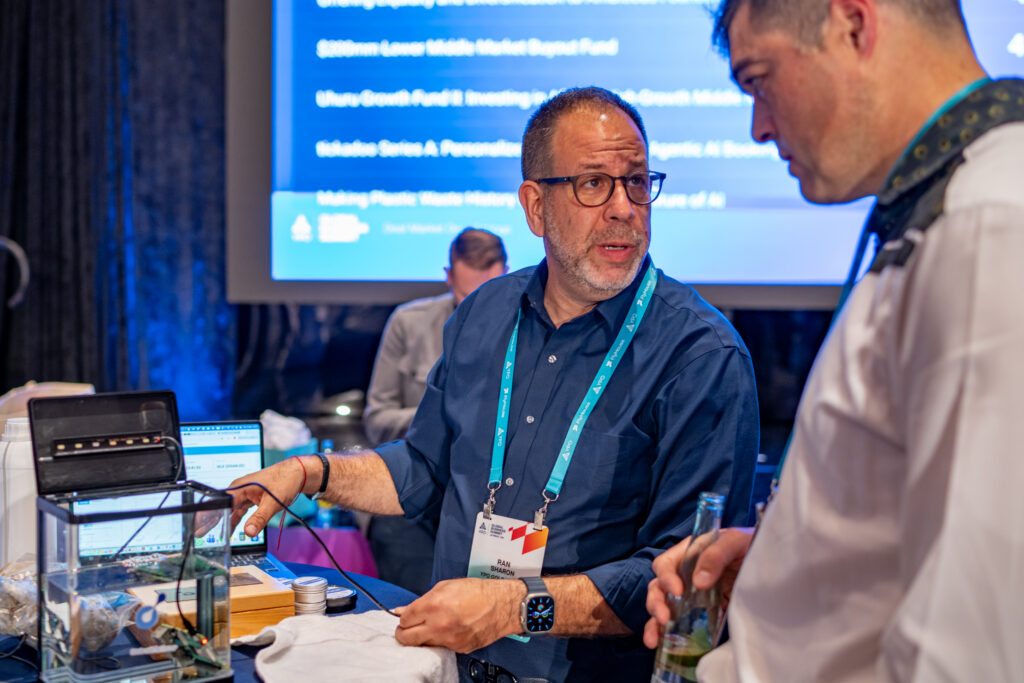
Walking the floor at YPO’s 2025 Global Business Summit in Los Angeles, you could be forgiven for taking little interest in the object displayed at Clariter CEO Ran Sharon’s Deal Tank presentation. It’s a small glass container, two-thirds filled with what looks like water and a small piece of plastic floating beneath the surface.
But for chemical engineers like Proconics CEO Melvin Jones, we’re assured that this really is exciting stuff.
What may look to the rest of us like a piece of Lego floating in a fish tank is, to Jones, considerably more interesting. The object inside is a piece of computer circuitry, running smoothly while fully submerged. The clear liquid surrounding it is not water. It’s a new form of cooling oil manufactured by Clariter from recycled plastic.
Jones stops for a closer look. The two men get talking. They soon discover common ground beyond a mutual interest in the technology in front of them. Clariter’s proof-of-concept facility is in South Africa, where Jones’ engineering projects company, Proconics, is also based.
Both men have come to Los Angeles with business investment firmly in mind. Sharon is at GBS seeking capital to support Clariter’s international expansion. Jones, too, has arrived looking for investment.
Instead, this chance conversation unfolding beside a fish tank is about to lead both men somewhere else: into an unconventional strategic partnership between their two companies that neither had predicted.
Speaking the same language
Eight months later, watching Sharon and Jones bouncing off one another during our Zoom call, it’s easy to understand why both they and their businesses have clicked so well. The banter starts almost as soon as Jones joins the call. “I cannot believe it, but Melvin is dressed up,” Sharon jokes, taking in Jones’ suit.
“It happens, Ran, it happens,” Jones shoots back.
Jones then brings us up to speed. In the months since GBS, their encounter has developed into a unique collaboration between their two companies, with Proconics supporting Clariter’s proof-of-concept facility in South Africa.
Clariter has spent more than 20 years developing proprietary technology that transforms hard-to-recycle plastic waste into high-value oils, waxes and solvents to replace traditional fossil-based petrochemicals. But presenting the company posed a practical challenge: How do you showcase something like that on the floor of a business summit?
There is a filter on character and credibility that lets you shortcut to having the proper conversations quickly.
”
— Melvin Jones, Proconics CEO
share
“I cannot bring my 150,000-square-foot facility to GBS,” Sharon says. “So, I got a small fish tank.”
The makeshift display did its job. It caught Jones’ attention, but the conversation soon moved beyond cooling oil. “We had a click between us,” Sharon recalls. Despite having only just met, the two began talking openly about how their businesses could support each other.
And those conversations soon turned into something tangible. Sharon opened up Clariter to Jones in a way that went far beyond a conventional business pitch. That openness extended to Clariter’s facility in South Africa. Jones visited the plant, brought in his team and began creating detailed 3D views of the facility, allowing engineers to zoom in on technical drawings down to individual pipes.
The aim is to give the facility what Jones calls “a new lease of life” through further experimentation, while exploring opportunities to deploy the technology across sub- Saharan Africa.
Character and credibility
The speed with which the relationship developed reflects something distinctive about doing business at a YPO event like GBS. As Jones describes it, there is already a degree of trust in place: a “filter on character and credibility” that “lets you shortcut to having the proper conversations quickly.”
Sharon puts it rather more bluntly. When two members meet through YPO, he says, there is less need for the usual posturing that can accompany a new business relationship. “It’s two YPOers,” he says. “No bull.”
That trust helps explain the openness that followed. When members of Sharon’s own team questioned why they were sharing so much with their new partners, his response was simple: “Why not?”
Plan for possibilities
Both men arrived in Los Angeles with clear objectives. But their experience illustrates the value of GBS beyond the deals you came for. Sharon’s advice is simple: Come with a clear aim but remain open to the people and possibilities around you. “I think the networking is a big part of the success of GBS,” he says.
Jones agrees. Looking back, he says he would approach GBS with a more open mind about where the opportunities might come from.
Like Sharon, he also pitched at the Deal Tank. “I was looking for USD5 million to do a proof of concept on a stranded gas conversion plant,” he recalls. “Ran made top 20. I was trying to make top 20 with my slide deck as well, but I didn’t have a water bath and a computer chip,” he jokes. “So, I wasn’t as impressive.”
He points to the event’s speed dating and roundtable sessions, where his focus on raising money meant “you weren’t talking about a lot of things that you could be talking about.”
This is where the conversation turns to the upcoming GBS in Istanbul. Sharon won’t be there this time. Clariter, however, will still have a presence. “I’ll have an ambassador in Turkey,” he points out. “His name is Melvin Jones.”
It’s perhaps the clearest indication yet of how far this relationship has come. Less than a year after meeting beside a fish tank in Los Angeles, Sharon now trusts Jones to speak for Clariter at the next GBS.
And Jones? This time, he plans to cast the net even wider. He’ll still arrive ready to talk business, but he’s deliberately leaving more room for the conversations and opportunities he can’t anticipate.
“I prepared presentations and pitches for Los Angeles,” he says. “I’m going to Turkey to participate in the roundtables, in the networking sessions, to be talking to as many people as I can about as many things as I can.”
That’s not to say he’ll arrive empty-handed. Jones is considering taking along a pitch for his Proconics Earth project, as he puts it, “just to break the ice.”
Sharon immediately jumps back in. “Melvin, I’ll coach you for being in the top 20,” he says, and our interview briefly gives way to an impromptu Deal Tank strategy session.
Ultimately, the return from GBS shouldn’t be measured “only by numbers,” Sharon tells us. “We made a deal,” he says. “But it’s not a regular deal, and it’s definitely not the deal that I intended.”
Much of that value, Jones believes, comes back to the environment GBS creates between YPO members: the character, credibility and openness that allow those conversations to get somewhere meaningful quickly. Or, as he puts it a little more succinctly: “It shortcuts a lot of the bull.”
YPO members: Ran Sharon and Melvin Jones joined us for the 2025 YPO Global Business Summit in LA. If you’d like to make meaningful connections, explore unexpected opportunities and see where the conversations can lead, register for the 2026 YPO Global Business Summit here.
The Adaptability Advantage: Leaders Share Takeaways From YPO’s Retail CEO Summit
Friday, August 21, 2026
In business today, one fact is undeniable: Uncertainty is the only certainty.
That is especially true in retail, where disruption has become the norm. Artificial intelligence (AI), shifting consumer expectations, geopolitical tensions, supply chain volatility and new commerce channels are reshaping the industry at an unprecedented pace.
Those themes echoed throughout YPO’s 2026 Retail CEO Summit, when 160 chief executives from 29 countries came together to explore the latest tools, trends and best practices in the omnichannel retail space.
“Uncertainty is now constant, not episodic,” says Anthony Amiel, CEO at the Amiel Group. “We’re adapting by shortening decision cycles, investing more in data visibility and staying closer to the customer. Inventory discipline and supply chain agility are also critical.”
Lessons for CEOs across industries
Today’s disruptive environment isn’t tied to a single issue, nor is it limited to a single industry. Retail leaders are navigating a rapidly changing landscape, but they are not alone. The insights shared at the summit offer valuable lessons for CEOs across industries.
“Retail is a leading indicator of change,” says Amiel, a YPO member. “The key lessons are agility, customer-centricity and the ability to operate with incomplete information while still moving forward decisively.”
Retail is a leading indicator of change. The key lessons are agility, customer-centricity and the ability to operate with incomplete information while still moving forward decisively.
”
— Anthony Amiel, CEO, Amiel Group
share
For Christine Assouad, CEO of Meeting Point SAL and former chair of the YPO Retail Network, that uncertainty is creating a world that is “more exciting than difficult,” she shares. “Today we have tools, options and possibilities we never had before, and that creates tremendous potential for growth and reinvention.”
At her company, Assouad has a simple rule of thumb: “When everyone is slowing down, that’s often when we choose to move faster. During moments of crisis or uncertainty, when many businesses become more cautious, we look for ways to invest, accelerate and grow.”
Speed and adaptability matter
Throughout the summit, speakers urged leaders to embrace this strategy: speed and adaptability over perfection. The leaders outperforming their competitors aren’t simply moving faster; they’re making better decisions about when to move. They test, learn and iterate quickly rather than waiting for perfect information, but they also resist the temptation to scale ideas before they’re ready.
“It’s important to make sure that what you’re making more efficient, and scaling, is actually what you want to scale,” says Bruce Wang, CEO at MICROJIG. “Rapidly rolling out or pushing an initiative but losing the soul and the character of the business can be detrimental, so it’s important to keep that at the heart and spirit.”
AI is a tool, not a replacement for humans
Artificial intelligence was another recurring topic throughout the summit, with conversations focused less on automation and more on better decision-making.
“Where I see the greatest impact of AI is in helping us make better decisions with large amounts of data,” says Assouad. “It’s helping us decide where to open our next location, strengthen loyalty programs and better understand customer behavior.”
Amiel believes AI will increasingly become embedded throughout retail operations while enhancing, not replacing, human judgment.
“Going forward, I see AI becoming deeply embedded in daily operations, from personalization to operational efficiency, while people remain central to creativity and relationship-building,” he says.
Customer engagement looks different
That creativity and human element is critical as the retail industry reinvents how it engages customers. “I think retail will be strong and do well as long as we create the right experiences for the users and give them something compelling to experience and connect with the right buying models,” says Wang.
Creating those experiences, however, looks very different than it did just a few years ago. Consumers no longer discover brands through a single storefront or marketing campaign. They find them through communities, creators, partnerships, social platforms and content that naturally fit into their daily lives.
“In retail, we are exploring different ways to talk about the brand and connect with customers beyond traditional channels,” Assouad says. “Collaborations, in particular, are becoming more and more impactful because they allow brands to reach new audiences in a more authentic and engaging way.”
When everyone is slowing down, that’s often when we choose to move faster. During moments of crisis or uncertainty, when many businesses become more cautious, we look for ways to invest, accelerate and grow.
”
— Christine Assouad, CEO of Meeting Point SAL
share
For Assouad, learning about Shopify and the company’s evolution from traditional websites to social commerce, and now toward agentic commerce, was a powerful reminder that the way customers discover, engage with and purchase from brands is changing very quickly.
“For retail leaders, this means we cannot think of digital commerce as a separate channel anymore,” she says. “It is becoming more integrated, more intelligent, and more embedded in the customer’s daily life. That shift will definitely influence how we think about our customer journey, our digital strategy, and the future of retail growth.”
Amiel agrees.
“Discovery is happening everywhere — on social and on content- and community-driven platforms. The focus is on meeting customers where they are and creating authentic engagement rather than just transactions,” he says.
The power of connection
The annual YPO Retail CEO Summit gives leaders facing similar challenges the chance to connect, exchange ideas and discover practical solutions they can apply in their own businesses,
“Events like these are incredibly valuable because you are surrounded by 160 like-minded leaders who are all focused on growth, retail and the future of our industry,” Assouad says.
The summit brought together industry leaders including Royalmount’s visionary developer Andrew Lutfy; Harley Finkelstein, President of Shopify; and David Bensadoun, CEO of ALDO Group, giving participants the opportunity to learn how they are navigating disruption.
“We learn so much, and there is a strong emphasis on practical business values,” Wang shares.
Beyond the insights and networking, Assouad says the summit created something even more valuable — space for reflection.
“It allows you to step back from the day-to-day, think about your business, think about your life, and ask yourself where you want to be tomorrow,” she says. “The energy in the room, the connections you make, and the people you meet all inspire you to become better — as a leader, as a business owner and as a person.”
YPO members interested in attending the 2027 Retail CEO Summit in Paris can join the waitlist here.
Join fellow peers in the YPO Retail Network and experience targeted learning programs, industry-specific insights, and international summits focused on retail innovation, e-commerce and sustainability.
How MedAsian CEO Michael Ma Turned a Dental Crisis into a Public-Private Win
Wednesday, August 12, 2026
Some challenges are too large for governments, businesses or nonprofits to solve alone. China’s growing dental health crisis among senior citizens is one of them.
With an aging population and widespread oral health issues, millions of older Chinese face declining nutrition, reduced social engagement and diminished quality of life. Traditional approaches through public health campaigns and corporate philanthropy have struggled to address the scale of the problem.
MedAsian, a Hong Kong-founded healthcare advisory company, took a different approach. Rather than treating the issue as a medical problem alone, it built an ecosystem of partners capable of addressing clinical, social and public trust barriers at the same time.
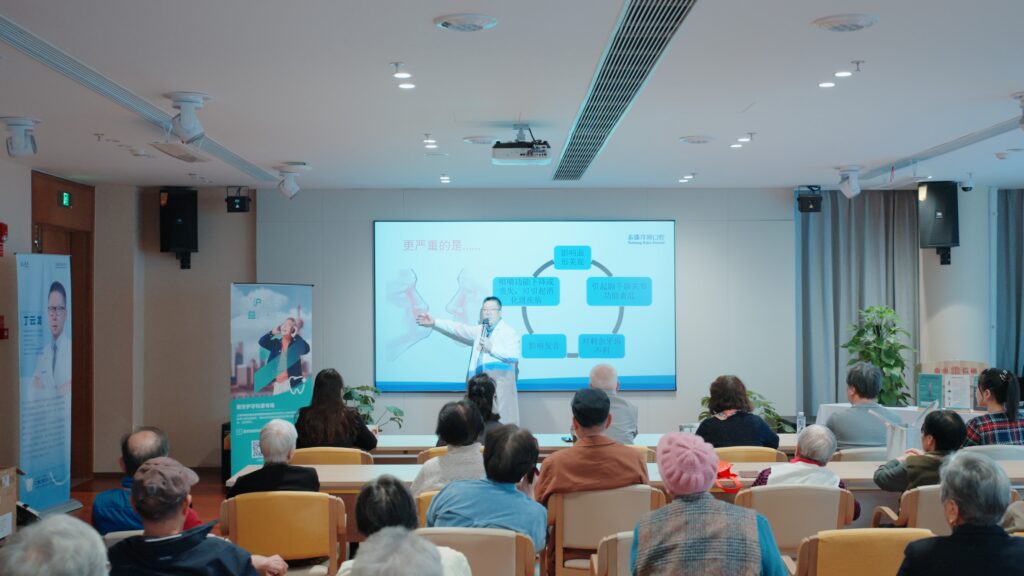
Working alongside the Shanghai Elderly Foundation and global oral care solutions leader Straumann Group, MedAsian launched the Smile Ambassadors initiative, a public-private partnership designed to improve awareness of dental implantology, expand access to care and ultimately improve the lives of senior citizens.
The result is a case study in how leaders can align government priorities, commercial interests and public needs to create measurable social impact.
An overlooked epidemic
According to MedAsian, 86% of China’s senior citizens suffer from untreated oral health issues. Tooth loss is particularly prevalent among older adults.
“People between 60 to 74, 80.5% of them have lost teeth,” notes YPO member Michael Ma, CEO of MedAsian.
Among those aged 65 to 74, many have already lost six or seven teeth, while “4.5% of them are totally without teeth,” he adds.
While dental implants have become increasingly common in developed markets, adoption in China remains limited to wealthier populations. Many seniors rely on removable dentures that often reduce comfort and quality of life.
“Before 2023, implantology was not as popular as it is today in China,” says Ma. “Only a few people, especially in the rich sector, approached implantology. Mostly the elderly use the removable retainer.”
For many seniors, the consequences extend beyond oral health. Difficulty eating affects nutrition. Missing teeth reduce confidence. Social isolation often follows.
While the technology exists to solve the problem, access, awareness and trust historically have not.
Building a supportive ecosystem
MedAsian recognized that no single organization could bridge those gaps alone. Rather than launching a standalone corporate initiative, the company focused on assembling complementary partners.
The Shanghai Elderly Foundation provided access to a vast network of seniors and the credibility that comes with public-sector involvement. Straumann Group contributed clinical expertise, technology and funding. MedAsian acted as the architect, connecting stakeholders and coordinating execution.
Success required aligning multiple interests. Government and commercial organizations plus the public’s unmet medical needs create what Ma calls “a very powerful triangle to build up the better living conditions of the people.”
That triangle became the foundation of the Smile Ambassadors initiative.
Beginning in early 2024, MedAsian consulted with government officials, positioning the program as a pilot aligned with Shanghai’s broader public health objectives.
Understanding the rules of the game
One of the most significant lessons from the initiative was the importance of understanding China’s policy environment. According to Ma, entrepreneurs often underestimate the role the government plays in shaping public acceptance and market adoption.
Winning government support was not easy because of, what Ma calls, “the distance” between commerce and government. He needed to convince the government to give him a chance.
It’s a win-win. The government wins the people’s goodwill. For the commercial entity, they win the brands. … You must align your commercial vision with the political ambition.
”
— Michael Ma, CEO of MedAsian
share
The process required significant discussions, approvals and stakeholder alignment. “It took us almost six to eight months to get everything ready,” he says.
Yet those efforts ultimately created a framework that allowed public trust and private innovation to reinforce one another rather than operate separately.
For Ma, the lesson for business leaders is straightforward. “You must align your commercial vision with government ambition,” he says.
That does not mean abandoning commercial goals but rather identifying where business objectives and public policy priorities intersect. “As a businessperson, how can you help them achieve their ambition? This will help you achieve your commercial ambition,” Ma explains.
Bringing care directly to communities
Once the partnership framework was established, each organization moved quickly to play their part. Straumann mobilized funding and specialist clinicians. The Shanghai Elderly Foundation activated its extensive community network. Volunteers engaged directly with seniors, addressing skepticism and building confidence in the program.
The outreach effort extended across Shanghai through consultations, educational events, screenings and awareness campaigns. “We discussed how implantology could help senior people live better, improve their quality of life,” says Ma.
The initiative went beyond clinical treatment. Educational workshops helped seniors understand modern dental solutions. Community events created opportunities for engagement. Local consultations connected residents directly with professionals. And MedAsian set out to reach seniors in hard-to-reach communities. “We even organized some crews for the senior people on boats on the Huangpu River in Shanghai,” Ma recalls.
The objective was not simply to provide treatment but to create familiarity with implantology and encourage informed decision-making.
Measuring impact beyond dentistry
The Smile Ambassadors initiative produced impressive operational results. By late 2024, the program had conducted thousands of screenings and provided restorative treatments to hundreds of seniors. Community nurses received specialized training to continue oral health education at the neighborhood level.
Do things that are more fitting to the local context and the local rules of the game.
”
— Michael Ma. MedAsia CEO
share
Yet the most meaningful outcomes were often personal rather than statistical. Data showed substantial improvements in nutritional intake and social participation among treated seniors. Individuals who had struggled with eating, speaking or socializing regained confidence and independence.
The approach generated benefits for every participant. Government agencies advanced healthy aging objectives. Seniors gained access to education and care. Straumann strengthened awareness of implantology and its technology. MedAsian demonstrated the value of coordinated healthcare ecosystems.
As Ma puts it, “It’s a win-win. The government wins the people’s goodwill. For the commercial entity, they win the brands.”
The key was creating value for all stakeholders rather than asking any one participant to shoulder the responsibility alone.
Scaling the model nationally
Shanghai’s success provides a powerful proof of concept, but replicating the model across China presents new challenges.
“China is such a vast country,” says Ma. “From north, south, east, west, and tier one, tier two, tier three, tier five, there is a huge difference.”
Tier systems are unofficially used to classify cities in China based on GDP and population to assess their development and economic potential. MedAsian is now working with broader government stakeholders to expand awareness and access nationwide. The company is also developing training and education centers in lower-tier cities where modern dental services remain less accessible.
“Our mission for this year is to go national,” Ma says.
The ambition reflects broader demographic realities. China’s senior population continues to grow rapidly, increasing demand for healthcare solutions that support healthy aging and quality of life. For MedAsian, the goal is not merely to replicate a program but to scale an ecosystem.
The leadership lesson
The Smile Ambassadors initiative offers a powerful lesson for leaders confronting large-scale social challenges. Complex problems rarely yield to isolated interventions. They require innovative thinking, stakeholder alignment and patience to build trust across organizational boundaries.
MedAsian’s achievement was not simply restoring hundreds of smiles. It was creating a framework through which public institutions, private enterprises, healthcare professionals and community organizations could collaborate around a shared mission.
The initiative demonstrates that meaningful change often begins not with a breakthrough technology or a large donation, but with thoughtful architecture.
As Ma advises entrepreneurs looking to create impact in China, success depends on understanding local realities and adapting accordingly. “Be more creative as an entrepreneur,” he says. “Do things that are more fitting to the local context and the local rules of the game.”
In Shanghai, that philosophy transformed a dental health crisis into a model of collaborative innovation.
In the Age of AI, Leadership Won’t Happen by Accident
Wednesday, August 12, 2026
As artificial intelligence reshapes the entry-level job, we can no longer rely on the traditional apprenticeship model to develop future leaders.
Twenty-five years ago, if you dreamed of one day becoming a CEO, your early jobs consisted of work you probably didn’t particularly enjoy: building spreadsheets, poring over legal cases, combing through research, staying late to create presentations. It was repetitive and often tedious work, but it was also formative; the opportunity many future leaders needed to learn the fundamentals of business.
Today, artificial intelligence (AI) can complete much of that foundational work in a matter of minutes – a huge efficiency gain for chief executives across industries, to be sure. But it also raises an important question: If AI removes the work that once taught judgment, resilience and business instincts, where will tomorrow’s leaders learn those skills?
The question today’s leaders must grapple with isn’t simply what happens to entry-level jobs. It’s what happens to an organization’s leadership pipeline when the first rung of the career ladder is being rewritten.
Future leaders can’t afford to learn passively
YPO member Peggy Choi knows firsthand the value of the traditional apprenticeship model. Before founding tokenization company Craftt and enterprise AI deployment company Anthora.AI, she spent years at Goldman Sachs and Silver Lake, experiences she credits with building the skills that shaped her career. Today, she believes AI is forcing the next generation to develop those same qualities far more intentionally.
“It’s no longer an option to passively learn on the job,” she says. “You have got to be very proactive in developing yourself from the start.”
So how do entry-level employees build up that industry and institutional knowledge without the years of the hands-on “grunt” work of the past?
“I do worry a lot,” admits Choi. “If you haven’t done the work, it’s almost impossible to know what to look for.”
She doesn’t have a clear answer, but until organizations rethink how they develop early-career talent, she believes much of the responsibility falls on individuals. Rather than absorbing judgment through repetition, future leaders must actively seek it — learning not only how to use AI, but how to question it. That means understanding where the technology excels, where it falls short, and when human judgment should take precedence.
It’s no longer an option to be passively learning on the job. You have got to be very proactive in developing yourself from the start.
”
— Peggy Choi, Founder, Craftt
share
And the work itself is already beginning to evolve. Rather than spending their early careers completing every task manually, Choi believes young professionals will increasingly be expected to improve the systems doing the work.
“We need our employees to start to train the models,” she says. “A big part of our work becomes training and benchmarking and evaluating.”
In many ways, she says, learning to manage AI isn’t all that different from learning to manage people. Both require clear direction, evaluating performance and knowing when to intervene. The technology might do the work, but humans will remain responsible for improving it and, above all, applying good judgment.
Organizations must build intentionally
“There is a risk that we are creating a huge leadership gap right now,” warns YPO member Gregor Fiabane on the impact of AI on entry-level jobs.
As Managing Partner at Korn Ferry, Fiabane has spent his career helping organizations identify, develop and succession-plan future leaders. From his perspective, the challenge is making sure organizations replace what is being removed.
“Organizations must intentionally redesign their development models,” he says. “The traditional apprentice model may no longer happen, but leadership development remains deeply human.”
Fiabane believes companies can no longer assume leadership capability will naturally emerge over time. Instead, organizations must create the experiences that repetitive work once provided. That doesn’t mean recreating busywork. Rather, it’s all about giving early-career professionals the opportunities to develop judgment through mentorship, coaching, rotational experiences, stretch assignments and leadership exposure — all things AI can’t automate.
Ironically, this makes AI more of an opportunity than a challenge in his eyes: By eliminating administrative tasks, organizations can now expose young professionals to more strategic work earlier in their careers.
Organizations must intentionally redesign their development models. The traditional apprentice model may no longer happen, but leadership development remains deeply human.
”
— Gregor Fiabane, Managing Partner, Korn Ferry
share
“AI may really accelerate the learning,” he points out. Yet he doesn’t believe the qualities that define great CEOs are changing nearly as much as the path to becoming one.
“Critical thinking is becoming much more important,” he says, adding that vision, strategy, judgment and the ability to rally people around a common purpose are leadership fundamentals that will remain consistent.
Choi believes that if organizations and future leaders embrace the challenge, AI has the potential to return leadership to its most human work. By automating more of the operational execution, leaders may ultimately have more time to focus on judgment, relationships, culture and developing people. “We’ll have a lot more time to really be in touch with the core,” she says. “We’ll think a lot more about humans, what we enjoy doing and how we create those experiences.”
How YPO’s Global Business Summit Helped Fuel Growth for NOVICA and Handmade.com
Tuesday, August 11, 2026
For NOVICA CEO Roberto Milk, YPO’s Global Business Summit (GBS) wasn’t just another conference. He arrived with a compelling investment proposition, and he left with more than 50 qualified leads, closed a USD500,000 tranche of Novica’s active USD6 million investment round and began term sheet discussions for a new strategic partnership — giving the company momentum to expand its impact.
The seeds of NOVICA were planted by Roberto Milk’s grandmother, a Peruvian artist whose work revealed both the beauty of handmade craft and the barriers preventing craftspeople from receiving fair value for it, inspiring a 25-year mission to help artisans connect with consumers on fairer terms.
These artisans, crafting everything from handwoven textiles to ceramics, often saw their work sold at enormous markups while they received little in return. As Milk explains, “An artist that sells an item for USD10, might see it retail for USD150.” Artists were “rarely empowered,” he says. Middlemen kept them “hidden in the corners,” leaving them with little negotiating power and little recognition for their work. For Milk, the conclusion was simple: “Talented artists around the world are not getting a fair shake.”
Milk founded NOVICA with a mission to rewrite the rules of global commerce, helping talented artisans receive fair value for their work.
Making that ambition a reality takes more than a great idea. It requires the right relationships at the right time. Milk found many of those through YPO’s GBS, where conversations that began over a few days quickly developed into investment opportunities, strategic partnerships and lasting business relationships.
The accelerator
Milk has been a YPO member for more than a decade and credits the organization with playing an important role throughout NOVICA’s journey. And if YPO builds relationships, Milk says, GBS accelerates them.
Attending GBS in Los Angeles, he found an event unlike any other business conference he had experienced. “It’s an accelerator in some ways of your YPO relationships,” he says. Rather than simply introducing members to one another, the summit created an environment where trusted relationships quickly turned into meaningful business conversations. “The amount of follow-up was light years beyond any conference that I’ve ever been to.”
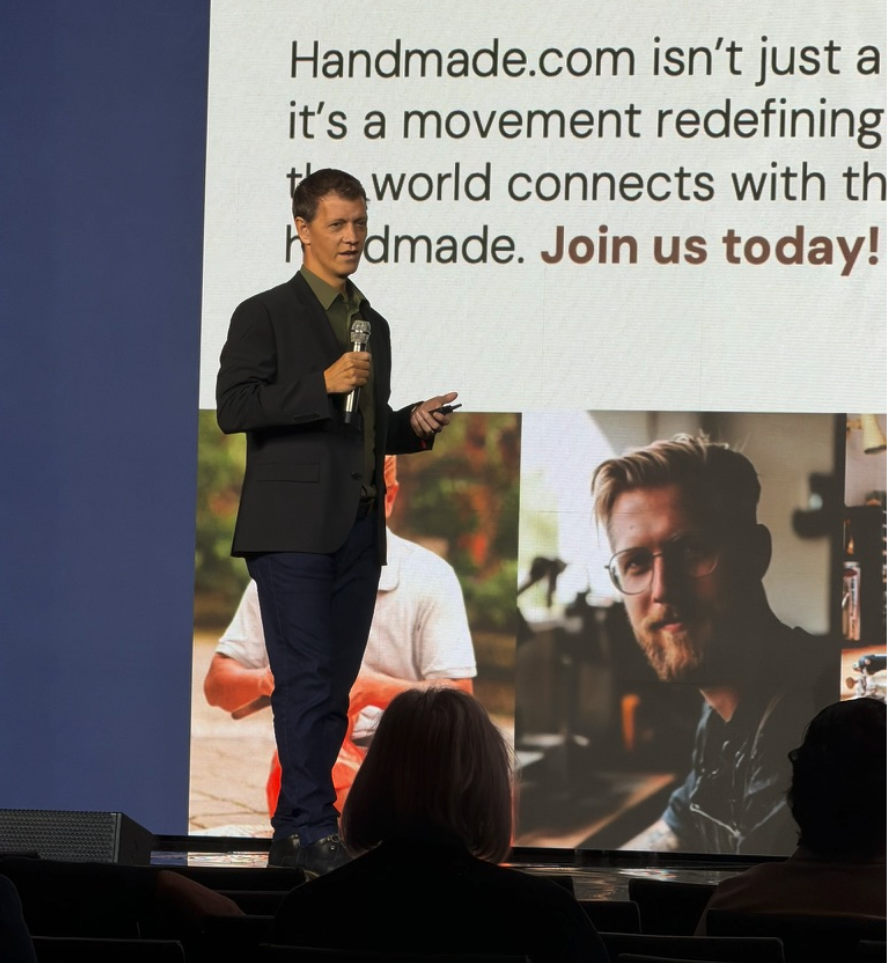
At GBS, Milk introduced peers both to NOVICA and its new fast-growing subsidiary, Handmade.com. “Someone who invests in NOVICA gets both,” he explains. For investors, the proposition combined the stability of an established business with the potential of an AI-driven growth company, offering what Milk describes as “the long trajectory of NOVICA” alongside “the fast-growth startup of Handmade.com.”
Talented artists around the world are not getting a fair shake.
”
— Roberto Milk, CEO of NOVICA and Handmade.com
share
Milk took his investment proposition to GBS’s Deal Tank, where entrepreneurs present their businesses to an audience of experienced founders and investors for feedback, introductions and potential investment. Deal Tank opened the door, Milk says. But one of his biggest surprises came elsewhere.
“Something that I didn’t expect is how powerful and enjoyable the Needs & Leads sessions were,” he says. Rather than simply exchanging business cards, Milk found members actively looking for ways to help one another.
Beyond new introductions, GBS also changed the nature of existing relationships. Milk found himself discussing opportunities with members he had known for years but had never spoken to about business. The structured format gave them permission to put real needs on the table. As he explains, “People who know us, they’re like, ‘Oh, I didn’t know you were raising money!'”
Results soon followed. Milk left GBS with more than 50 qualified leads, while also helping fellow members’ businesses by personally making around 40 to 50 introductions. GBS also helped NOVICA complete a USD500,000 tranche of its active USD6 million investment round, as well as sparking term sheet discussions for a new USD5 million strategic partnership.
The mission evolves
To fulfill its mission, NOVICA partners directly with artisans through a worldwide network of Artisan Empowerment Hubs, where products are photographed and cataloged before being introduced to international markets. Acting as what Milk describes as a “concierge service for artists to get online,” the hubs also provide no-interest microcredit, allowing artisans to borrow against their products — something he says has proved to be “a game changer for many artists.” NOVICA has connected thousands of craftspeople with customers around the world, returning more than USD140 million directly to artisans and their communities.
Recognizing the model didn’t work well for artists living far from its hubs, Milk created Handmade.com. The new platform removes many of the traditional barriers to reaching customers, allowing artists to onboard using AI, photographing products from their own workshops while the technology removes backgrounds and generates product descriptions in any language.
Handmade isn’t a departure from NOVICA’s mission — it’s the next step in making it universally accessible, Milk explains. The ambition remains the same, just on a larger scale.
The lasting impact
With Handmade.com extending NOVICA’s reach beyond the limits of its Artisan Empowerment Hubs, Milk’s ambition remains unchanged: to ensure that talented artisans everywhere have the opportunity to build sustainable businesses and reach customers anywhere. GBS has helped accelerate that journey, providing the relationships and momentum to take the mission further.
Beyond creating economic opportunities for artisans, NOVICA’s model generates a wider impact, Milk explains, from preserving traditional craftsmanship and empowering women to improving educational outcomes within local communities. He believes this broader purpose is part of the company’s appeal. “I think that resonates with a lot of people,” he adds. “They like to be able to invest in companies that can grow and also that can have a positive impact.”
NOVICA’s work was also recognized when Milk was honored with a regional 2020 YPO Global Impact Award. “We have a fast-growth company that’s investable, but also that’s deeply impacting people’s lives,” Milk says.
We’re all busy. You know what? It’s worth it.
”
— Roberto Milk, CEO of NOVICA and Handmade.com
share
Yet, while the recognition was meaningful, it is the relationships formed through YPO that Milk believes have had the greatest long-term impact. “These amazing relationships have led to so many important decisions and important steps for us as a company and me personally,” he says.
His advice to fellow YPO members is to make the time for GBS. For Milk, the greatest challenge wasn’t deciding whether GBS was worthwhile — it was making the time to attend in the first place. “I’m a roll-up-your-sleeves entrepreneur who is always busy,” he says. Looking back, however, making that time was one of the best decisions he could have made.
“GBS for us has been the most incredible experience ever from a conference standpoint… by far the most meaningful YPO in-person experience that I’ve ever been to,” Milk says. “We’re all busy. You know what? It’s worth it.”
YPO members can join the GBS 2026 in Istanbul by registering here.
Making Their Mark: YPO Members Among This Year’s EY World Entrepreneur Of The Year™ Finalists
Tuesday, August 4, 2026
Great entrepreneurs don’t just build successful businesses — they change the way people live. Meet the six entrepreneurs from the YPO community who represented their respective countries on the global stage at EY World Entrepreneur Of The Year™ 2026 doing exactly that. From improving healthcare outcomes and expanding access to education, to transforming pet nutrition, urban mobility and global technology, these innovators are tackling real-world challenges with bold ideas, unquenchable ambition and lasting impact.
Raising the Standard for Pet Nutrition: Isaac Langleben & Jacqueline Prehogan | Canada
When Isaac Langleben and Jacqueline Prehogan first adopted their rescue dogs, they were surprised by the lack of ingredient transparency in pet food across the industry. That realization led them to found Open Farm in 2014 with a mission to combine premium pet nutrition with responsible sourcing and ingredient traceability. Today, the Certified B Corporation reaches pet owners and their furry companions through more than 8,500 retail locations worldwide. Learn more about theEY Entrepreneur Of The Year™ Canada winners’ journey here.
A Legacy of Learning: Ari de Sá Neto | Brazil
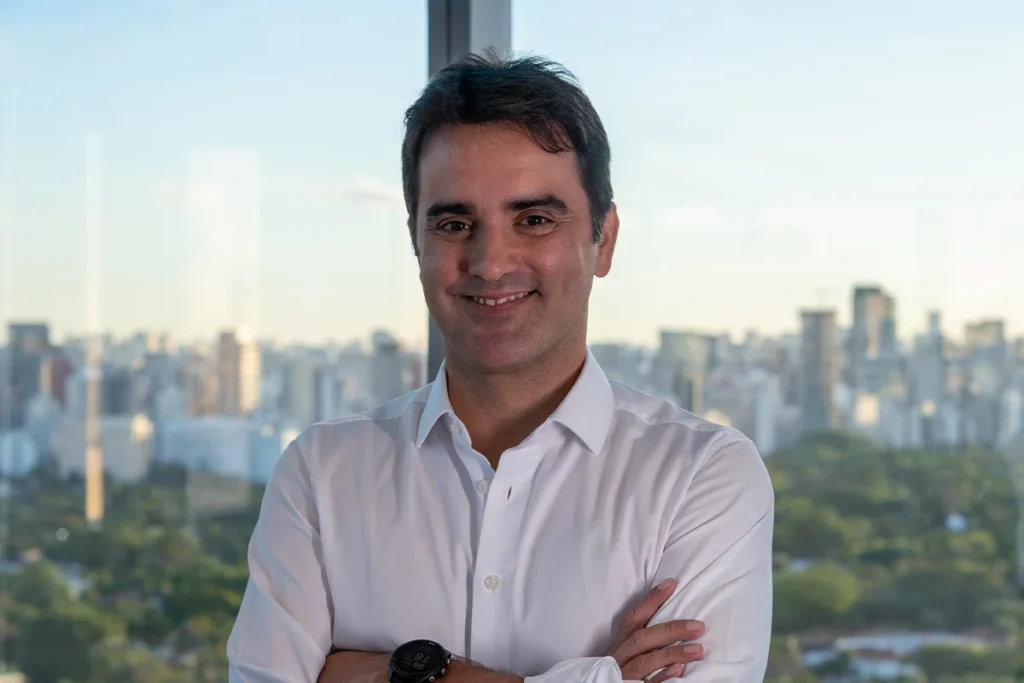
Founder and CEO of Arco Educação, Ari de Sá Neto has spent his career expanding access to high-quality education across Brazil. Building on a family legacy that began when his grandfather founded a school in 1944, which his father later transformed into a national benchmark, de Sá Neto created Arco Educação to bring evidence-based learning tools to schools nationwide. Today, their integrated solutions reach more than 4 million students, and 141,000 teachers across 12,000 schools. Recognized as EY Entrepreneur Of The Year™ Brazil for 2026, de Sá Neto is now leading Arco’s next chapter with a USD220 million investment to develop Latin America’s first operating system for schools.
Broader Access to Better Healthcare: Chin Wei Jia | Singapore
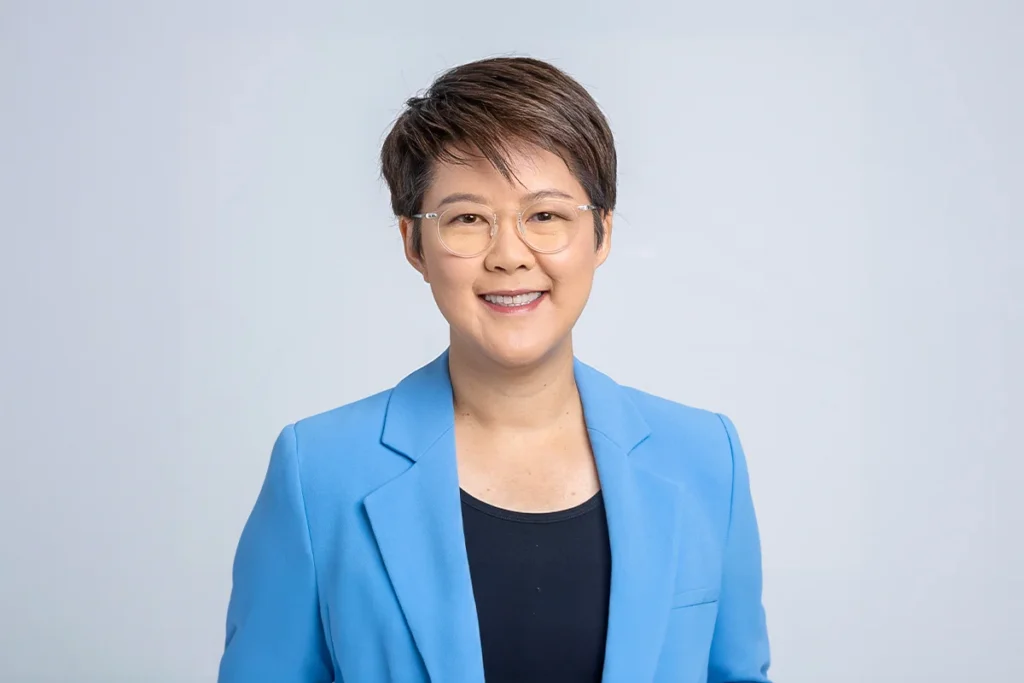
Group CEO of Health Management International (HMI), Chin Wei Jia has spent over two decades helping HMI expand access to quality, patient-centered care across Southeast Asia. Since joining the organization in 2002, she has overseen its evolution into an integrated healthcare network spanning Singapore, Malaysia and Indonesia, combining hospitals, specialist centers, primary care, diagnostics and telehealth. Today, HMI supports more than 3 million patient visits annually. Singapore’s finalist at EY World Entrepreneur Of The Year™ 2026, Wei Jia continues to champion digital innovation, regional partnerships and connected care that helps patients receive the right care at the right time.
From One Village Computer to Millions of Global Users: Dušan Šenkypl | Czech Republic
Dušan Šenkypl’s entrepreneurial journey began as a teenager in socialist Czechoslovakia, when a quest to buy his village’s first computer inspired him to start a small business. He went on to build Czechia’s first internet banking platform before moving to the United States to launch another IT company that developed products for more than 200 million users. Today, as co-founder and partner of Pale Fire Capital and CEO of Groupon, he helps build and scale global technology businesses. Under his leadership, Groupon returned to profitability, while Pale Fire has supported the growth of companies including Rouvy, itrinity and Mubi. Read more about the EY Entrepreneur Of The Year™ 2026 for Czech Republic.
Rethinking Urban Mobility: Charles Richard Oentomo | Indonesia
Charles Richard Oentomo founded Centrepark in 2009 after recognizing the potential to transform one of Indonesia’s most routine everyday services. Under his leadership, the company has evolved from a traditional parking operator into a technology-driven business that helps property owners manage their assets more effectively while making parking simpler and more convenient for millions of people. Today, Centrepark operates in more than 700 locations across 60 cities and employs over 5,000 people. Read more about Indonesia’s EY World Entrepreneur Of The Year™ 2026 finalists.
YPO is proud to collaborate with EY, its Strategic Learning Advisor, to help global leaders drive innovation, accelerate growth and create long-term value. Learn from the successes of thousands of the world’s fastest-growing entrepreneurs and realize your ambition faster.
From Deal Tank to Nasdaq
Wednesday, July 29, 2026
How GBS helped accelerate Deep Fission’s remarkable journey
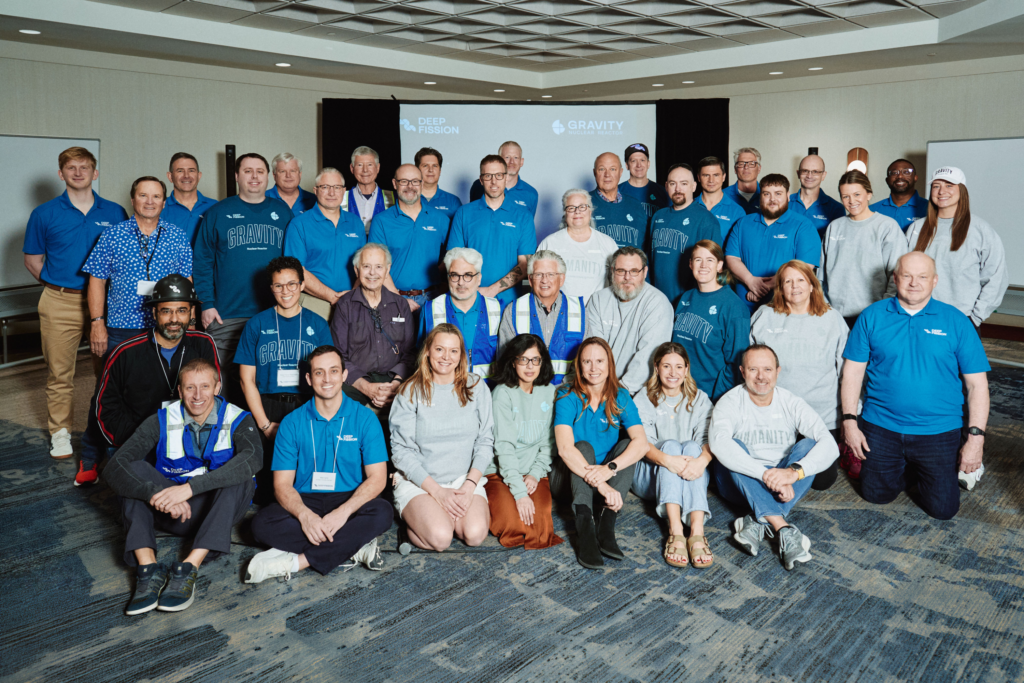
At the 2024 YPO Global Business Summit (GBS), Liz Muller stood before her fellow YPO members with an early-stage company that had only recently emerged from stealth mode. During Deal Tank, a live pitch competition at GBS, she offered a rare opportunity to invest. Less than two years later, Deep Fission (FISN) is publicly traded on the Nasdaq.
The journey illustrates how the conversations that begin at GBS can lead to extraordinary business opportunities.
Deep Fission was Liz Muller’s second company. It was founded to tackle one of the defining challenges of the artificial intelligence (AI) era: how to meet rising energy demand while delivering reliable, low-carbon power. The company is developing a new approach to nuclear energy by leveraging pressurized water reactor technology and drilling techniques from the oil and gas industry. It aims to make nuclear power faster, more affordable and easier to deploy.
Nuclear fission, Muller explains, is “very, very simple.”
Turning potential into progress
The real complexity — the time and cost — comes from everything built around the reactor: the containment buildings, pressurization systems and other safety infrastructure required above ground.
“We’re not inventing new reactor physics,” she says. “We’re just having it deployed in a different environment.” By placing small modular reactors deep underground, the surrounding rock and water perform many of those functions naturally. “Deep Fission is the only one doing it in a borehole a mile underground,” Muller adds. “So, our vision for this is pretty unique.”
The goal is to develop a design that can ultimately be built “much, much faster and much, much cheaper than we’ve ever been able to do before,” Muller explains.
Following GBS, Deep Fission’s momentum continued to build. The company quickly raised further funding, gaining significant market traction.
“And then we just kept growing,” she says. “We took the decision to go public less than a year after GBS. The whole process took about a year, and just this past month we finally got listed on the Nasdaq and are now trading as a public company.”
Muller has little doubt that GBS accelerated Deep Fission’s journey to market.
If you go in with an open mind and are just open to learning from people who you trust and believe in and have this sort of peerdom with, I think it really can impact your business and impact your world.
”
— Liz Muller, Chief Executive Officer at Deep Fission
share
The capital mattered. So did the validation. But what made GBS unique was the opportunity to put an early-stage business in front of hundreds of experienced entrepreneurs from vastly different industries.
“It was a great chance to validate what we’re building,” she says, “to see if this is something that would resonate with a broader market than the VCs we’d been narrowly targeting up to that point.”
The caliber of the YPO audience mattered, too. “They had great questions,” Muller recalls. “Every one of them was making me think about things differently.”
YPO members approached the business as fellow entrepreneurs, offering perspectives that would continue to shape Deep Fission long after the summit had ended.
But the investment opportunity was only part of Muller’s GBS experience. During the summit she joined panels on AI and leadership, conversations that would prove just as influential to Deep Fission’s future as the capital it raised.
One recurring theme was one of the defining questions of the AI revolution: How will we generate enough power to support it? For Muller, the answer was obvious. “Well, if you need power, you need nuclear power, and here’s where Deep Fission can help,” she says.
The conversations around AI also shaped Muller’s thinking. As a young company, Deep Fission was still deciding how it wanted to grow. “We wanted to be an AI-native company from the beginning,” she says. Rather than bolting AI onto existing processes, the goal was to build it into the business from Day 1.
The discussions at GBS reinforced that ambition, helping define how the company would use AI as it scaled. That decision to grow as an AI-native company, Muller adds, has been helpful in terms of how they use their resources efficiently.
One connection in particular would prove especially valuable. “It also led to my meeting Stuart Lacey,” Muller says. “We ended up bringing him in as a fractional AI officer.” For Muller, the appointment illustrated how GBS had influenced Deep Fission, “not just on the investment side, but also in the ‘how we grow’ side.”
Why the right room matters
Asked what advice she would give a fellow YPO member considering attending GBS, Muller doesn’t hesitate. The greatest opportunities, she says, aren’t always the ones you expect. While the opportunity to invest in Deep Fission may have first drawn members to Deal Tank, the conversations that followed ultimately proved just as valuable.
“The connections that we get through YPO are really just incredibly valuable,” Muller says. “YPOers think like CEOs.”
From investment and validation to AI strategy and leadership, GBS shaped Deep Fission in ways Muller could never have predicted before she arrived.
“And that’s why if you go in with an open mind and are just open to learning from people who you trust and believe in and have this sort of peerdom with, I think it really can impact your business and impact your world.”
YPO members can join the GBS 2026 in Istanbul by registering here.
The World Cup Effect
Tuesday, July 21, 2026
For Brett Johnson, the FIFA World Cup is more than a tournament. It’s a window into football — or soccer, for our readers in the United States — and its unique power to unite communities, shape economies and define the future of the most popular sport on Earth.
We are deep into extra time. World Cup debutant Cape Verde, the smallest country ever to reach the knockout stages, has held the current world champions at bay for 90 minutes, forcing this remarkable match into extra time.
Argentina has taken the lead again in the 93rd minute.
But Cape Verde is not defeated yet. Heroic defending and a superhuman goalkeeper have kept the dream alive. Then, with 102 minutes on the clock, Sidny Lopes Cabral receives the ball out wide. He passes it inside, receives it back, skips over a challenge from the Argentine defender – he could go down, but stays on his feet – checks his stride, sets himself, then releases a sublime long-range effort from outside the box.
The ball seems to hang in the humid Miami air for a magical few moments as an entire stadium of 64,000 fans holds its breath. It traces a long arc over the defenders’ heads, beyond the goalkeeper and into the top corner.
After 103 minutes, it’s 2-2.
Argentina will go on to clinch a 3-2 victory. But this is a goal that will live forever.
More than 4,000 miles away, it is after one o’clock in the morning in Cardiff, Wales. A group of English friends on a bachelor weekend are crowded around a television at the end of a bar. Cabral’s shot finds the top corner, the net ripples with Cape Verde’s second goal, and the entire place erupts.
What is it about the World Cup that makes a bunch of English guys on a night out in Wales care so deeply about a game happening in Florida, between two countries half a world away, to which they have no immediate ties?
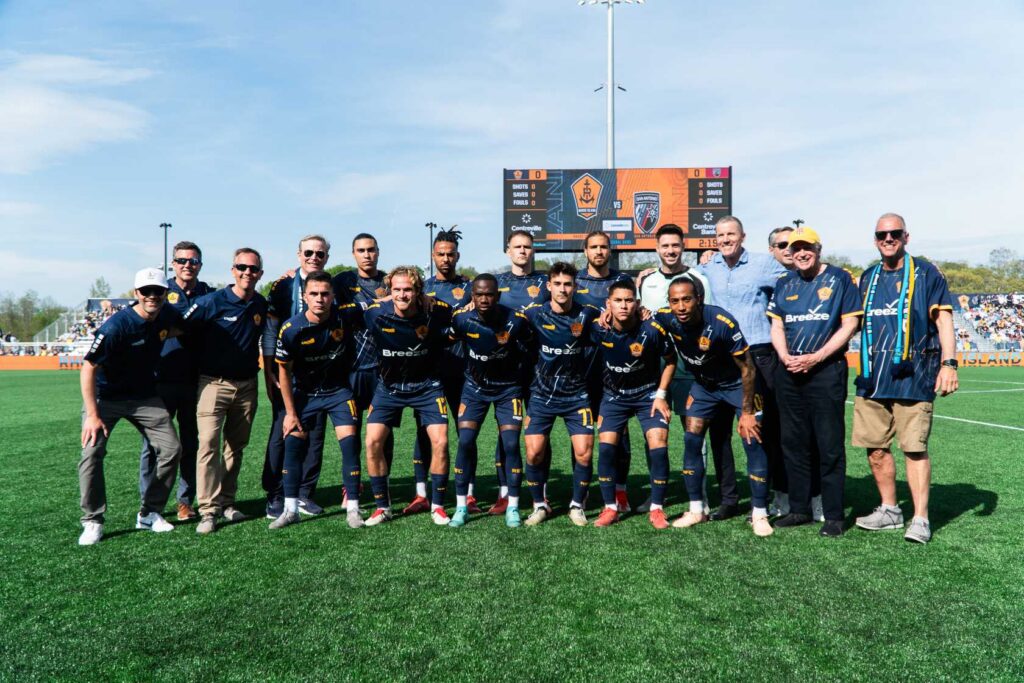
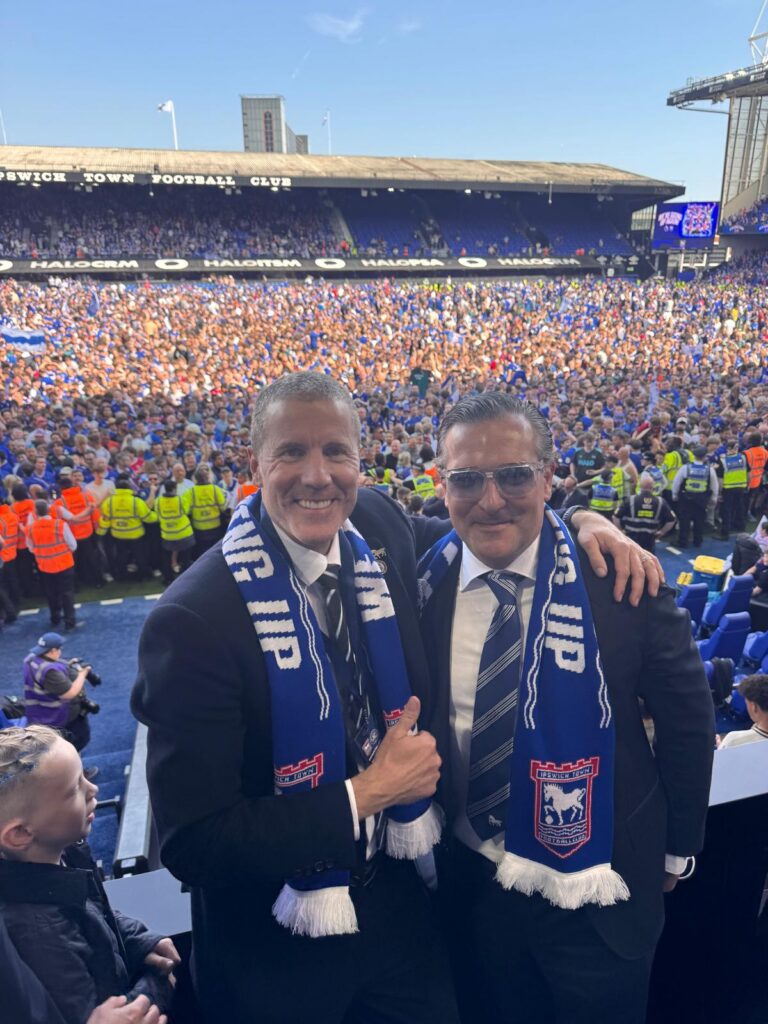
According to YPO member Brett Johnson — owner of USL Championship club Rhode Island FC and English Premier League side Ipswich Town FC — that question goes to the very heart of what makes the FIFA World Cup unlike any other sporting event on Earth.
“Beyond compare”
There are, after all, plenty of global stage sporting events. The Olympics. Super Bowl. Wimbledon. Each attracts vast audiences that transcend borders. Yet Johnson believes the FIFA World Cup stands apart from them all.
“It’s beyond compare,” he says. “I think it’s the greatest [sporting event] in the word by some margin. And the fact that it really is the World’s Cup ….”
Even if most Americans still call it soccer, football, he argues, is the only truly global sport. “With the greatest of respect to cricket, every single country plays this sport,” Johnson says “Every single country has an opportunity to field a team and qualify for these finals.”
It’s exactly what the world needs. Seeing the sea of humanity — the Dutch fans, the Scottish fans, the Cape Verdean fans — it’s example after example of what makes this sporting event the best in the world and truly unique.
”
— Brett Johnson, owner of USL Championship club Rhode Island FC and English Premier League side Ipswich Town FC
share
And the 2026 tournament’s expansion to 48 teams has only strengthened that sense of possibility. The additional 16 teams created an extra knock-out round, with the eight best third-placed teams also advancing from the group stage.
Critics feared a larger tournament would dilute the quality, but some of its most compelling matches have come from teams many expected to struggle.
“It’s clearly proven to be the right move,” Johnson says. “Some of the best games in the tournament were the ones everyone was worried about.”
Cape Verde’s extraordinary run is the clearest example. “I don’t know if there’s been a sporting event that’s had a more positive impact on a country than what this World Cup has meant to Cape Verde.”
Before this summer, many people wouldn’t have realized Cape Verde was even its own country. Now, Johnson argues, millions have been introduced to the island nation through its football.
A transformative tournament
If the World Cup can change the fortunes of the nations taking part, Johnson believes it can be just as transformative for those that host it. For more than a month, North America became the world’s meeting place as millions of supporters from every corner of the globe flocked to stadiums, city streets and fan zones in their national colors, turning host cities into a month-long festival of football, culture and shared celebration.
“The tournament’s just been so incredible,” Johnson says. “It’s exactly what the world needs. Seeing the sea of humanity — the Dutch fans, the Scottish fans, the Cape Verdean fans — it’s example after example of what makes this sporting event the best in the world and truly unique.”
After the celebrations end, Johnson believes the tournament’s greatest legacy will be the new generation of supporters it creates in the United States. Millions of Americans have now experienced football at its biggest and best for the first time, and he believes many will become lifelong followers of the game.
“In the United States, it will clearly hit a whole other level,” he says. “The amount of people who will now be converts to the beautiful game will go to another level.”
For Johnson, that transformation extends far beyond the final whistle. As Americans discover football’s biggest stars and breakout players, many will begin following the clubs those players represent, while a new generation of children will be inspired to choose it over other sports. With the FIFA Women’s World Cup arriving in North America next year, he believes that momentum will only continue to build.
“America is the last frontier,” Johnson says. “There’s still so many Americans who don’t have it as anywhere close to their top sport, and that’ll start to change.”
Changing the game
Beyond inspiring new supporters, the World Cup also offers a glimpse of where the sport itself is heading. Many of the innovations that define the modern game — including goal-line technology, referees’ vanishing spray and Video Assistant Referee (VAR) — first came to global prominence on football’s biggest stage before becoming familiar features of domestic competitions around the world. Johnson believes this summer’s tournament may ultimately be remembered for a different kind of innovation.
This year’s tournament offered fresh evidence of that evolution. But this time, the shift appears to be less about technology than presentation, structure and the growing influence of the American sports model.
I do treat it like a business. I’m looking for a return on investment, but the catalytic element of social and economic impact is staggering. The turn of fortune of Ipswich since we’ve owned it, bringing it back to the Premier League, is staggering.
”
— Brett Johnson, owner of USL Championship club Rhode Island FC and English Premier League side Ipswich Town FC
share
The final itself reflected that influence, with an extended halftime break featuring a star-studded musical performance more reminiscent of the Super Bowl than a traditional football match. Before kickoff, actor Tom Cruise addressed the fans. All of this ‘extra’ underlines FIFA’s growing willingness to embrace entertainment alongside elite competition.
While those moments may ultimately prove to be little more than window dressing, the tournament’s most significant innovation came in the form of the newly introduced hydration breaks. Presented primarily as a player welfare measure to combat the North American summer heat, they also created additional commercial inventory for broadcasters while giving coaches an unprecedented opportunity to influence matches during play. In effect, they nudged football a little closer to the quarter-by-quarter rhythm that has long defined American sports.
Johnson acknowledges the commercial logic behind those changes but admits they come with trade-offs. “I take an attitude where anything that slows the game down, I’m against,” he says, arguing that football’s uninterrupted flow is one of its defining strengths.
Yet, as both a club owner and investor, he also recognizes the commercial realities driving the sport’s evolution. “It is a business at the end of the day,” he says. “English fans will hate it … but now that broadcasters are seeing the additional advertising revenue, that might be where it’s too difficult to put the toothpaste back in the tube.”
Beyond the final whistle
The World Cup may be football’s greatest stage, but its legacy is ultimately carried forward by the local clubs and communities that sustain the game between tournaments. For Johnson, a successful football club becomes far more than a sporting institution. It can act as a catalyst for jobs, investment, housing and wider regeneration, while bringing new energy to the communities it serves.
He has seen that firsthand in both England and the United States. Since his ownership group acquired Suffolk’s Ipswich Town, the club has returned to the Premier League after more than two decades away.
“I do treat it like a business. I’m looking for a return on investment, but the catalytic element of social and economic impact is staggering,” he says. “The turn of fortune of Ipswich since we’ve owned it, bringing it back to the Premier League, is staggering.”
He also points to Rhode Island FC’s new USD140 million stadium, which has become a year-round destination for sport, concerts and live entertainment, creating jobs and attracting wider investment to the area.
“It’s become the sports and entertainment capital for southern New England,” he says. “That’s not even touching on the amount of jobs that we’ve created, the housing that we’re starting to build. The economic flywheel of social and economic impact is staggering when done right and with humility as well.”
For Johnson, success is measured not only by what happens on the pitch, but by the lasting difference a club can make to the people and places around it.
And perhaps that is the real legacy of the FIFA World Cup. Somewhere, in a crowded sports bar in Cardiff, a living room in Los Angeles or a café in Cape Verde, someone will have watched football for the very first time this summer. Some will become lifelong supporters. Some will fall in love with a club. A few may even build careers or businesses around the game.
Others, like Brett Johnson, will come to see football as more than a sport: a viable asset class capable of generating financial returns while transforming communities. The final whistle may have brought the tournament to an end, but its impact is only just beginning.
Brett Johnson joined us for the 2025 YPO Global Business Summit in LA. YPO members: if you’d like to connect with leaders like Brett and gain practical insights, meaningful connections and new opportunities for growth, register for the 2026 YPO Global Business Summit here.