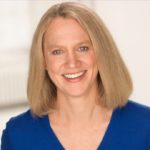
Still think early mornings and late nights are signs of commitment and productivity? According to Australia’s leading sleep expert Olivia Arezzolo, that mindset is not only outdated – it is dangerous.
“Sleep is a strategy,” she says. “The real result? Maximizing human potential, peak performance, and the clarity and capacity to be the leader you wish to be and to create the legacy you wish to see.”
March is Sleep Awareness Month, and Arezzolo uses it as an opportunity to remind executives that sleep is one of the most underrated tools they can use to achieve their business goals.
The neuroscience of sleep
Arezzolo reframes sleep as a high-performance tool essential for leadership and long-term success. It restores the brain in ways no productivity tool can.
“In slow wave sleep, we see a 60% increase in glymphatic clearance of a toxic protein called beta-amyloid,” she explains, noting that beta-amyloid – basically a protein waste product in the brain – accumulation is associated with cognitive decline.
You may know ‘slow wave’ sleep as deep sleep. It’s during this portion of your sleep that your brain is able to flush out this toxin, enabling you to think clearly, respond rapidly and think precisely, Arezzolo adds.
Sleep also restores the prefrontal cortex, the brain’s executive control center. “As leaders, you need to have a strong prefrontal cortex, operating on all cylinders,” Arezzolo says. “It’s responsible for decision-making, judgment, concentration and focus.”
— Olivia Arezzolo, Australia’s leading sleep expert share
The cost of neglect is surprisingly high. “With insufficient sleep, even just one night, cognitive performance can match someone with a blood alcohol level of 0.05,” she explains.
Beyond cognition, sleep is the foundation for emotional regulation. “With insufficient sleep, cortisol increases,” Arezzolo notes. High cortisol levels make “you feel anxious, wired, unable to switch off. You will also make stress-based decisions, oversight risks and have impaired judgment.”
For leaders navigating volatile markets or complex stakeholder environments, emotional composure is not optional. “Sleep is not just a nice-to-have; it’s a necessity,” she says.
Three pillars for high performers
Arezzolo’s elite sleep strategy is built on three pillars: protect the nights, protect the mornings and protect consistency.
“They will make the greatest impact on your sleep, your circadian rhythm, your energy levels and your capacity to lead,” she says.
Nighttime strategies focus on reducing light exposure, lowering temperature, eliminating late-night technology, and managing stimulants, alcohol and supplements.
Light is one of the most powerful factors affecting your sleep.
“In the two hours before bed and particularly during your critical circadian zone, which is 10 p.m. to 5 a.m., avoiding and minimizing light is absolutely key,” Arezzolo explains.
While low light helps release melatonin, a sleepiness hormone, bright light increases cortisol. High cortisol and high stress cause us to wake up.
It probably comes as no surprise, but technology compounds the problem. “Using social media just 30 minutes before bed increases your likelihood of waking by 62%” she says. “Using your phone in the last hour increases the likelihood of taking over an hour to fall asleep by 48%.”
Her advice is simple: Protect your final hour before bed. “Reading a book has been found to lower stress levels by 68%, with the effect starting in just six minutes,” she says. Progressive muscle relaxation and breathwork also calm the nervous system to fall asleep faster and reduce awakenings.
Temperature matters, too. A drop in core body temperature of about 1 degree supports melatonin production. To lower body temperature, cut out eating and exercise three hours before bedtime. A cool room temperature of 18 degrees Celsius (64 degrees Fahrenheit), 200-400 thread count natural fiber bedding and a cooling mattress topper can also help.
Protect the mornings
If darkness signals sleep, light signals wakefulness.
“The first 60 minutes is the most important time for you to get sunlight,” Arezzolo says.
She explains that the hour is optimal for activating your circadian system. The sunlight starts your melatonin timer. Roughly 14 hours later, your melatonin levels start rising to get your body ready for sleep.
For executives wanting to shift from night owl to morning strategist, jumpstarting that timer is critical. Morning exercise – even just 30 minutes of brisk walking or yoga – helps manage your circadian rhythm. The benefit, Arezzola says, is as much as two extra hours of sleep a week and – the best part – feeling alert in the morning and tired in the evening.
Protect consistency
Operational consistency is good for business, and sleep consistency is good for your brain. “Your circadian rhythm thrives on consistency,” Arezzolo says, advising to aim for “no more than a 30-minute variation in your sleep and wake times.”
Sleep duration matters. Most men require 7 to 9 hours; most women 7½-9½ hours, with additional needs during menstruation, pregnancy, perimenopause and menopause.
Sleep timing affects sleep quality. Slow wave (deep) sleep tends to be before 3 a.m.; after, we move into REM sleep. REM, or rapid eye movement, sleep is typically when we dream.
— Olivia Arezzolo, Australia’s leading sleep expert share
“The best opportunity to have both sufficient slow wave sleep, which should be 20% of total sleep time, and REM sleep, which should be 25% of total sleep time, is by getting to bed at 10 p.m.,” she explains.
Sleep disruptions are bound to happen. On those days, 26-minute naps in a dark room before 3:30 p.m. can help. “NASA discovered that 26-minute naps could boost cognitive performance for astronauts by 34% and attention by 52%,” Arezzolo says.
When a longer nap is needed, keep it to 90 minutes. “That allows you to go from light sleep to deep sleep back into light sleep, and you wake up feeling refreshed,” she explains.
Supplements, stimulants and strategic recovery
Caffeine requires precision. “You can have two coffees, single shot only, before 2 p.m.,” Arezzolo advises. “Caffeine suppresses adenosine, a sleep-promoting compound. A 4 p.m. coffee can reduce sleep time by an hour and deep sleep activity by 20%.”
Sleep deprivation also increases caffeine sensitivity, amplifying anxiety and restlessness. Tea and matcha feature L-theanine, a calming amino acid that can counteract the stimulating effect of caffeine.
On the supplement front, creatine has emerged as a surprising cognitive ally. “When sleep deprived, creatine supplementation has been found to reduce mental fatigue by 25%,” she says.
In addition, magnesium supports gamma-aminobutyric acid (GABA) activation, calming the brain. Magnesium glycinate helps regulate temperatures for women navigating hormonal transitions and reduce wakings while magnesium L-threonate (MgT) helps people fall asleep.
Alcohol, on the other hand, is the anti-supplement.
“Even one drink can compromise sleep quality by 9%,” she says. “Moderate drinking, which according to researchers is three drinks, compromises your sleep by 24% and heavy drinking, which is five drinks, compromises your sleep by 39%.”
Mastering sleep
Arezzolo categorizes leaders into three groups: the sleepless (less than five hours, caffeine-dependent), the apprentice (inconsistent sleepers) and the masters.
“Sleep is a skill to master,” she advises.
Protecting nights, mornings and consistency helps create the conditions to become an elite sleeper and harness sleep hygiene effectively. For leaders, the benefits are immense: clearer thinking, sharper judgment and sustainable productivity.
As Sleep Awareness Month reminds us, the future of leadership may not belong to those who work the longest hours but to those who recover the smartest.