Want to be a Successful Leader? Get Comfortable with Contradictions
Thursday, May 21, 2026
The leaders of today — and tomorrow — don’t have the luxury of clear answers. But that can’t stop them from moving forward.
In the latest episode of the Mistakes over Failure podcast, Christine Crawford and YPO Global Chairman Debby Carreau speak with YPO member Dr. Elikem Tamaklo, Chairman of the Board at Nyaho Healthcare Limited, on how leaders can better navigate multiple truths.
Successful leaders must:
Move fast AND think long term. Speed matters, but so does perspective. “The leader of the future has to understand that they’re not just making decisions that impact them for now,” says Tamaklo. “They’re also impacting decisions for the future.” And not just for them, but their employees, communities, and businesses.
Seek out valuable data AND trust your gut. Data, advisers and frameworks all matter. But leadership can’t be outsourced. At some point, says Tamaklo, the person in charge must make the call. And when that time comes you need to understand when insight is helpful and when your instincts are stronger.
Build systems AND protect your people. As organizations grow, systems become essential for scale. As a leader, it’s your job to ensure these systems enhance your company culture, rather than override it. Tamalko sees this as the biggest challenge for growing companies launched by infectious, passionate founders: You can’t become less human-centered as you grow.
Listen to other perspectives AND own the final decision. Listening well is not the same as handing over responsibility, Tamalko stresses. Leadership means honoring others’ wisdom while still owning the outcome.
Accept uncertainty AND act anyway. Every action or moment of inaction equals growth for leaders. Tamaklo says some of his biggest lessons came from the moments when he hesitated.“The only way to learn whether you are on the right track and how you change is through experience,” he says. The goal isn’t perfect foresight; it’s the courage to move, learn and adjust.
Leadership may require making the final call alone, but growth rarely happens alone. YPO gives leaders a place to challenge each other’s thinking, share lessons from experience and help one another navigate the difficult decisions that define leadership. Learn more about YPO membership >>>
About the Mistakes Over Failure Podcast
In Mistakes over Failure, Dr. Christine Crawford and Debby Carreau – joined by fellow YPO members as guests – highlight the missteps, breakthroughs and deep commitment to learning that CEOs experience while building and leading their businesses.
Discover who is shaping today’s business landscape, the lessons they’ve learned and shared along the way, and how they are creating lasting impact as leaders.
Explore more episodes of Mistakes Over Failure.
Derrick Emsley and His Push for Proof
Thursday, April 2, 2026
With tentree, he sells the promise of impact. With veritree, he’s ensuring those efforts take root.
The business of impact hinges on idealism. When you round up your total at the grocery store to contribute the spare change to a good cause, you want to believe you’ve done your part to make the world a better place.
But an unfortunate reality of the impact economy is that follow-through can often fall short.
“I’m a believer that there is way more waste in this space than anybody realizes — often not ill-intentioned, but also not delivering the outcomes we all want,” says Derrick Emsley.
As Co-founder and CEO of two companies with missions centered on sustainability, Emsley knows this struggle firsthand. But his unique position also enables him to address the gap between intention and execution on a global scale.
Planting the seeds
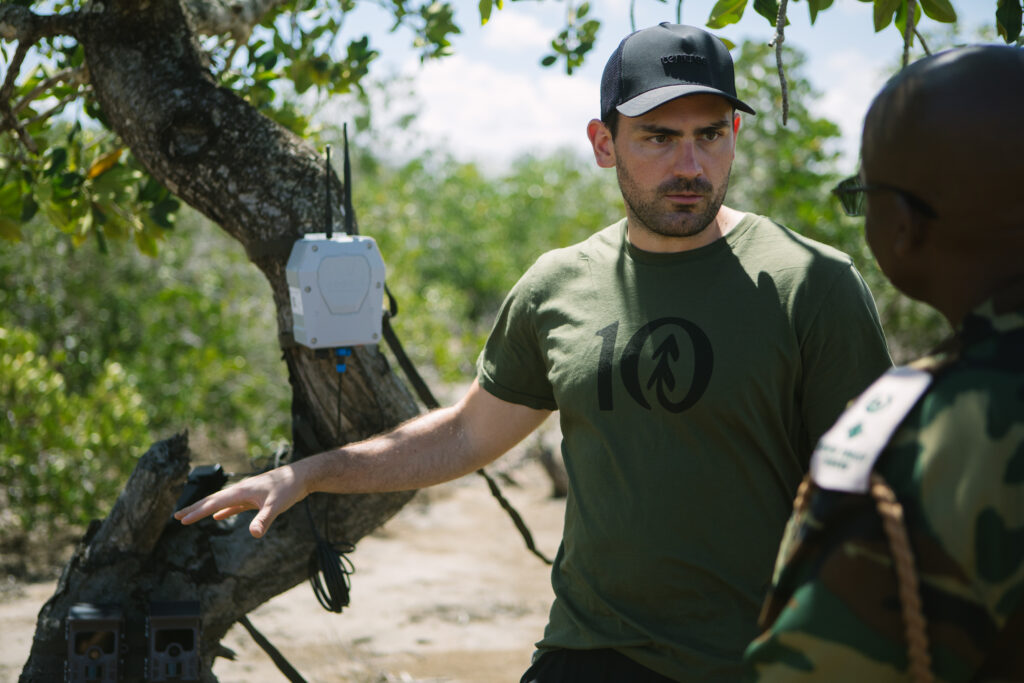
Emsley had the eye for impact at an early age. As teens, he and his brother Kalen Emsley started a tree farm in Saskatchewan, planting 150,000 trees to sell carbon offsets to companies. Their contracts totaled more than USD1 million.
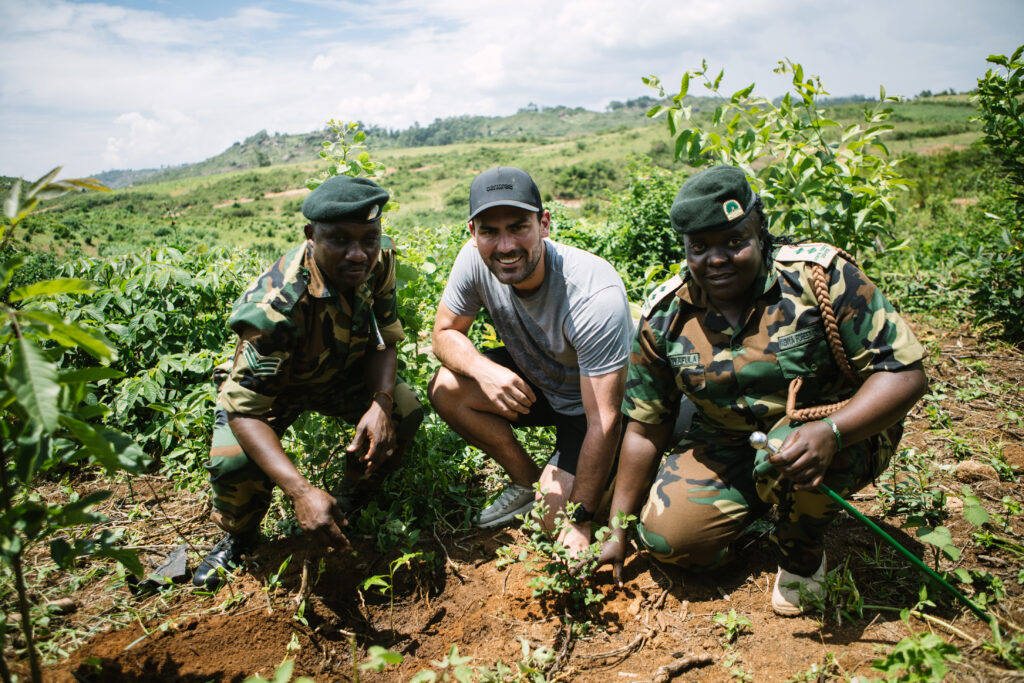
After college, they wanted to do more. In 2012, they launched tentree, tying the brand’s identity to direct environmental action. For every item you purchased, they would plant, you guessed it, 10 trees. To date, the company has funded more than 100 million trees across the world.
“We didn’t know anything about apparel, we just knew trees, and we knew that we wanted to connect people with the ability to fund more reforestation,” Emsley says. “We just needed a new vehicle to allow us to do it.”
Tentree’s products (men and women’s apparel, accessories and gear) have been rooted in accessible sustainability from the beginning. The brand uses organic and recycled materials and produces all their offerings in audited factories that meet strict labor standards. With an “Earth-first” mindset, the global lifestyle brand cuts emissions, reduces waste and designs for circularity wherever possible. The goal isn’t perfection but progress at scale. And thanks to their storytelling-focused marketing, their consumers get it.
We always think of ourselves as blue-collar environmentalists. We’re less about preaching, and we’re more about doing.
”
— Derrick Emsley, Co-founder and CEO, tentree and veritree
share
“One of the coolest experiences I’ve had was someone coming up to me when they saw I was wearing tentree,” Emsley recalls. They told him, “‘I love that brand; did you know they plant trees?’ and they could tell me on the spot where theirs had been planted.”
That moment was a powerful reminder of tentree’s influence: the brand was marketable because it was measurable. But as the company matured, so did Emsley’s understanding of impact, and how much was still left to unearth.
Seeing the bigger picture
Emsley credits a childhood immersed in natural resources and farming for the ethos he brings as the leader of tentree. “We always think of ourselves as blue-collar environmentalists. We’re less about preaching, and we’re more about doing.”
As tentree scaled, this mindset led to an uncomfortable realization that they were only focusing on part of the story. “Planting trees is great because it’s a number and an emotional connection that everybody can anchor to,” says Emsley. But it’s an oversimplification, he adds, because what happened after they plant the tree?
“We started with a very myopic view of the problem tentree had,” Emsley says. “We needed to know, if we fund a tree, did it get planted? Did anybody else claim that tree?”
The deeper they dug, the more complex their problems became and the more questions surfaced: Did the trees survive? How could they monitor them over the long term? How did they know it was the right tree, the right place at the right time? “Our aperture of the problem just continued to expand.”
That expansion led to something larger than tentree itself: veritree.
A standalone platform, veritree combines field data, geospatial tracking and on-the-ground verification to create transparent records from planting through long-term outcomes. It’s the digital accountability infrastructure behind restoration projects like those tentree supports.
The goal, Emlsey says, was to bring auditability, transparency, verifiability and frankly, just integrity to their own work with tentree and eventually, to the impact space at large.
Addressing a shared problem
As veritree developed, it was clear tentree wasn’t alone.
Whether driven by compliance — organizations required to restore land or offset environmental impact as part of their operations — or what Emsley deems charismatic reasons — companies choosing to invest in nature because they believe they should — the challenge was the same: How did anyone know what was working?
“Companies who were already funding reforestation started reaching out,” he says. “They’d say, ‘We have this exact same problem, can we work with you?’”
That pull from the market shifted veritree’s trajectory. No longer just a backend system for one brand, it became a platform designed to support a wide range of partners from financial institutions to travel companies looking to integrate nature into their business models, including Manulife, a global insurance company with extensive forestry and restoration initiatives.
After working with veritree on select projects and seeing the suite of reporting and verification they could provide, Manulife asked to expand its use of the platform across a number of their other global projects.
“It was really cool to see different use cases of where companies see value,” says Emsley. “By no means did we approach [veritree] with this view of, ‘oh, the world needs this!’ But I think as we got into the problem, we realized that there was something much bigger here.”
In 2024 alone, veritree’s partners supported the planting of more than 22 million trees across five countries, provided over 19,556 hours of work and restoring over 3,600 hectares. They’ve launched projects in a diverse range of landscapes including mangroves, agroforestry, kelp, wildfire restoration and more.
Balancing two businesses, one mission
Though Emsley is the CEO of both tentree and veritree, they are truly two separate entities, with totally separate operating teams.
Tentree, now a scaled apparel brand, functions in a familiar market, where the focus is on refinement and efficiency. Veritree, by contrast, is still defining its category and is moving fast, testing ideas and building infrastructure in real time.
Emsley admits the “context switching” can be tough, but he also says that the tension between the two can be an advantage.
“Tentree provides me with operational excellence, that foundational piece,” he says. What we’re building at veritree pushes me to be more growth mentality. Like, where could we take this? What stones are left unturned?”
Of course, another major differentiator between the two is that veritree exists to hold tentree accountable. And the lessons from that dynamic have allowed Emsley to better collaborate with veritree’s clients.
“Tentree has given us so much insight into the value that companies can get from tree planting, that it’s given us a really incredible lens with the conversations we have with companies we work on the veritree side,” he says.
The next phase
For tentree, the path forward will continue to be about scale with integrity. Emsley’s goal is to plant 50-100 million trees every year while stepping into the same conversation as brands like Patagonia. Because despite its size, he says tentree is already punching above its weight, ranking among the top global performers in sustainable materials and practices.
Meanwhile, he’s positioning veritree to become the great connector across the impact economy. Emsley wants to engage with 100,000 businesses.
Tentree provides me with operational excellence, that foundational piece. What we’re building at veritree pushes me to be more growth mentality. Like, where could we take this? What stones are left unturned?”
”
— Derrick Emsley, Co-founder and CEO, tentree and veritree
share
“Every year, there’s over a trillion dollars of philanthropy that gets delivered, and all of these marketplaces operate around the trust that the impact is happening, and the verification behind it,” Emsley says. “Reforestation is just the start of what we’re building. Our vision is to create the infrastructure for trust so that collectively, we can bring much more funding into the space, and collectively, more impact.”
He’s also manifesting a future where nature is embedded into everyday transactions, similar to the small percentages already built into credit cards and platforms like Uber or DoorDash. This way, instead of being an optional add-on, impact becomes a seamless, expected cost of doing business: One that is automated, normalized and of course, verified.
Leading People, Products and Markets in the AI Era
Tuesday, March 31, 2026
Leaders at Google have been a transformative force for people, products and markets since 1998. And now they are redefining what it means to guide organizations in a constantly evolving technological landscape.
At YPO EDGE in Sydney, YPO member and a Google President Selin Song, and Brain Glaser, Google’s Vice President and Chief Talent and Learning Officer, explored how artificial intelligence (AI) is reshaping leadership, product development and market dynamics, offering a roadmap for thriving in an era of rapid change.
Their insights go beyond technology and point to a deeper shift. Success in the AI era depends less on tools and more on mindset, culture and the systems leaders build.
Learn-it-all leadership beats know-it-all
The time has come for leaders to abandon traditional leadership archetypes.
According to the Great Man Theory of Leadership, “leaders are supposed to show up and provide certainty and clarity, and the workforce is supposed to be there to listen and proceed as they are told,” Glaser explains. In unprecedented times, “courage is the new currency; being able to show up and let people know that as a leader, you don’t have all the answers.
A learn-it-all approach requires actively unlearning outdated beliefs and embracing discomfort as a signal of growth. “We have to question everything and get with the times,” Song urges. “Those of us who have children understand the way people are processing information and communicating is dramatically changing.”
Leadership right now is less about the answers and more about creating the environment for exploration.You have to give people permission to experiment, fail, learn and share, and if you don’t, you’ll never see real adoption.
”
— Selin Song, Google President
share
For example, after hiring a Gen Zer from Google sales to handle internal comms, Song shifted her strategy from town halls and emails to video-based snippets. “We’ve gotten much greater engagement and cut-through,” she says. “The way we communicate and process information is one specific area that I’ve had to completely rethink.”
The shift wasn’t easy. In fact, “it was very uncomfortable,” Song admits. “Maybe that’s the key. When you do something, are you comfortable? Maybe that’s not a good idea; maybe you should be uncomfortable.”
Discomfort becomes a strategic advantage. Leaders who lean into experimentation rather than resisting it are better positioned to connect with evolving teams and markets.
AI adoption is cultural, not technical
While many leaders view AI transformation as a technical challenge, it’s actually a cultural one. Organizations often stall not because of lack of tools but because of fear, misaligned incentives or outdated narratives.
“The reality is an organization cannot reinvent itself at a faster pace than its leaders,” Glaser emphasizes. At the Google School for Leaders, “we’re hearing stories that are really anxiety provoking about AI adoption around productivity, efficiency and optimization.”
Leaders need to change the narrative around AI adoption. His advice: “Create the conditions for people to ask themselves, ‘how do I need to change and how do I galvanize people differently by telling different stories about an alternative future that we haven’t seen yet?’”
Rather than trying to influence people through efficiency metrics, try to reframe AI adoption as a growth enabler. “People want to see something that’s exciting, that’s expansionary, that makes them feel like they’re going to be helping more people, more users and more customers,” Song says.
This subtle shift from replacement to expansion unlocks engagement. Equally important is creating systems that encourage experimentation.
“Leadership right now is less about the answers and more about creating the environment for exploration,” she explains. “You have to give people permission to experiment, fail, learn and share, and if you don’t, you’ll never see real adoption.”
A workplace where humans openly play, fail and succeed with new technology requires mutual trust between employees and leaders. ”If the workforce doesn’t trust the leadership or the leadership doesn’t trust the workforce to experiment, you’re dead in the water,” Song cautions. “[CEOs] feel like if they let go, chaos ensues, but in reality, structured freedom is what generates real innovation.”
Leading with humanity in uncertain times
In an AI-driven world, leaders must often make high-stakes decisions with incomplete information.
Amidst uncertainty, start with three questions. “What is reversible? What is low regret? What is high impact?” Glaser advises. “If it’s reversible, you can move faster; if it’s low regret, you can afford to experiment; if it’s high impact, you prioritize.” This approach enables more confident decision-making by balancing risk with opportunity.
Another recommended model combines scenario planning with intuition. “I imagine different futures – best case, worst case, likely case – and then map the ripple effects,” Song says. “Finally, I check with my gut. If something doesn’t feel right, no matter how logical it seems, I pause.”
Both frameworks highlight an important truth. “Decision-making isn’t just about data,” she explains. “It’s about humans, intuition and consequences.
As leaders move toward fostering cultures and designing systems for technological impact, it’s even more important to maintain simple, human-centered habits.
Deep listening is key. “Actively listen to the subtle things people say,” Song says. “Much of leadership is about what’s unsaid — the tone, the hesitation, the excitement.”
Courage is the new currency; being able to show up and let people know that as a leader, you don’t have all the answers.
”
— Brian Glaser, Google’s Vice President and Chief Talent and Learning Officer
share
Another important quality is curiosity. “I try to ask ‘why?’ constantly, not superficially, but asking, ‘why is this happening, why now, why this person?’” Glaser says. “It keeps me open and people are often surprised because it’s not the traditional authoritative approach they expect from a leader.”
These practices may seem understated, but they are foundational. Being open, curious and available enables leaders to evolve, connect, anticipate challenges and make more informed decisions.
“Leadership is less about having all the answers and more about enabling others to find the answers together,” Glaser emphasizes.
In this era of rapid change and AI acceleration, “never underestimate the power of deep listening and small habits that build connection, understanding and trust,” Song advises. “Those are the things that compound over time.”
Canada’s EY Entrepreneur Of The Year® 2025: Redefining Pet Nutrition Through Purpose-Driven Leadership
Tuesday, March 31, 2026
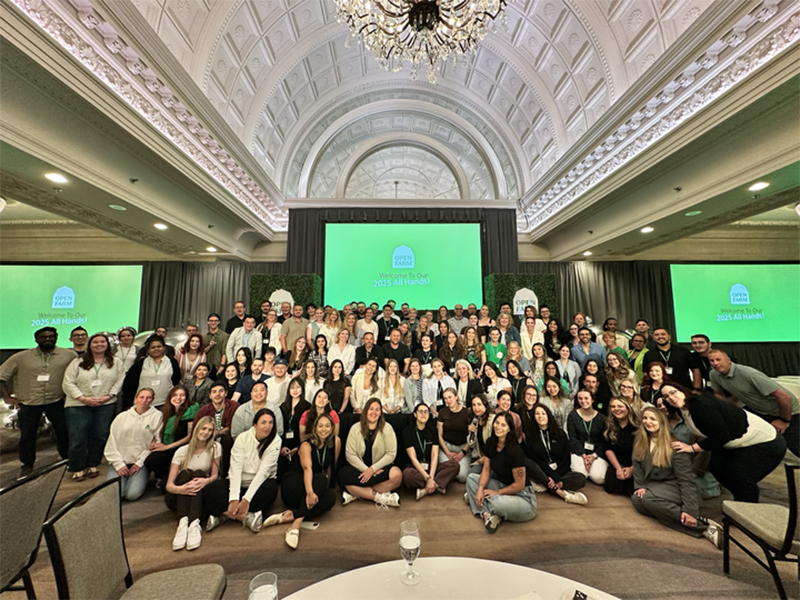
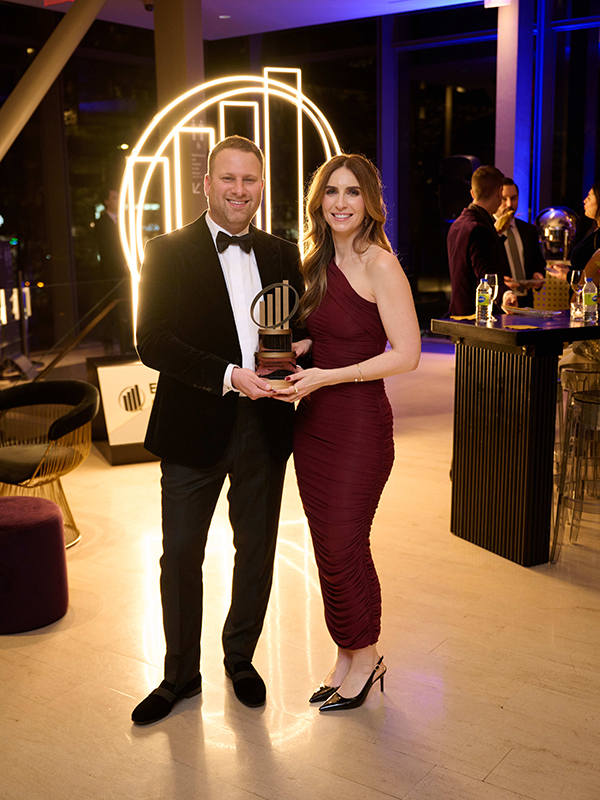
Recognized as Canada’s EY Entrepreneur Of The Year® 2025, YPO members Isaac Langleben and Jacqueline Prehogan have transformed pet nutrition with a bold vision that blends quality and ethical responsibility. As Co-founders of Open Farm, one of North America’s most trusted pet food brands, Langleben and Prehogan prove that prioritizing long-term impact over short-term gain can help purpose and performance thrive together.
“Isaac and Jacqueline are proof that entrepreneurship can be a force for good,” says Rachel Rodrigues, EY Entrepreneur Of The Year Canada Program Director. “Their dedication to conscious business practices hasn’t just transformed the pet food industry; it exemplifies leadership that strengthens Canada’s economy and creates a sustainable future for animals, people and the planet.”
Challenging a legacy industry
Open Farm was born from a simple but powerful realization.
“When we adopted our dogs, we were surprised by how little transparency existed in the pet food aisle and how few options reflected our values around animal welfare and sustainability,” Chief Brand Officer Prehogan explains.
While the natural food movement was reshaping human nutrition, similar standards had not yet taken hold in pet nutrition. The co-founders established a clear mission when they established their firm in 2014. “We believed pet parents deserved better,” she says. “We set out to build a company where exceptional nutrition and responsible sourcing went hand in hand. Our mission has always been simple: to do some good for animals and the planet.”
Breaking into the pet food market was no small feat.
Purpose only works at scale when it’s supported by operational discipline.
”
— Jacqueline Prehogan, Co-founder and Chief Brand Officer of Open Farm
share
“Open Farm wasn’t created to follow an existing model; it was built to challenge one,” CEO Langleben explains. “Pet food is a legacy industry dominated by large, established players, and breaking in meant questioning deeply entrenched systems.”
As a result, advisers tried to deter them. “When we were starting out, everybody was like, ‘Don’t do it. The pet industry is crowded. There are a few big players that have endless resources,” he says in his award acceptance speech. “But we had one thing really going for us: We had an idea; we had a mission; and we were completely bought into it.”
Defining progress through higher standards
The pair made bold decisions that prioritized long-term impact over short-term gain. “From the outset, we required third-party animal welfare certifications for all our meat ingredients and invested in traceability infrastructure well before consumers expected it, which made the early years more complex and capital intensive,” Langleben says.
Those early investments laid the foundation for differentiation. Today, Open Farm is widely recognized for introducing Canada’s first Certified Humane® pet food and for building a transparent supply chain from scratch.
Those higher standards have broader implications. “Because pets consume a meaningful portion of the global meat and fish supply, this industry has real influence over agricultural practices,” Langleben notes. “By raising standards within pet food, we can positively impact the broader food system at scale.”
Growth, for us, is not the end goal – it’s the engine that allows us to influence more of the agricultural system and raise the bar across our industry and beyond.
”
— Isaac Langleben, Chief Executive Officer and Co-founder of Open Farm
share
Innovation in pet food is not just about new flavors or formats. “For us, progress means measurable improvements in animal welfare, sustainability and ingredient transparency,” Prehogan notes. “As the industry becomes more accountable and consumers can make more informed choices because standards have improved, that’s progress we’re proud of.”
Scaling those standards requires embedding the mission into every aspect of operations so pet owners can make more informed decisions. “When pet parents choose responsibly sourced, transparently made nutrition, they’re reinforcing the connection between how ingredients are grown or raised and the quality of the food in their pets’ bowls,” Langleben explains. “That demand reinforces accountability within our supply chain and encourages higher standards across the pet industry.”
Each new customer has the power to amplify the brand’s message. “Every new pet parent that feeds Open Farm is expanding the reach of a model that demonstrates how better nutrition, responsible farming, and commercial success can work together to positively influence the broader food system,” he adds.
Aligning purpose and profit
As Open Farm has grown into one of the most ethically sourced and respected pet food brands, maintaining alignment between values and financial performance has remained a priority.
“Our success comes from staying true to our mission, even when it means taking the harder path,” Prehogan emphasizes. “But purpose only works at scale when it’s supported by operational discipline. We’ve built a lean organization with strong systems across sourcing, manufacturing and distribution, allowing us to maintain high standards while driving efficiency and making our products more accessible to pet parents.”
The results speak for themselves: “When values are operationalized and execution is disciplined, purpose and performance become mutually reinforcing and drive long-term value creation,” Prehogan adds.
Being part of the YPO community has offered invaluable peer support for the husband-and-wife team, who joined YPO in 2019. “It has provided something every entrepreneur needs but rarely finds: honest perspective,” Langleben notes. In addition, “it allows you to pressure-test assumptions, assess risk more clearly, and approach pivotal decisions with both ambition and discipline.”
Looking ahead, Langleben and Prehogan remain committed to the company’s foundational beliefs. “We’re focused on continuing to execute on the fundamentals that brought us here – delivering exceptional, responsibly sourced nutrition, investing in meaningful innovation across our portfolio, and deepening our connection with pet parents,” Langleben explains.
Growth is a means to a greater end. “Growth, for us, is not the end goal – it’s the engine that allows us to influence more of the agricultural system and raise the bar across our industry and beyond,” he says.
For aspiring entrepreneurs, Prehogan offers practical guidance: “Be clear about your nonnegotiables early. The larger you become, the harder it is to retrofit values into a business model.”
Trust and authenticity are key components of success. “The next generation understands that responsibility and performance are not opposing forces – they can be symbiotic – and that real differentiation comes from walking the walk,” she says.
With their national win and global stage ahead, Langleben and Prehogan’s journey stands as compelling proof that good food never fails in bringing people – and their pets – together.
YPO is proud to collaborate with EY, its Strategic Learning Advisor, to help global leaders drive innovation, accelerate growth and create long-term value. Learn from the successes of thousands of the world’s fastest-growing entrepreneurs and realize your ambition faster.
Architects of Hope: How a Group of YPO Members Turned Crisis into Community
Thursday, March 12, 2026
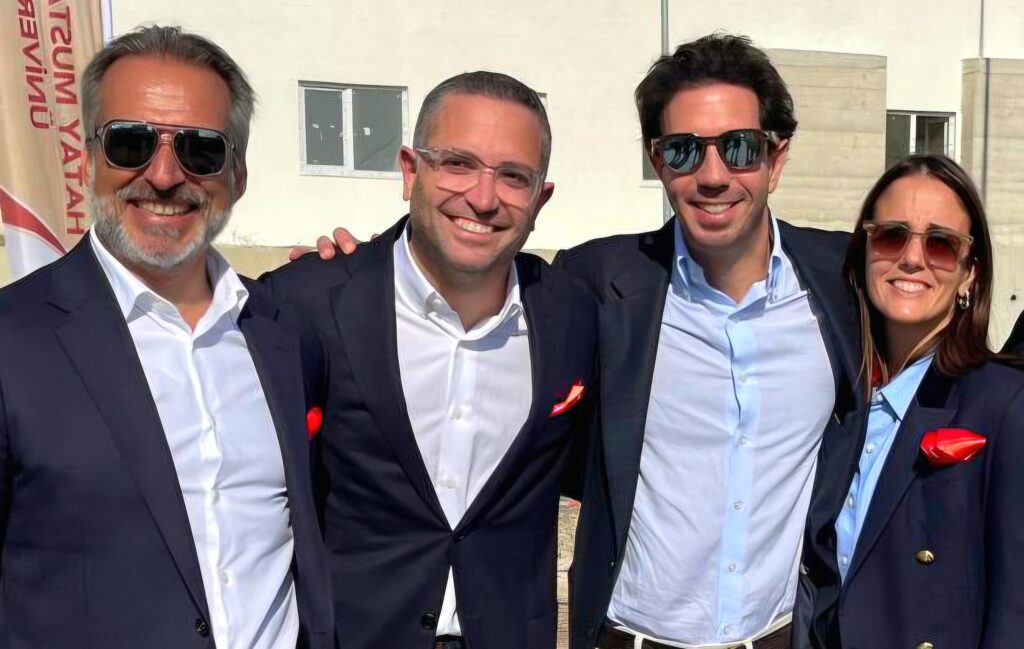
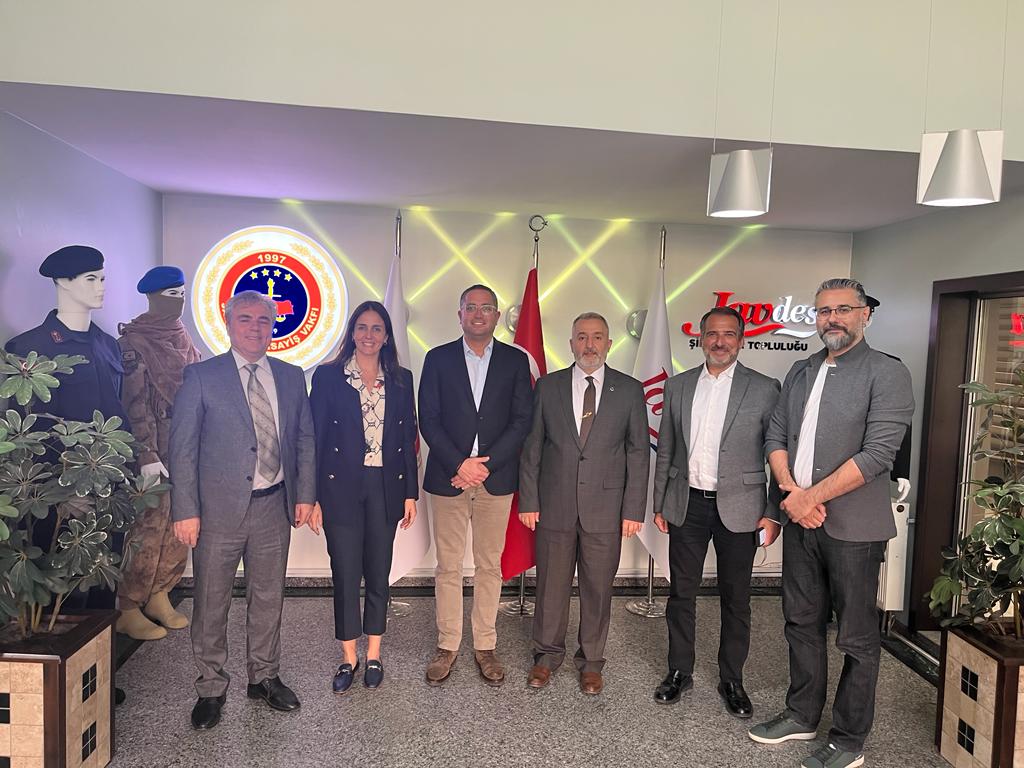
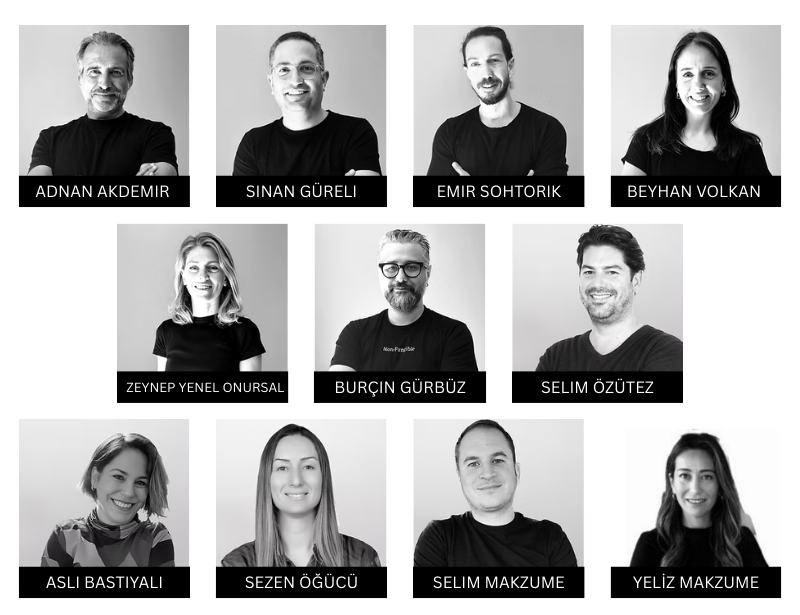
Adnan Akdemir, Sinan Gureli, Emir Sohtorik and Beyhan Volkan, are the winners of our 2026 YPO Global Impact Award. The award focuses on YPO members making impact outside the organization that is both sustainable and scalable, affecting people, prosperity, peace or our planet.
Fear is contagious. But so is hope. – Sinan Gureli
For centuries, Antakya, in the Hatay Province of Türkiye, has been a place of connection: The place where ancient Antioch once stood, where trade routes, culture and community all converged at the edge of the Mediterranean world.
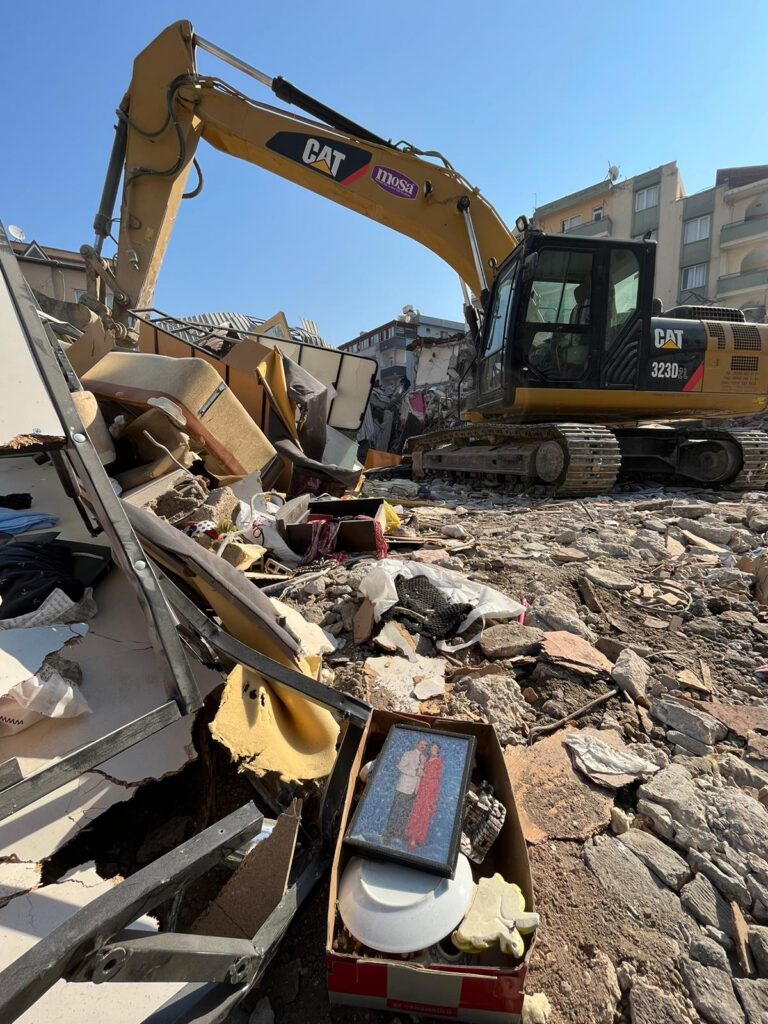
On 6 February 2023, three major earthquakes struck the storied land, rippling across 350,000 square kilometers of Türkiye and Syria — roughly the size of Germany — and leaving devastation in its wake.
It was one of the worst natural disasters in modern history: 60,000 lives lost. 130,000 people injured. 1.5 million people homeless. 165,000 buildings destroyed and more than 15 million people affected in total.
In the face of widespread destruction and despair, YPO members Adnan Akdemir, Sinan Gureli, Emir Sohtorik and Beyhan Volkan quickly focused their attention and resources on something more powerful: hope.
And in their pursuit of hope, displays of servant leadership and commitment to rebuilding a community for future generations, YPO proudly recognizes the founders of Blocks for Hope’s 100th Year Village as the 2026 YPO Global Impact winners.
I need to do something.– Sinan Gureli
Gureli was on holiday with his family in France when he heard the news of the earthquakes. Coverage was limited in the first hours, but what he did see was enough.
“I was pacing around the house; I just felt helpless,” says Gureli. “I kept saying ‘I need to do something.’”
Akdemir similarly was in shock, glued to online coverage of the aftermath from his home in Istanbul.
Though neither had personal ties to Hatay, a brief phone call — “What are we going to do?” — quickly turned into action. Within 24 hours, through a connection with the Turkish military, they secured seats on a rescue flight.
“Half the city was underwater; the other half was on fire,” he remembers. “People were still stuck in buildings, and we didn’t even know where to park our car where a building wouldn’t crash on it.”
Searching for direction, they sought out police officers, firefighters and municipal authorities, only to encounter the sobering reality that many first responders had perished.
“There was no authority left,” says Sohtorik, Chair of Fides Turzm ve Denizcilik. “We realized quickly that there was an enormous amount of goodwill, but very little structure and organization.”
Aid was already arriving, but systems were overwhelmed with supplies being damaged, misdirected and looted.
They were able to connect to a government official, who urged them to play to their strengths, “You’re businessmen,” he said. “Help us create a logistics center.”
The pair established the first emergency task center in a tent just outside the city, rallying officials and volunteers to organize the influx of aid. For seven days and eight nights they sacrificed showers and basic comforts as they stabilized distribution systems.
There would be many more trips between Istanbul and Hatay, with Volkan and Sohtorik joining the response.
For Akdemir, one encounter proved defining. A young university student stepped in as their guide, helping the team reach villages that hadn’t yet received aid.
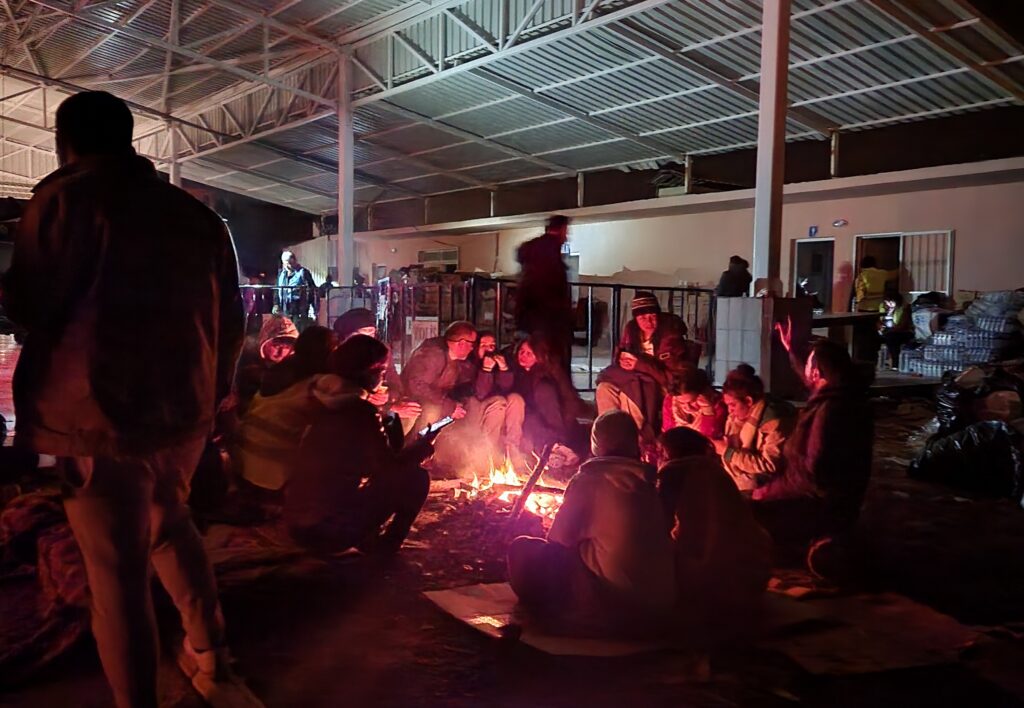
When they asked to thank her parents, she led them into a snow-covered forest, where her family sat beside a campfire. Their home had been destroyed and food was scarce. When Sohtorik offered them a shipping container for shelter, her father refused.
“We’re fine. We survived,” he told them, asking instead that it be given to a Syrian mother nearby with five young children. The group secured container housing for both families.
Amid devastation, humanity spoke louder.
Without a home, nothing else can start. – Beyhan Volkan
In the weeks following their initial response, even as emergency aid continued to flow and temporary shelters expanded, a more permanent challenge came into focus.
“It’s human nature to want to help,” Sohtorik says. “But without structure, even good intentions can become harmful.”
Gureli and Akdemir convened a call across YPO’s three Türkiye chapters, gathering members to share firsthand accounts of the devastation and explore how they all could contribute.
Dozens joined the discussion, offering resources and expertise. Among the many ideas, one thing stood out as essential: housing. “Afterwards, everything follows: jobs, education, normalcy,” says Volkan, Managing Partner at Banat Firca ve Plastik. “But first, they need a home.”
From those early conversations, a small group formed not around titles or hierarchy, but shared commitment: To deliver housing that was functional, safe and sustainable, while restoring stability and dignity. Blocks of Hope was born.
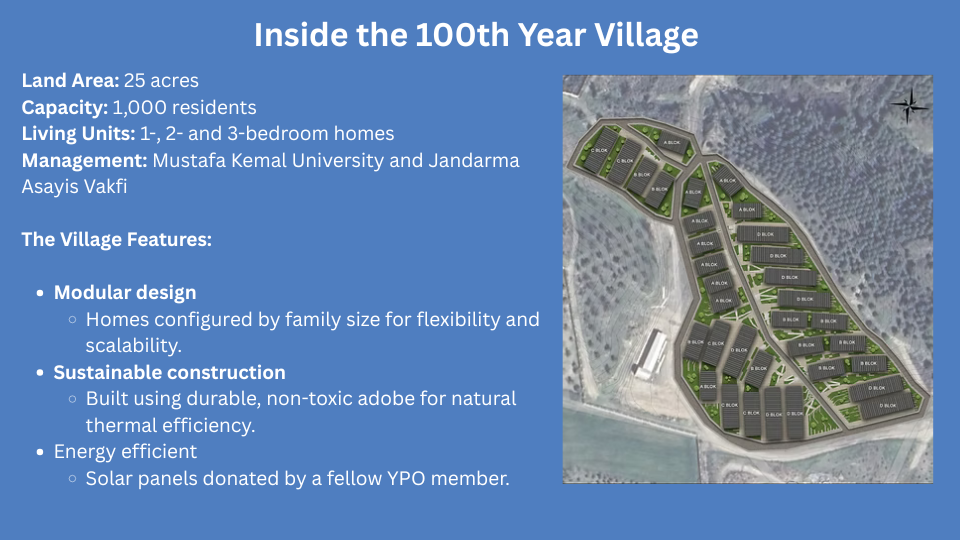
With architect Burcin Gürbüz, originally from Hatay, the board of Blocks for Hope developed the 100th Year Village, a community designed to support university and hospital personnel who chose to remain after the disaster.
“They could have left,” Sohtorik says. “These doctors and professors had other options. But they chose to stay, living with their families in these 200-square-foot containers that in the heat, become ovens, in the cold, freezers.”
Volkan adds that it sent a powerful message across the region that these people who had truly lost everything — their homes, loved ones, their past and sense of security — weren’t going to be forgotten.
“What we tried to do with this project was not just build houses,” says Sohtorik. “It was to create hope; hope to start over, move forward.”
The project gained momentum when Mustafa Kemal University donated land for the development (valued at approximately USD4.5 million).
We’re all part of one family. We have to take care of each other. – Adnan Akdemir
Transforming Blocks for Hope from concept to construction required extraordinary alignment across sectors.
“This is the only project where the government, the military, NGOs, volunteers and business leaders were all sitting around the same table,” Gureli says.
This convergence became a defining hallmark of the initiative. Government authorities granted land access. NGOs provided community support. YPO business leaders mobilized capital and their networks.
So many differing stakeholders might have invited potential friction. Instead, the opposite occurred.
“You can’t achieve big dreams alone,” Sohtorik says. “You need partners, and you need to trust their judgment, even when it doesn’t always align with yours.”
The board members all brought different expertise and perspectives, and while Sohtorik admits there were disagreements along the way, they trusted each other.
“Leadership is not about directing people,” he says. “It’s about creating and maintaining the conditions for cooperation — and not giving up, no matter the difficulties.”
As partnerships solidified, the project scaled through phases that reflected an expansion of trust, proving that credibility compounds.
In the first phase, USD1 million was raised by YPO members, their companies and their immediate networks of family, friends and professional connections.
The second phase drew support from YPO member Mert Tümen’s family foundation.
By the third phase, the initiative had earned global corporate backing, with Peninsula Hotels, whose chairman is a YPO member, stepping up.
The experience demanded unusual persistence. Akdemir says it shaped his understanding of leadership itself.
“As CEOs, we’re trained to create value,” he says. “But when you build something for others, the learning is different — operational, emotional, even personal. It’s one of the most fulfilling experiences a leader can have, and I believe it should be part of every CEO’s education.”
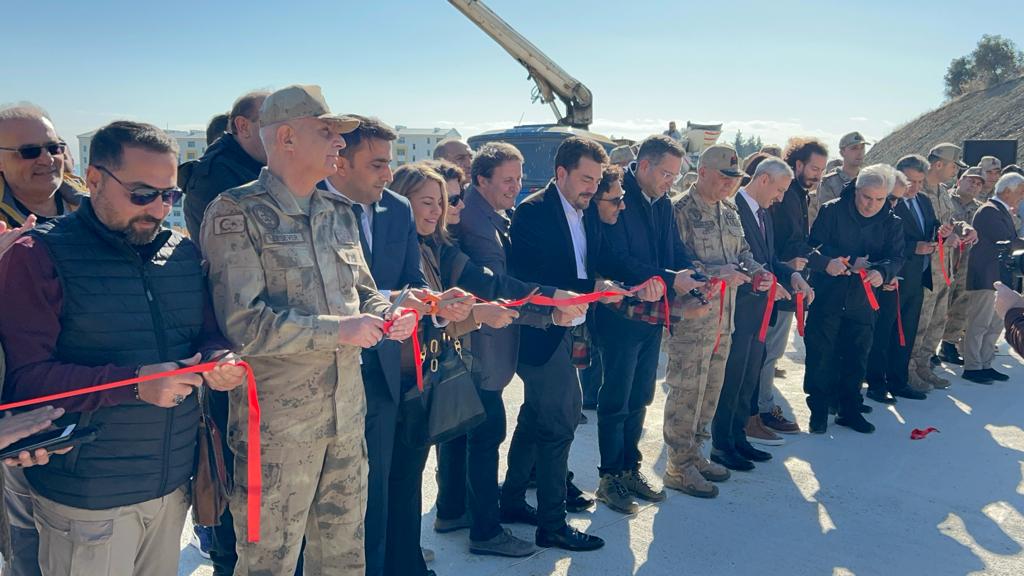
The village, completed in October 2025, is home to more than 1,000 earthquake survivors who enjoy access to schools, sports facilities, a place of worship, a business center and a library. Residents may live in these homes for four years, rent-free, before the units are repurposed as university dorms.
This isn’t a housing story; it’s a human story. – Emir Sohtorik
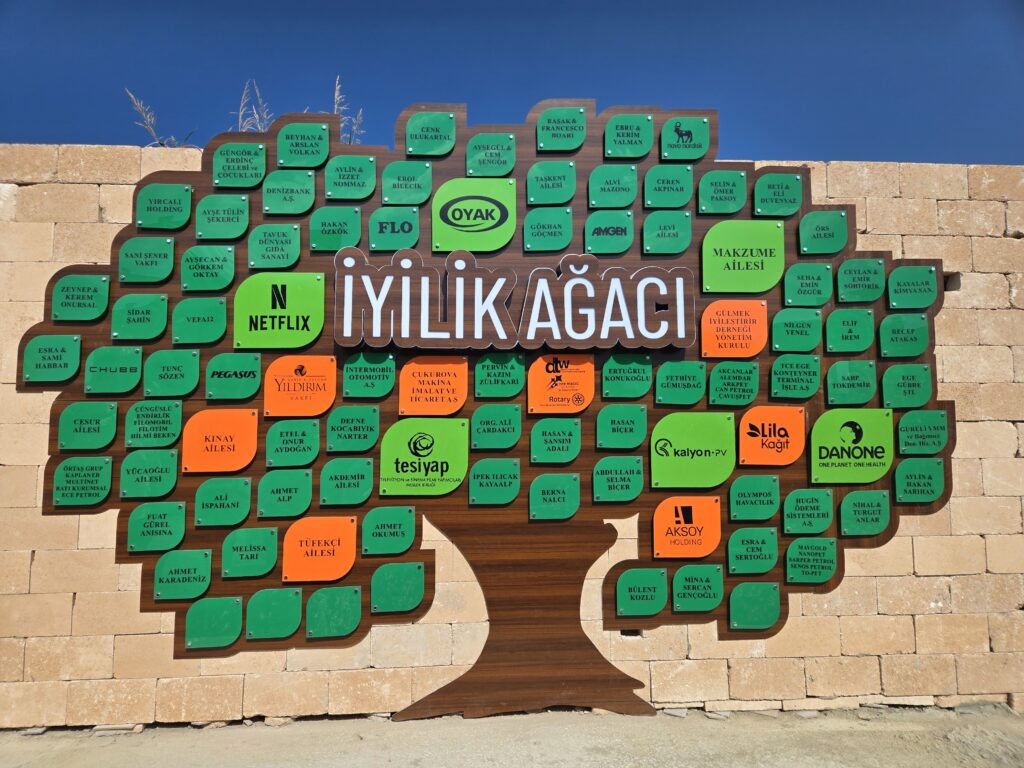
At the entrance of the village stands The Support Tree. Its metal leaves bear the names of donors who believed in something that didn’t exist yet. Hope translated into action.
Perhaps the most enduring contribution of Blocks for Hope extends beyond the village itself: Gürbüz made the architectural plans publicly available, offering not just inspiration, but infrastructure, to future communities impacted by disasters. Hope designed to last.
That legacy aligns with the land itself — a placed shaped by disruption and rebuilding, of convergence and connection. “Our story is not only a housing story,” Sohtorik says. “It’s a human story. It shows what communities are capable of when we move together.”
Adds Güreli, “It’s a miracle to find many different soul mates at the same time under one project. We’ve shown people that in desperate times, we can come together. Rather than ‘you and me’, I think it’s all about ‘we’.”
Blocks for Hope Executive Committee
Felipe Ventura’s Unexpected Path: Revolutionizing Construction
Thursday, March 12, 2026
Felipe Ventura is a2026 YPO Global Impact Award honoree. The award focuses on YPO members making impact outside the organization that is both sustainable and scalable, affecting people, prosperity, peace or our planet.
Felipe Ventura, CEO of Opus Construtech in Minas Gerais, Brazil, always forged his own path.
As a child, he chose competitive horseback jumping over his country’s most beloved sport, soccer. After earning his law degree, he quickly realized that a life spent logging endless hours at the office wasn’t for him. Instead, he followed his grandfather’s footsteps into entrepreneurship. Even as he built his company, Ventura again took the unconventional approach — prioritizing innovation, efficiency and human connection over short-term profits.
“Profit is a consequence,” he says. “When you build trust and connect people, reputation becomes stronger than price — and that’s a better way to do business.”
That better way has paid off for Ventura, a YPO 2026 Global Impact Award honoree.
Not only is he a world champion show jumper, he is also the CEO of a company revolutionizing construction through industrialization, with a relentless focus on drastically reducing material waste to build a more sustainable future.
The impact
When Ventura founded Opus eight years ago with just four employees, the vision centered on innovation, automation and robotics, manufacturing sustainable modules for offices and homes. They pledged to follow the 3R concept — reduce, reuse and recycle — throughout the production chain and “always think about governance structure and doing things right, from the beginning.”
“We are reinventing construction to scale impact, dignity and sustainability where people live and work,” he says.
Opus merges the automotive and construction industries to build steel-structured modules with isothermal panels in less than half the time of traditional builds. “Because we produce our models in an industrial process and plan material usage mathematically, the construction is already more efficient and generates far less waste,” he says.
That’s the magic of everything. You’re not just looking because somebody told you that you need to use sustainable materials; you’re using them because it’s better — for the customer and the environment.
”
— Felipe Ventura, CEO of Opus Construtech
share
The results are measurable. At Opus, each square meter of modular construction generates 12.5 kg (27.5 lbs.) of waste, while traditional construction generates 86.27 kg (192.35 lbs). Material waste drops from as much as 8% to just 1.8%.
CO² emissions are also lower. According to academic research from the University of Cambridge and Edinburgh Napier University, factory-built homes can produce up to 45% less carbon compared to traditional residential construction methods. To top it off, the sale of recyclables in 2024 covered 134% of the waste management costs at the Betim facility in Minas Gerais, effectively eliminating waste management expenses.
Scaling with purpose
The company’s success at reducing waste and CO² emissions didn’t happen overnight. Ventura says Opus started out focused on solving problems for their clients: building economical, quality modular offices or houses.
By 2021, the company was growing at an exponential rate — almost 400% in one year. That same year, Opus undertook a huge project — constructing 28 buildings for a mining company in north Brazil. Effectively, they were building a city for more than 4,000 people, and Ventura knew he had to ramp up production.
“We decided to merge with the automotive industry, but we connected this to sustainability,” he says. “When we develop new ways and new materials, we are always asking: How can we make it more sustainable? Not because it’s beautiful or because it’s fancy or because it’s good to say, but because it can be more efficient and better for all of us.”
One of those innovations was creating recyclable plastic flooring that has saved the extraction of 4,479 trees. Partnering with a supplier, Opus repurposes industrial scrap to create a stronger, more durable alternative to wood.
“In the end, the floor is much better because it’s much stronger and the appearance is much better than the wood,” he says. “It’s not like we were looking only for recycled materials. We were looking for hard materials that can last and improve our quality. In the end, it was a sustainable material. I think that’s the magic of everything. You’re not just looking because somebody told you that you need to use sustainable materials; you’re using them because it’s better — for the customer and the environment.”
More than modules
Opus’s commitment extends beyond environmental sustainability. The company is committed to social responsibility, integrating inclusive practices, processes and actions by investing in the community and supporting families in vulnerable regions where they operate.
The investments vary depending on the needs of the community. And while the company does its fair share of charitable donations like food baskets, toys and food, Opus also prioritizes training and courses for community members to create lasting, sustainable impact.
“We are trying to do more than just solve the problem in that moment,” he says. “We want to help them make a better life – long term.”
In Canaã dos Carajás, Brazil, Opus partnered with a local agency to offer training courses for the local community in childcare, elderly care, fabric painting and truck driving. More than 2,500 people were impacted by that work, and more than 300 jobs were generated.
Ventura shares a story about one woman who completed the truck driving program and secured a role at one of Brazil’s largest mining companies. “One month after being hired, she discovered that she had cancer,” he says. “But because she had been hired, she had health insurance, so she could have a treatment.”
The power of YPO
As Opus expanded and his social impact deepened, Ventura joined YPO in 2022, calling it a turning point in his leadership journey.
“YPO was a shift in my career because it was a place where I could share some of the most difficult parts of being a CEO, like managing culture,” he says. “YPO is an amazing opportunity for leaders to connect and see how others are innovating and driving new ways to do business. You can share what you are doing and be inspired through others.”
Human connection
Today, Opus employs 1,200 people and offers 200 modular building variations across Brazil. While the company works solely in Brazil, Ventura says his vision has always stretched far beyond his country.
“We have an amazing opportunity in Brazil, but Opus was built to be a global company,” he says. “We’ll expand at the right time. Within 10 years, that will happen.”
We are trying to do more than just solve the problem in that moment. We want to help them make a better life – long term.
”
— Felipe Ventura
share
No matter how far the company reaches, Ventura is clear he will continue to take the unexpected path and stay grounded in one belief: Community is the true foundation of Opus.
“Companies don’t really exist,” he reflects. “What truly exists are the connections — how people treat one another and how they choose to show up for each other. And community isn’t just the people inside the company. It’s the neighbors around us. In the end, it’s about human connection.”
That belief guides him beyond the doors of Opus.
“I want to build a company that creates real impact where people live and work — without ever losing sight of what matters most: my family, my values and the responsibility we have to improve people’s lives at scale.”
Reaching the Next Village: Sivan Yaari’s Solar-Powered Path to Water Across Africa
Thursday, March 12, 2026
Sivan Yaari is an honoree for the 2026 YPO Global Impact Award. The award focuses on YPO members making impact outside the organization that is both sustainable and scalable, affecting people, prosperity, peace or our planet.
It is 2017. A young mother sits on the floor of her home in a remote part of Karamoja, northern Uganda. She is 21. Her last meal was days ago. She cannot make the 15-kilometer walk to the nearest water. In her arms she cradles her baby.
The child, too weak to cry, searches for milk that just isn’t there.
Her body is spent. She has nothing left to give.
“I cannot feed my baby.” Her pleading words come through a translator, but the truth is already visible in the baby’s glazed, unfocused eyes.
“That was the first time I realized we have to move fast,” Yaari recalls, describing the hurried six-hour drive south to pack a van with beans, maize and water. “By the time I came back, it was too late.”
“I’ve seen the real impact of people not having access to clean water,” she says, “and what bothers me most is that the water exists just below their feet.”
Beneath the village, Yaari knows, there is water — enough to sustain everyone here. But with nothing to power a pump, there is no way to bring that water to the surface, no way to grow food, no way for a community to sustain itself.
The crisis is not water, Yaari explains. It is energy. Without it, everything else — health, food, education, economic life — remains out of reach.
It is this reality Yaari, founder and CEO of Innovation: Africa, has spent nearly two decades working to change — delivering the infrastructure that allows remote communities across Africa to lift water, grow food and become self-sufficient.
Origins
Born in Israel, Yaari’s family moved to France when she was 12. After returning to Israel to complete her military service, at 20 she found herself overseeing quality control and preparing exports for a denim factory in Madagascar.
The experience was transformative. On weekends, she travelled throughout the country. “I spent quite some time in the villages,” she says.
What she saw changed her understanding of hardship. Growing up with an unemployed father and later spending long hours helping in her family’s small pizza shop in a local market, Yaari thought she understood what it meant to struggle. But in rural Madagascar, she saw communities where survival depended entirely on what could be grown or carried by hand.
“Really, what bothered me was seeing the women and the children, especially girls, waking up early in the morning to walk for hours just to come back with contaminated water — literally dirty water.”
It was her first exposure to a level of deprivation caused by the complete absence of systems most of the world takes for granted.
Her work soon took her to other African countries. Everywhere she went, Yaari saw the same pattern: communities without access to electricity or clean water. “People were getting sick by drinking dirty water. People were going to the medical centers where there were no doctors, because there was no electricity. The children were not going to school, because they had to go and search for water.”
That’s when it hit her. “Energy is the key,” she says. “Because where there is no energy, people are still living in poverty.”
Leading the change
Determined to be part of the solution, Yaari relocated to the United States to pursue a master’s degree in energy at Columbia University. In her first year, she returned to Africa with two solar panels. Installed on the roof of a rural medical center, they powered light bulbs and a small refrigerator — enough to store vaccines and keep the clinic open after dark.
The outcome is much, much bigger than the challenges.
”
— Sivan Yaari, Founder and CEO of Innovation: Africa
share
The next day, lines of women and children were already waiting for treatment. For Yaari, it demonstrated how reliable electricity could transform access to basic services – overnight. “So easy, so simple, so reliable,” she says.
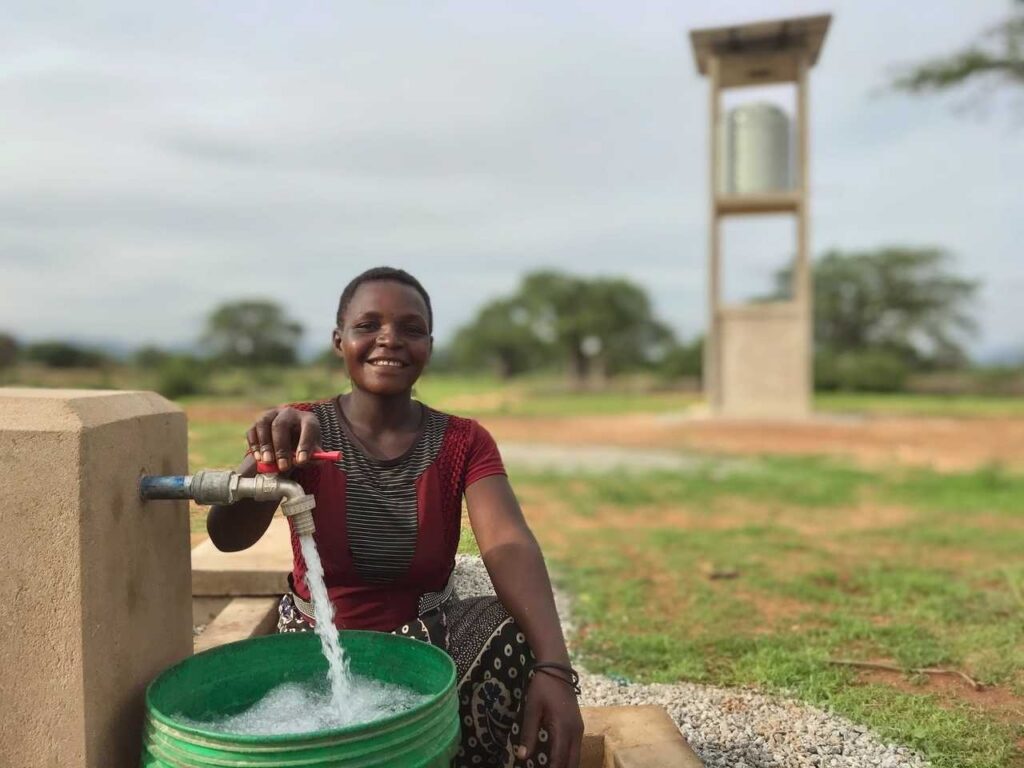
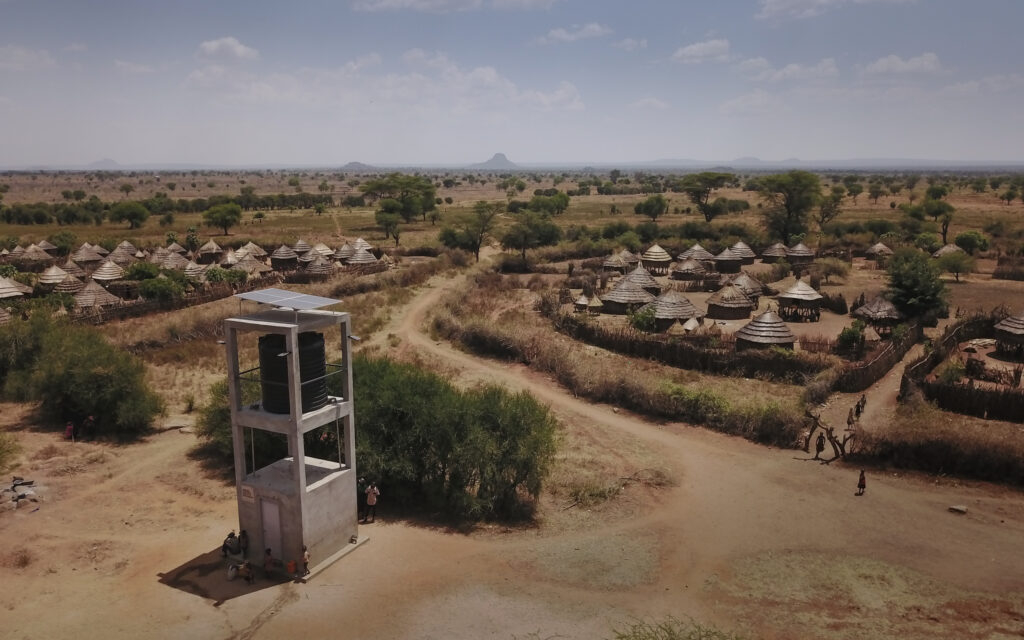
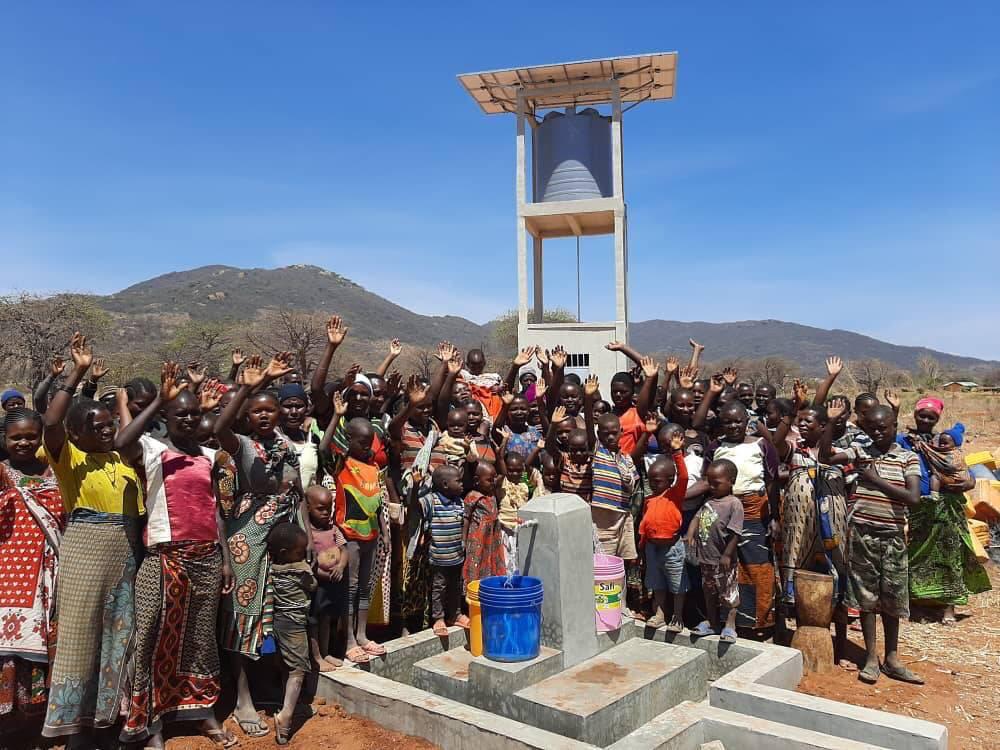
Innovation: Africa now uses solar energy to deliver clean water to remote communities across the continent. The first step involves drilling for usable groundwater. A solar-powered pump is installed and a 10-meter tower built to hold a 10,000-liter tank. From there, water flows by gravity to taps placed throughout the village.
Since 2008, this model has brought electricity and clean water to an estimated 6 million people in more than 1,400 villages across 10 African countries.
Learning in the field
Yaari is the first to admit that the journey has been marked by steep learning curves. “I failed many times,” she says. Reaching the point where Innovation: Africa can now deliver hundreds of projects per year took persistence. “We understood that the outcome is much, much bigger than the challenges we’re facing.”
Some early challenges were cultural. In Bagamoyo, Tanzania, Yaari discovered that the solar-powered lights she had installed in a school were not being used. Children were not allowed to use the electricity because families feared the new technology would undermine local witchcraft — the traditional systems of belief and authority in the village.
The experience reshaped her approach. Today, every project begins with conversations with community leaders to understand local beliefs and build trust.
I’ve seen the real impact of people not having access to water. And what bothers me the most is that the water exists just below their feet.
”
— Sivan Yaari, Founder and CEO of Innovation: Africa
share
The environments in which Innovation: Africa operates present another layer of complexity. The organization prioritizes villages far beyond the reach of national grids and major aid programs — communities that governments may not be able to help for another 10 to 20 years.
Often many hours’ drive from the nearest capital, these projects can take months to complete, with poor roads and limited infrastructure presenting the logistical challenge of transporting equipment to each location.
In some regions, the work can mean operating in active conflict zones. At the request of UNICEF, Innovation: Africa deployed systems in northern Cameroon, where villages were absorbing refugees fleeing Boko Haram, escalating local tensions over scarce water and medical services. In such cases, the projects required security as well as engineering — a reminder that access to energy and water is often inseparable from broader issues of stability and peace.
Empowering local ownership
Over time, Yaari came to see that the long-term success of each project depended as much on the people responsible for it as on the durability of the technology.
Each installation is managed by the community through an elected water committee responsible for overseeing day-to-day usage and routine maintenance. This embeds the project within the village, making it far more likely to endure, while a remote monitoring system allows Innovation: Africa to track equipment performance over time, plan longer-term maintenance and respond to larger-scale technical issues.
Residents are employed to maintain the systems locally, gaining practical technical skills and a recognized certification in the process. For many, the training becomes a pathway to employment beyond their own village, extending the project’s impact from access to water and electricity to long-term economic opportunity.
“I’m pleased to say that today, we have over 80 employees, most of them engineers coming from the tribes where we operate,” she says.
Sustaining the work
Despite its reach, Innovation: Africa remains dependent on one of the most traditional mechanisms in the nonprofit world: donations. The financial realities of the regions she serves prevent the solar water systems to be self-sustaining.
“We have chosen to work in the poorest of the poor communities,” she says, where residents cannot repay the upfront capital required for drilling and construction. A constant cycle of fundraising ultimately determines how many villages the organization can reach each year — a challenge she now hopes to tackle in conversation with fellow YPO members.
That challenge has been compounded by geopolitical realities. As an Israeli-founded organization, Innovation: Africa lost invitations to international forums and saw some funding opportunities disappear following the events of 7 October 2023 — ultimately forcing a reduction in the number of communities it could serve. Yaari responded by continuing the work on the ground. “For me, it’s not about the politics,” she says. “It’s about the humanitarian work.” Despite the setbacks, Innovation: Africa delivered water to more than 200 villages in 2024.
The next village
And yet, the scale already achieved is only the beginning. Millions of people across the continent still cannot access the water beneath their feet. “There are 400 million people across Africa without access to clean water,” Yaari says.
According to Yaari, it is a challenge the YPO community is uniquely positioned to help address — through ideas, collaboration and long-term thinking about financing impact at scale.
The model is proven, the technology is simple and the demand is vast.
But the image that drives her forward is the one from Karamoja: a young mother, too weak to walk for water, cradling an infant she cannot feed. That reality has not disappeared. It exists in countless communities across an entire continent.
The work is still to reach the next village.
Sleep: Most Underrated CEO Skill
Tuesday, March 10, 2026
Still think early mornings and late nights are signs of commitment and productivity? According to Australia’s leading sleep expert Olivia Arezzolo, that mindset is not only outdated – it is dangerous.
“Sleep is a strategy,” she says. “The real result? Maximizing human potential, peak performance, and the clarity and capacity to be the leader you wish to be and to create the legacy you wish to see.”
March is Sleep Awareness Month, and Arezzolo uses it as an opportunity to remind executives that sleep is one of the most underrated tools they can use to achieve their business goals.
The neuroscience of sleep
Arezzolo reframes sleep as a high-performance tool essential for leadership and long-term success. It restores the brain in ways no productivity tool can.
“In slow wave sleep, we see a 60% increase in glymphatic clearance of a toxic protein called beta-amyloid,” she explains, noting that beta-amyloid – basically a protein waste product in the brain – accumulation is associated with cognitive decline.
You may know ‘slow wave’ sleep as deep sleep. It’s during this portion of your sleep that your brain is able to flush out this toxin, enabling you to think clearly, respond rapidly and think precisely, Arezzolo adds.
Sleep also restores the prefrontal cortex, the brain’s executive control center. “As leaders, you need to have a strong prefrontal cortex, operating on all cylinders,” Arezzolo says. “It’s responsible for decision-making, judgment, concentration and focus.”
Sleep is not just a nice-to-have; it’s a necessity.
”
— Olivia Arezzolo, Australia’s leading sleep expert
share
The cost of neglect is surprisingly high. “With insufficient sleep, even just one night, cognitive performance can match someone with a blood alcohol level of 0.05,” she explains.
Beyond cognition, sleep is the foundation for emotional regulation. “With insufficient sleep, cortisol increases,” Arezzolo notes. High cortisol levels make “you feel anxious, wired, unable to switch off. You will also make stress-based decisions, oversight risks and have impaired judgment.”
For leaders navigating volatile markets or complex stakeholder environments, emotional composure is not optional. “Sleep is not just a nice-to-have; it’s a necessity,” she says.
Three pillars for high performers
Arezzolo’s elite sleep strategy is built on three pillars: protect the nights, protect the mornings and protect consistency.
“They will make the greatest impact on your sleep, your circadian rhythm, your energy levels and your capacity to lead,” she says.
Nighttime strategies focus on reducing light exposure, lowering temperature, eliminating late-night technology, and managing stimulants, alcohol and supplements.
Light is one of the most powerful factors affecting your sleep.
“In the two hours before bed and particularly during your critical circadian zone, which is 10 p.m. to 5 a.m., avoiding and minimizing light is absolutely key,” Arezzolo explains.
While low light helps release melatonin, a sleepiness hormone, bright light increases cortisol. High cortisol and high stress cause us to wake up.
It probably comes as no surprise, but technology compounds the problem. “Using social media just 30 minutes before bed increases your likelihood of waking by 62%” she says. “Using your phone in the last hour increases the likelihood of taking over an hour to fall asleep by 48%.”
Her advice is simple: Protect your final hour before bed. “Reading a book has been found to lower stress levels by 68%, with the effect starting in just six minutes,” she says. Progressive muscle relaxation and breathwork also calm the nervous system to fall asleep faster and reduce awakenings.
Temperature matters, too. A drop in core body temperature of about 1 degree supports melatonin production. To lower body temperature, cut out eating and exercise three hours before bedtime. A cool room temperature of 18 degrees Celsius (64 degrees Fahrenheit), 200-400 thread count natural fiber bedding and a cooling mattress topper can also help.
Protect the mornings
If darkness signals sleep, light signals wakefulness.
“The first 60 minutes is the most important time for you to get sunlight,” Arezzolo says.
She explains that the hour is optimal for activating your circadian system. The sunlight starts your melatonin timer. Roughly 14 hours later, your melatonin levels start rising to get your body ready for sleep.
For executives wanting to shift from night owl to morning strategist, jumpstarting that timer is critical. Morning exercise – even just 30 minutes of brisk walking or yoga – helps manage your circadian rhythm. The benefit, Arezzola says, is as much as two extra hours of sleep a week and – the best part – feeling alert in the morning and tired in the evening.
Protect consistency
Operational consistency is good for business, and sleep consistency is good for your brain. “Your circadian rhythm thrives on consistency,” Arezzolo says, advising to aim for “no more than a 30-minute variation in your sleep and wake times.”
Sleep duration matters. Most men require 7 to 9 hours; most women 7½-9½ hours, with additional needs during menstruation, pregnancy, perimenopause and menopause.
Sleep timing affects sleep quality. Slow wave (deep) sleep tends to be before 3 a.m.; after, we move into REM sleep. REM, or rapid eye movement, sleep is typically when we dream.
With insufficient sleep, even just one night, cognitive performance can match someone with a blood alcohol level of 0.05.
”
— Olivia Arezzolo, Australia’s leading sleep expert
share
“The best opportunity to have both sufficient slow wave sleep, which should be 20% of total sleep time, and REM sleep, which should be 25% of total sleep time, is by getting to bed at 10 p.m.,” she explains.
Sleep disruptions are bound to happen. On those days, 26-minute naps in a dark room before 3:30 p.m. can help. “NASA discovered that 26-minute naps could boost cognitive performance for astronauts by 34% and attention by 52%,” Arezzolo says.
When a longer nap is needed, keep it to 90 minutes. “That allows you to go from light sleep to deep sleep back into light sleep, and you wake up feeling refreshed,” she explains.
Supplements, stimulants and strategic recovery
Caffeine requires precision. “You can have two coffees, single shot only, before 2 p.m.,” Arezzolo advises. “Caffeine suppresses adenosine, a sleep-promoting compound. A 4 p.m. coffee can reduce sleep time by an hour and deep sleep activity by 20%.”
Sleep deprivation also increases caffeine sensitivity, amplifying anxiety and restlessness. Tea and matcha feature L-theanine, a calming amino acid that can counteract the stimulating effect of caffeine.
On the supplement front, creatine has emerged as a surprising cognitive ally. “When sleep deprived, creatine supplementation has been found to reduce mental fatigue by 25%,” she says.
In addition, magnesium supports gamma-aminobutyric acid (GABA) activation, calming the brain. Magnesium glycinate helps regulate temperatures for women navigating hormonal transitions and reduce wakings while magnesium L-threonate (MgT) helps people fall asleep.
Alcohol, on the other hand, is the anti-supplement.
“Even one drink can compromise sleep quality by 9%,” she says. “Moderate drinking, which according to researchers is three drinks, compromises your sleep by 24% and heavy drinking, which is five drinks, compromises your sleep by 39%.”
Mastering sleep
Arezzolo categorizes leaders into three groups: the sleepless (less than five hours, caffeine-dependent), the apprentice (inconsistent sleepers) and the masters.
“Sleep is a skill to master,” she advises.
Protecting nights, mornings and consistency helps create the conditions to become an elite sleeper and harness sleep hygiene effectively. For leaders, the benefits are immense: clearer thinking, sharper judgment and sustainable productivity.
As Sleep Awareness Month reminds us, the future of leadership may not belong to those who work the longest hours but to those who recover the smartest.
Wellness Is a Leadership Skill — ‘Dr. Mao’ Shares How to Be Your Own Health Guide
Thursday, March 5, 2026
When Mao Shing Ni was 6 years old, he fell from the rooftop of his family’s three-story home in Taiwan, slipping into a month-long coma and suffering a spinal cord injury and brain damage. Doctors warned his family that he would either spend his life in a vegetative state or in a wheelchair.
Neither prediction came true, thanks largely to his father, a traditional Chinese medicine (TCM) doctor, who treated him daily with acupuncture, bitter herbal teas and patient rehabilitation.
“Chinese medicine saved my life,” he says. “And that had a huge impact on me when it came time to choose my path.”
Ni chose to follow his ancestors into the family profession of TCM, making him the 38th generation of his family to do so.
“I was inspired to be able to offer hope to patients who otherwise would not have any,” he says. Chinese medicine is very different from Western medicine “in that we believe the body possesses natural healing capabilities,” he explains. “Our job as doctors is to awaken that healing capability, and then to guide it. So, our work really is about empowering patients’ innate healing capabilities.”
A wellness prescription
For the past 40 years, that has been his calling: guiding patients back to health — and restoring hope when it’s in short supply.
Known as “Dr. Mao” to his patients and staff, Ni has carried out that mission in many roles — as a practitioner at his clinic, Tao of Wellness in Santa Monica, California, USA; as past president of Yo San University, the institution named for his grandfather; as the author of multiple bestselling books on health and wellness, including the popular “Secrets of Longevity” in 22 languages; and as a nationally recognized voice on longevity. Across each platform, his focus remains the same — helping people live better — not just longer.
Get the best doctors on your team, but who’s driving the team? You are.
”
— Mao Shing Ni, traditional Chinese medicine practitioner
share
In March, the YPO member will visit Bangkok to accept his Best of the Best Award for his YPO chapter and to participate in a YPO Thought Leadership Advisors (TLA) panel. He will discuss how to extend life, drawing on practical wisdom from four decades at the forefront of integrative medicine and longevity science. He will join other leading experts offering deep insights into wellness best practices, shared exclusively for chief executives on YPO’s video platform, The Source.
“Ultimately, everyone’s looking for longevity — better quality of life, for sure, and living as long as you can, of course,” he says.
Lead your health team
Ni urges leaders to take charge of — and not outsource — their health.
“A lot of people surrender their health care and their health to the doctors,” he says. “But that’s not how it should be. This is your life. Nobody knows your health better than you.”
It’s clear to Ni that longevity is a leadership skill — one that CEOs must prioritize.
“Of course, get the best doctors on your team, but who’s driving the team? You are,” he says.
For lasting vitality, Ni outlines a four-point longevity playbook with simple, actionable steps focused on the “tried and true,” not the latest trends, to guide leaders to reclaim their health and sustain it long term.
Step 1:Eat less, live longer.
It’s his first and most important principle. “Because we’re well off, we can afford to go to a steakhouse and eat a 16-ounce porterhouse steak,” he says. “But the question is, should you?”
To help people eat healthier, Ni authored a bestselling cookbook, “Dr. Mao’s Secrets of Longevity Cookbook: Eat to Thrive, Live Long, and Be Healthy,” where he interviewed centenarians around the world, gathering their favorite recipes and their top habits for good health.
Step 2: Move regularly. Movement is medicine.
In Chinese medicine, the concept of energy is central to how the body functions and heals. “Energy carries all the signals throughout the body,” he says.
Blood follows qi — the life force or energy — making circulation essential for delivering nutrients and oxygen while removing waste products. Regular movement, therefore, becomes critical to health. Regular is the key word here. Going to the gym first thing in the morning and then sitting for eight hours undermines the benefits of exercise.
“Sitting for eight hours is as bad as smoking a pack of cigarettes,” he says.
If you sit at a desk for most of your day, Ni recommends standing and moving every hour. He advises short walks, doing 10 squats or even jumping rope. It doesn’t have to be intense to keep energy and blood flowing consistently throughout the day.
“I’ve met centenarians around the world who’ve never gone to the gym,” he says. “How do they live to be 100? They walk everywhere.”
Step 3: Reduce stress. Stress ages us faster than time.
Ni calls stress a “silent killer,” connecting chronic stress to cortisol, inflammation and accelerated aging. And the reality is, chief executives live in a world of constant demands and urgent needs, keeping their bodies in constant survival mode, with adrenaline and cortisol pumping.
He urges leaders to listen to their body and create moments to reduce stress, like with meditation, breath work or reflective journaling.
“I look at peace as a health strategy,” Ni says.
To find that peace, leaders must regulate their nervous system because, he explains, “If you don’t, it will regulate you and cause all kinds of functions to malfunction.”
As a YPO certified forum facilitator, Ni reminds his CEO peers of the simple forum best practice — starting every meeting with a centering exercise, like a breathing practice or visualization. And those moments of peace “change you and everyone.”
His hope is that the leaders continue to use those techniques every day in their life so that they can speak and act from a place of clarity, not emotionality.
Step 4:Treat longevity as legacy.
“It’s not what you build. It’s the life force that built it,” he says, adding, “It’s your life force that allows you to continue to build.”
Leaders need to eliminate what is extraneous and draining in their lives, so they can live a focused, purpose-filled life. Doing more just to accumulate more is not a path to longevity.
Ni says, leaders need to ask themselves: Is it worth it — exchanging my life force for wealth? “Because on every deathbed, no one will say, ‘I regret not spending more time to make more money,’” he says.
The answer
For Ni, the answer to longevity is following the path of simplicity. He watched the habits and studied the choices of over 100 centenarians and found it’s not money giving them this longevity — it’s the simplicity they choose for their lives. Simple but nourishing foods. Movement. Peace. Legacy.
“They are vital. They are healthy,” he says. “And they can still dispense wisdom and advice with clarity.”
It’s really this simple. “Longevity requires no fancy things,” Ni says.
Toward the Fusion Frontier — How Yohei Kiguchi is Building the Materials that Could Power Fusion
Tuesday, March 3, 2026
Many founders would view building a market-leading company as an end goal. For YPO member Yohei Kiguchi, Founder & CEO, LiCUBE, it was a signal to aim higher.
Following an engineering doctorate at Cambridge, Kiguchi set out to build Japan’s largest EV-charging network. In just few short years, he achieved exactly that — scaling it into a billion-dollar, publicly listed business and retiring to the French Riviera at the ripe old age of 32.
By many people’s standards, he had succeeded.
But for Yohei, it didn’t feel that way for long. The luxury lifestyle of Monaco soon began to feel hollow. He craved a fresh challenge. He needed a new project. Something bigger.
That hunger led him to the Deal Tank stage at YPO’s 2025 Global Business Summit with a very different kind of idea — one that moved beyond national scale, was global in scope and guided by a vision for humanity’s future.
The idea that won the room
Kiguchi’s idea ultimately rose to the top of more than 100 submitted pitches, was selected as one of three finalists and was voted the winner by his YPO peers at the summit.
He tells the story with an easy, self-effacing humor. During his presentation, one judge kept asking unusually sharp, in-depth technical questions. Later he learned that the man in the hat and glasses who had spent all that time grilling him was actor, investor and YPO Deal Tank judge Ashton Kutcher. Maybe this meant he had a shot.
YPO gives immediate international access. I think that’s a very tangible outcome.
”
— Yohei Kiguchi
share
“That was the first moment I realized I might be selected,” he recalls. “I was about to go out and get a coffee. But then I thought, my name might get called. I better stay!”
Kiguchi’s pitch centered on his new startup, LiCUBE — a deep-tech company developing ultra-high-purity lithium materials for frontier industries, from next-generation batteries and semiconductors to space exploration and, longer term, the ultimate end goal of enabling nuclear fusion.
The spark
To understand where that idea came from, we have to go back. Kiguchi founded his previous company in 2015 with the intention of building the largest electric vehicle charging network in Japan — and that is what he did.
“The vision was too small,” he says. “I’m very proud of that company. But I wanted to dream bigger.”
His early success and retiring to Monaco placed him among top-tier founders and CEOs.
In these circles, conversations were not about maintaining success but about defining the next great leaps in human progress.
A conversation with a tech CEO Kiguchi describes as a “mentor” turned to artificial intelligence (AI), quantum computing and nuclear fusion, what Kiguchi calls the three “last human frontiers.”
The question for Kiguchi was not which frontier sounded most ambitious, but where he could meaningfully contribute. AI and quantum computing were exciting, but not his domain. “I’m an energy guy,” he says. “I understand how nuclear fusion works. That’s something I can do.” He is, at heart, an engineer — grounded in energy systems and infrastructure. Fusion, with its promise of near-limitless clean power, felt like a frontier he could help advance.
Curiosity led him to ITER, the international nuclear fusion research project just outside Marseille, France — a two- to three-hour drive from Monaco. While others might have chosen to spend their time relaxing on the Riviera, Kiguchi preferred to make regular trips to the research center, looking, he admits, a little out of place as he pulled up in his Monaco-plated Ferrari to spend the day talking science with ITER’s engineers and physicists. The contrast was not lost on him. “I’m not sure,” he laughs, “but I might have been the only one doing that.”
What he learned surprised him. The bottleneck, he realized, was not simply the complexity of building fusion reactors. It was fuel. Specifically, lithium-6 — a rare isotope required to produce the tritium that powers most fusion reactor designs.
Despite the vast engineering effort poured into reactor design, the supply of lithium-6 was limited and heavily concentrated. Much of the world’s production capability sits in China and Russia, leaving little scalable supply elsewhere. For a technology intended to power the future, the fuel itself is both scarce and strategically constrained.
Enter LiCUBE
Rather than attempting to compete directly in reactor design, Kiguchi turned his attention to the overlooked fuel supply chain.
In Japan, researchers had been working quietly for years on advanced lithium isotope separation technologies. The science was there, but it lacked scale, capital and a clear commercial mandate. Monetization was still 10 to 20 years away — too distant for most investors and institutions.
The vision was too small … I wanted to dream bigger.
”
— Yohei Kiguchi
share
For Kiguchi, that was precisely the point. “To win this game,” he says, “first, as a CEO, we define the game. We set the goal, we form the team and we run for that.”
That’s what he did. He committed to funding the entire research team himself, freeing them from the uncertainty of grant cycles and government budgets and giving the work a clear commercial direction.
That decision became LiCUBE — a company built to industrialize the science and bring it to market.
“Starlink before Mars”
Without the rare lithium-6, most fusion designs cannot run. That is the long game.
“We want to eventually make the lithium-6 isotope for nuclear fusion,” Kiguchi says. “That’s a gamechanger for human history.” But the 10–20-year timeline, he admits, is uncertain. “Maybe longer. We can’t wait for that.”
LiCUBE’s current focus is on developing “4N” lithium — meaning 99.99% purity, the “four nines” that give the material its name.
This is the ultra-pure form of lithium used in advanced industries, from solid-state batteries and semiconductors to space systems.
“Like how Elon Musk gave us Starlink before Mars,” he explains. If lithium-6 is Mars, then 4N lithium is Starlink — the interim product that’s building capability, credibility and revenue now, while keeping the long horizon firmly in sight.
That YPO factor
Kiguchi brought this strategy of aiming for lithium-6 as the long-term horizon, while focusing on 4N as the short-term commercial bridge to YPO’s GBS Deal Tank.
GBS’ value to Kiguchi is not just financial. It is the access it brings — to peers, to conversation and to insight that’s candid, technical and grounded in real-world experience.
“YPO people are usually very well connected locally,” he says. “Their value is not only in themselves — it’s having a whole community behind them.” In a sector shaped by geopolitics as much as engineering, that kind of embedded access matters.
In the weeks after the summit, he says he held more than 30 follow-up conversations with YPO members. Some explored investment. Others offered regional and operational insight.
“YPO gives immediate international access,” he adds. “I think that’s a very tangible outcome.”
His advice to other members is simple: Show up and engage. Not every conversation needs to generate immediate capital. The relationships matter. The mission is long-term. He plans to travel to Türkiye in November for GBS 2026.
To win this game, first, as a CEO, we define the game. We set the goal, we form the team and we run for that.
”
— Yohei Kiguchi
share
And what does a CEO focused on fusion-era materials do to unwind? Kiguchi laughs at the question. Beyond the Monaco drives to fusion labs and long conversations about isotopes, there is a simpler answer.
Mid-interview, he disappears from the screen, returning moments later with his eight-year-old French bulldog, Lon, holding her up to the camera with obvious pride.
For all the talk of lithium-6 and long-term, space age horizons, there is something grounding in that image — a reminder that even those chasing the “last human frontiers” remain, at heart, no different to any of us.
The fusion breakthrough may be decades away. The work, however, has firmly begun.
YPO members can join the GBS 2026 in Istanbul by registering here.