Deep into the Colombian jungle, Christoph von Toggenburg was on a boat, with just his driver as his companion, when he came upon hundreds of armed fighters from the Revolutionary Armed Forces of Colombia (FARC) gathered among the trees.
“It was really like in the movies, Rambo-style,” he says of the scene.
Von Toggenburg had come to negotiate humanitarian access for thousands of civilians displaced by fighting between government and rebel forces.
He’d been warned that the elusive commander he needed to speak with was aggressive and dangerous. When he finally stood in front of him, the warning proved correct as the man immediately started screaming at him. “He was totally out of control, and I thought, ‘OK, now I’m going to die here.’”
But as the shouting continued, von Toggenburg realized the commander needed what he calls an “emotional debrief.” So rather than interrupt or react, he listened. After 15 minutes, the commander ran out of breath, giving von Toggenburg a chance to speak. Two hours later, the two men were sitting in the jungle drinking a beer together. The following day, emergency aid deliveries began.
Most CEOs will never have to negotiate under these conditions. But von Toggenburg built a career working in conflict zones around the world for international humanitarian organizations.
Board member of YPO’s Peace Action Network, Group Head of Human Rights and Social Impact (CSR) at Holcim Ltd., Global Leadership Fellow at the World Economic Forum, and author of “War, Love, Hope”, he believes the qualities that moved some of his most treacherous experiences forward — self-regulation, patience, humility and a willingness to listen — are equally valuable to anyone navigating conflict.
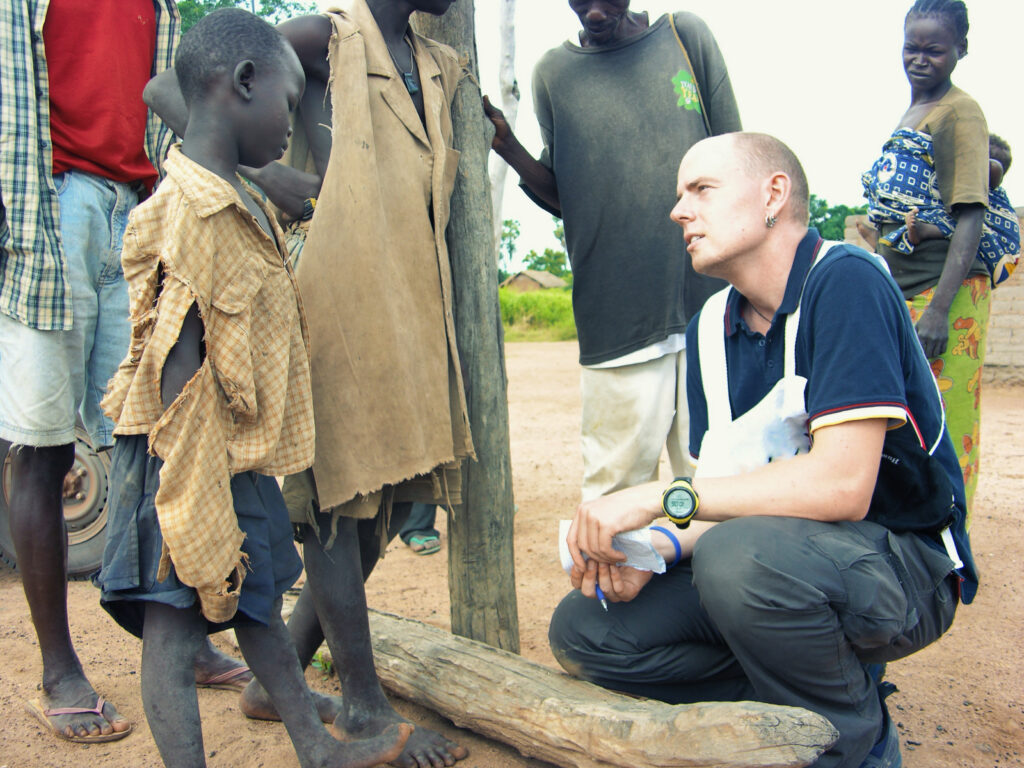
In honor of International Day of Peace, recognized worldwide on 21 September, von Toggenburg shares some of his more intrepid negotiation stories to highlight how all leaders can build trust and create progress in an increasingly polarized world.
Before you can influence, you must self-regulate
While intelligence and experience matter when coming to the negotiation table, neither is enough if you can’t manage your own reaction when emotions run high — and they usually do, says von Toggenburg.
— Christoph von Toggenburg share
He admits he was terrified that day in the Colombian jungle. But he knew that acting out of fear or anger would only escalate the encounter, so he held back. He’s quick to point out that this wasn’t caving in. It was restraint, not surrender. And that allowed him to remain present until a real conversation could happen.
“The key question you ask yourself as a leader is, am I going there just to win? Or am I going there to start a dialogue?” he says. “If your only mindset is, I want to win this thing, then you’re not preparing for a negotiation; you’re preparing for a battle. And the risk is then very high that you either win the battle, at whatever cost it comes, or the outcome is going to be negative, and you achieve nothing.”
Get curious about the other side
Once in the Central African Republic, von Toggenburg had to negotiate with a man they called “The Butcher” who had been leading the killing and torturing of many.
He quickly realized that a formal meeting was not going to be helpful, so he changed the setting and took The Butcher to dinner. This decision did not mean he agreed with or excused any of his actions, von Toggenburg explains. But it did give him a chance to understand the man behind the name, to find a way to connect.
“This guy was full of himself, very ego-driven,” he says. “So, I appealed more to his sense of leadership and what a great leader would and would not do. And a great leader would not kill and torture civilians.”
The next day, the torture stopped.
“You do not have to agree with someone to understand what matters to them, or to use that understanding to move closer to your goal,” he says. “You must humanize who you have in front of you.” That might mean, he adds, offering the other person a path forward that allows them to “save face” publicly.
— Christoph von Toggenburg share
In the day-to-day conflicts most leaders face, where right and wrong are rarely as stark, that idea cuts both ways: To understand the person across the table, von Toggenburg argues, you must challenge your own assumptions. What you learn might reveal common ground, or simply a better way forward.
Keep showing up
During time spent on the ground during a civil war in Nepal, von Toggenburg was approached by a man whose daughter had been kidnapped by rebels. Another young woman accused of being a spy who had been with her had already been killed.
“My immediate goal with them was not even about release. First and foremost, she needed to stay alive,” he says.
The negotiations lasted more than a year. Von Toggenburg found himself returning to the mountains again and again, insisting on seeing the woman in person to confirm she was alive.
“The important thing on this journey was to keep the stamina and keep on showing up,” he says.
Not reaching an agreement after the first, second, third or fourth meeting did not mean it was impossible. Each encounter, von Toggenburg explains, kept the channel open and allowed trust to build until she was eventually released and returned to her family.
The same principle can apply in the boardroom. Leaders might not always be met with enthusiasm or agreement when introducing a new plan or idea. They must have patience and build trust and alignment along the way to their end goal.
“Peace is always a process, and it’s an ongoing process,” von Toggenburg says. “People must be brought along on the journey.”
Make room for an imperfect win
Of course, a stalled negotiation can make leaders fixate on everything that has not happened: the agreements not reached, the positions unchanged, the outcomes not achieved. Von Toggenburg argues this is precisely when leaders need to stay open-minded.
“It comes back to one very core element of negotiations: reframe the problem, reframe the issue,” he says. “If we only see the problems, then we have a problem.”
Reframing does not mean pretending the problem is smaller than it is. It means looking for what has moved, and what might still be possible.
“Maybe it’s not 100% of my goal, maybe it’s 70% of my goal, but 70% is better than 0%, you know?” he says.
Sometimes, progress is simply preserving the possibility of more progress.
“Sometimes, the fact that the channel stays open is a sign for hope,” he says. “And as a leader, you become the creator of that hope.”
In our polarized world where people often exchange opinions rather than engage in dialogue, leaders cannot promise that every conflict will be resolved. They can, however, listen to someone with whom they disagree, come back when the previous conversation stalls, take a small victory when that’s all that’s available. And, perhaps most importantly, make sure there can still be another conversation tomorrow.
For von Toggenburg, that is what peace looks like in practice.
YPO networks are virtual, interest-based communities where members connect with peers who share their professional and personal interests. YPO members Interested in the Peace Action Network can explore it on YPO Connect.