For Brett Johnson, the FIFA World Cup is more than a tournament. It’s a window into football — or soccer, for our readers in the United States — and its unique power to unite communities, shape economies and define the future of the most popular sport on Earth.
We are deep into extra time. World Cup debutant Cape Verde, the smallest country ever to reach the knockout stages, has held the current world champions at bay for 90 minutes, forcing this remarkable match into extra time.
Argentina has taken the lead again in the 93rd minute.
But Cape Verde is not defeated yet. Heroic defending and a superhuman goalkeeper have kept the dream alive. Then, with 102 minutes on the clock, Sidny Lopes Cabral receives the ball out wide. He passes it inside, receives it back, skips over a challenge from the Argentine defender – he could go down, but stays on his feet – checks his stride, sets himself, then releases a sublime long-range effort from outside the box.
The ball seems to hang in the humid Miami air for a magical few moments as an entire stadium of 64,000 fans holds its breath. It traces a long arc over the defenders’ heads, beyond the goalkeeper and into the top corner.
After 103 minutes, it’s 2-2.
Argentina will go on to clinch a 3-2 victory. But this is a goal that will live forever.
More than 4,000 miles away, it is after one o’clock in the morning in Cardiff, Wales. A group of English friends on a bachelor weekend are crowded around a television at the end of a bar. Cabral’s shot finds the top corner, the net ripples with Cape Verde’s second goal, and the entire place erupts.
What is it about the World Cup that makes a bunch of English guys on a night out in Wales care so deeply about a game happening in Florida, between two countries half a world away, to which they have no immediate ties?
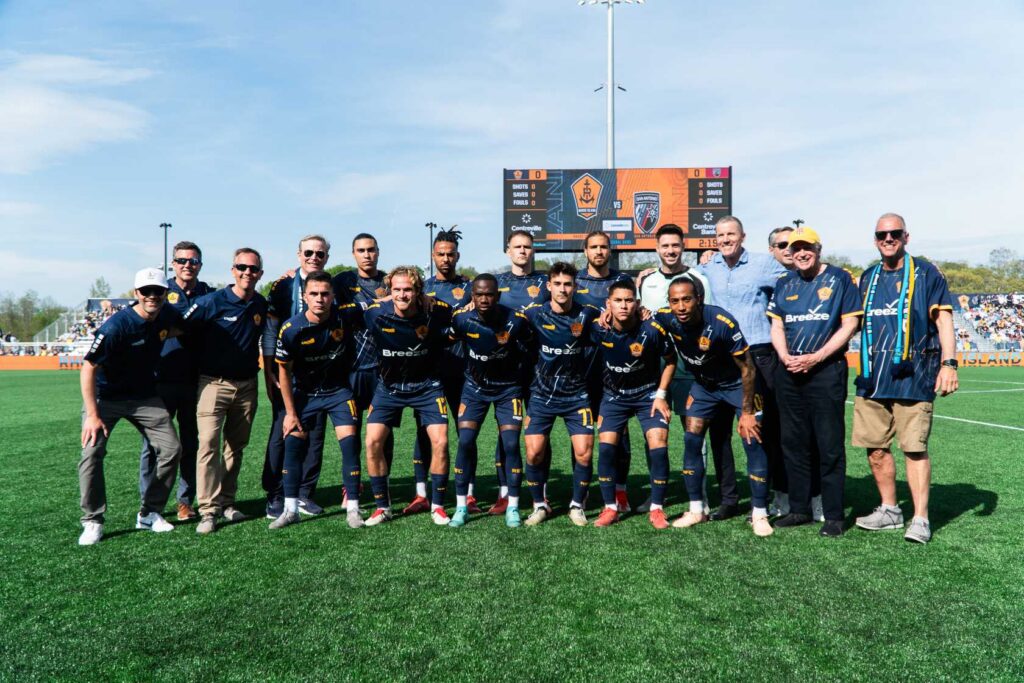
According to YPO member Brett Johnson — owner of USL Championship club Rhode Island FC and English Premier League side Ipswich Town FC — that question goes to the very heart of what makes the FIFA World Cup unlike any other sporting event on Earth.
“Beyond compare”
There are, after all, plenty of global stage sporting events. The Olympics. Super Bowl. Wimbledon. Each attracts vast audiences that transcend borders. Yet Johnson believes the FIFA World Cup stands apart from them all.
“It’s beyond compare,” he says. “I think it’s the greatest [sporting event] in the word by some margin. And the fact that it really is the World’s Cup ….”
Even if most Americans still call it soccer, football, he argues, is the only truly global sport. “With the greatest of respect to cricket, every single country plays this sport,” Johnson says “Every single country has an opportunity to field a team and qualify for these finals.”
— Brett Johnson, owner of USL Championship club Rhode Island FC and English Premier League side Ipswich Town FC share
And the 2026 tournament’s expansion to 48 teams has only strengthened that sense of possibility. The additional 16 teams created an extra knock-out round, with the eight best third-placed teams also advancing from the group stage.
Critics feared a larger tournament would dilute the quality, but some of its most compelling matches have come from teams many expected to struggle.
“It’s clearly proven to be the right move,” Johnson says. “Some of the best games in the tournament were the ones everyone was worried about.”
Cape Verde’s extraordinary run is the clearest example. “I don’t know if there’s been a sporting event that’s had a more positive impact on a country than what this World Cup has meant to Cape Verde.”
Before this summer, many people wouldn’t have realized Cape Verde was even its own country. Now, Johnson argues, millions have been introduced to the island nation through its football.
A transformative tournament
If the World Cup can change the fortunes of the nations taking part, Johnson believes it can be just as transformative for those that host it. For more than a month, North America became the world’s meeting place as millions of supporters from every corner of the globe flocked to stadiums, city streets and fan zones in their national colors, turning host cities into a month-long festival of football, culture and shared celebration.
“The tournament’s just been so incredible,” Johnson says. “It’s exactly what the world needs. Seeing the sea of humanity — the Dutch fans, the Scottish fans, the Cape Verdean fans — it’s example after example of what makes this sporting event the best in the world and truly unique.”
After the celebrations end, Johnson believes the tournament’s greatest legacy will be the new generation of supporters it creates in the United States. Millions of Americans have now experienced football at its biggest and best for the first time, and he believes many will become lifelong followers of the game.
“In the United States, it will clearly hit a whole other level,” he says. “The amount of people who will now be converts to the beautiful game will go to another level.”
For Johnson, that transformation extends far beyond the final whistle. As Americans discover football’s biggest stars and breakout players, many will begin following the clubs those players represent, while a new generation of children will be inspired to choose it over other sports. With the FIFA Women’s World Cup arriving in North America next year, he believes that momentum will only continue to build.
“America is the last frontier,” Johnson says. “There’s still so many Americans who don’t have it as anywhere close to their top sport, and that’ll start to change.”
Changing the game
Beyond inspiring new supporters, the World Cup also offers a glimpse of where the sport itself is heading. Many of the innovations that define the modern game — including goal-line technology, referees’ vanishing spray and Video Assistant Referee (VAR) — first came to global prominence on football’s biggest stage before becoming familiar features of domestic competitions around the world. Johnson believes this summer’s tournament may ultimately be remembered for a different kind of innovation.
This year’s tournament offered fresh evidence of that evolution. But this time, the shift appears to be less about technology than presentation, structure and the growing influence of the American sports model.
— Brett Johnson, owner of USL Championship club Rhode Island FC and English Premier League side Ipswich Town FC share
The final itself reflected that influence, with an extended halftime break featuring a star-studded musical performance more reminiscent of the Super Bowl than a traditional football match. Before kickoff, actor Tom Cruise addressed the fans. All of this ‘extra’ underlines FIFA’s growing willingness to embrace entertainment alongside elite competition.
While those moments may ultimately prove to be little more than window dressing, the tournament’s most significant innovation came in the form of the newly introduced hydration breaks. Presented primarily as a player welfare measure to combat the North American summer heat, they also created additional commercial inventory for broadcasters while giving coaches an unprecedented opportunity to influence matches during play. In effect, they nudged football a little closer to the quarter-by-quarter rhythm that has long defined American sports.
Johnson acknowledges the commercial logic behind those changes but admits they come with trade-offs. “I take an attitude where anything that slows the game down, I’m against,” he says, arguing that football’s uninterrupted flow is one of its defining strengths.
Yet, as both a club owner and investor, he also recognizes the commercial realities driving the sport’s evolution. “It is a business at the end of the day,” he says. “English fans will hate it … but now that broadcasters are seeing the additional advertising revenue, that might be where it’s too difficult to put the toothpaste back in the tube.”
Beyond the final whistle
The World Cup may be football’s greatest stage, but its legacy is ultimately carried forward by the local clubs and communities that sustain the game between tournaments. For Johnson, a successful football club becomes far more than a sporting institution. It can act as a catalyst for jobs, investment, housing and wider regeneration, while bringing new energy to the communities it serves.
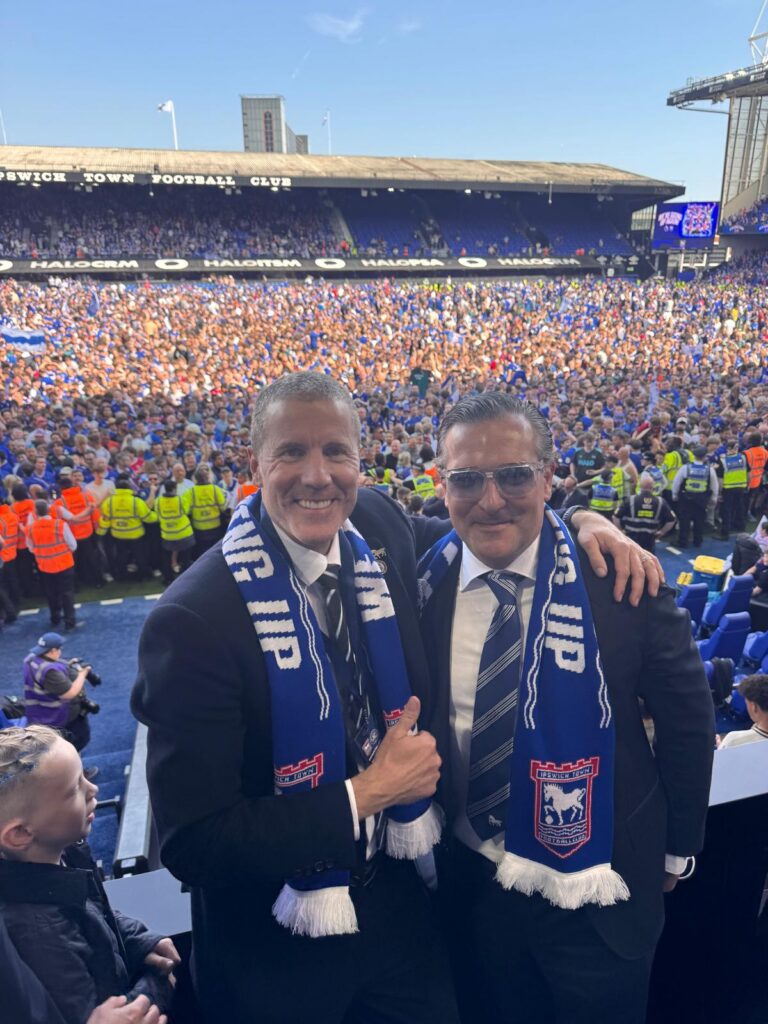
He has seen that firsthand in both England and the United States. Since his ownership group acquired Suffolk’s Ipswich Town, the club has returned to the Premier League after more than two decades away.
“I do treat it like a business. I’m looking for a return on investment, but the catalytic element of social and economic impact is staggering,” he says. “The turn of fortune of Ipswich since we’ve owned it, bringing it back to the Premier League, is staggering.”
He also points to Rhode Island FC’s new USD140 million stadium, which has become a year-round destination for sport, concerts and live entertainment, creating jobs and attracting wider investment to the area.
“It’s become the sports and entertainment capital for southern New England,” he says. “That’s not even touching on the amount of jobs that we’ve created, the housing that we’re starting to build. The economic flywheel of social and economic impact is staggering when done right and with humility as well.”
For Johnson, success is measured not only by what happens on the pitch, but by the lasting difference a club can make to the people and places around it.
And perhaps that is the real legacy of the FIFA World Cup. Somewhere, in a crowded sports bar in Cardiff, a living room in Los Angeles or a café in Cape Verde, someone will have watched football for the very first time this summer. Some will become lifelong supporters. Some will fall in love with a club. A few may even build careers or businesses around the game.
Others, like Brett Johnson, will come to see football as more than a sport: a viable asset class capable of generating financial returns while transforming communities. The final whistle may have brought the tournament to an end, but its impact is only just beginning.
Brett Johnson joined us for the 2025 YPO Global Business Summit in LA. YPO members: if you’d like to connect with leaders like Brett and gain practical insights, meaningful connections and new opportunities for growth, register for the 2026 YPO Global Business Summit here.