Sivan Yaari is an honoree for the 2026 YPO Global Impact Award. The award focuses on YPO members making impact outside the organization that is both sustainable and scalable, affecting people, prosperity, peace or our planet.
It is 2017. A young mother sits on the floor of her home in a remote part of Karamoja, northern Uganda. She is 21. Her last meal was days ago. She cannot make the 15-kilometer walk to the nearest water. In her arms she cradles her baby.
The child, too weak to cry, searches for milk that just isn’t there.
Her body is spent. She has nothing left to give.
“I cannot feed my baby.” Her pleading words come through a translator, but the truth is already visible in the baby’s glazed, unfocused eyes.
YPO member Sivan Yaari is panicked.
“That was the first time I realized we have to move fast,” Yaari recalls, describing the hurried six-hour drive south to pack a van with beans, maize and water. “By the time I came back, it was too late.”
“I’ve seen the real impact of people not having access to clean water,” she says, “and what bothers me most is that the water exists just below their feet.”
Beneath the village, Yaari knows, there is water — enough to sustain everyone here. But with nothing to power a pump, there is no way to bring that water to the surface, no way to grow food, no way for a community to sustain itself.
The crisis is not water, Yaari explains. It is energy. Without it, everything else — health, food, education, economic life — remains out of reach.
It is this reality Yaari, founder and CEO of Innovation: Africa, has spent nearly two decades working to change — delivering the infrastructure that allows remote communities across Africa to lift water, grow food and become self-sufficient.
Origins
Born in Israel, Yaari’s family moved to France when she was 12. After returning to Israel to complete her military service, at 20 she found herself overseeing quality control and preparing exports for a denim factory in Madagascar.
The experience was transformative. On weekends, she travelled throughout the country. “I spent quite some time in the villages,” she says.
What she saw changed her understanding of hardship. Growing up with an unemployed father and later spending long hours helping in her family’s small pizza shop in a local market, Yaari thought she understood what it meant to struggle. But in rural Madagascar, she saw communities where survival depended entirely on what could be grown or carried by hand.
“Really, what bothered me was seeing the women and the children, especially girls, waking up early in the morning to walk for hours just to come back with contaminated water — literally dirty water.”
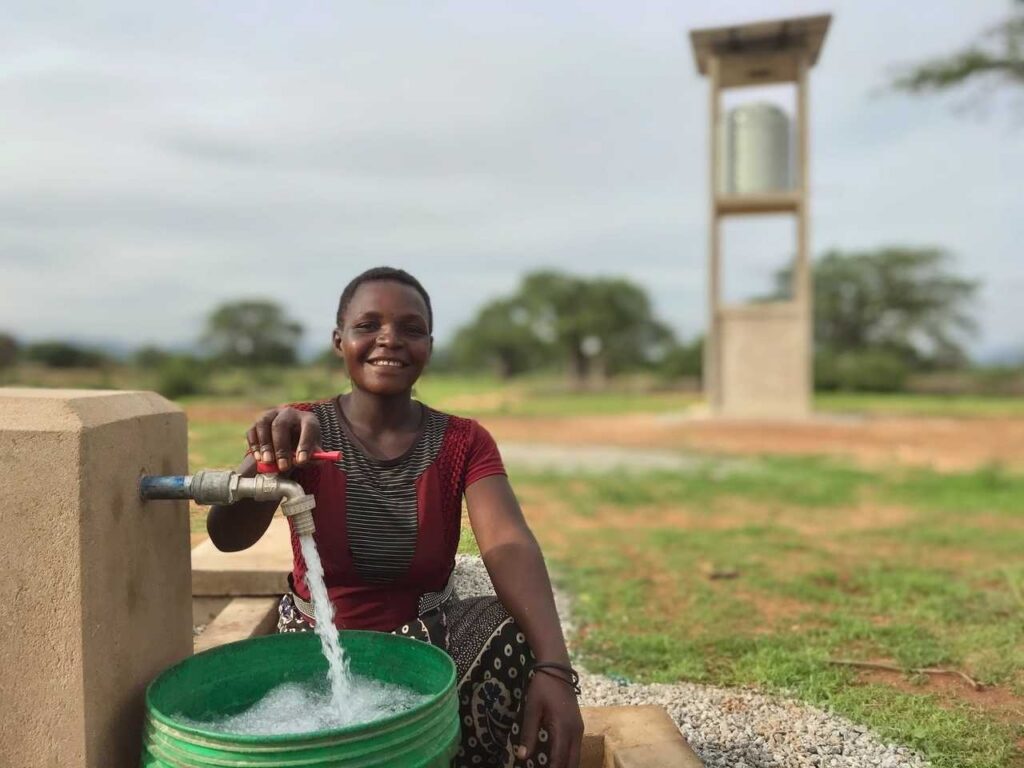
It was her first exposure to a level of deprivation caused by the complete absence of systems most of the world takes for granted.
Her work soon took her to other African countries. Everywhere she went, Yaari saw the same pattern: communities without access to electricity or clean water. “People were getting sick by drinking dirty water. People were going to the medical centers where there were no doctors, because there was no electricity. The children were not going to school, because they had to go and search for water.”
That’s when it hit her. “Energy is the key,” she says. “Because where there is no energy, people are still living in poverty.”
Leading the change
Determined to be part of the solution, Yaari relocated to the United States to pursue a master’s degree in energy at Columbia University. In her first year, she returned to Africa with two solar panels. Installed on the roof of a rural medical center, they powered light bulbs and a small refrigerator — enough to store vaccines and keep the clinic open after dark.
— Sivan Yaari, Founder and CEO of Innovation: Africa share
The next day, lines of women and children were already waiting for treatment. For Yaari, it demonstrated how reliable electricity could transform access to basic services – overnight. “So easy, so simple, so reliable,” she says.
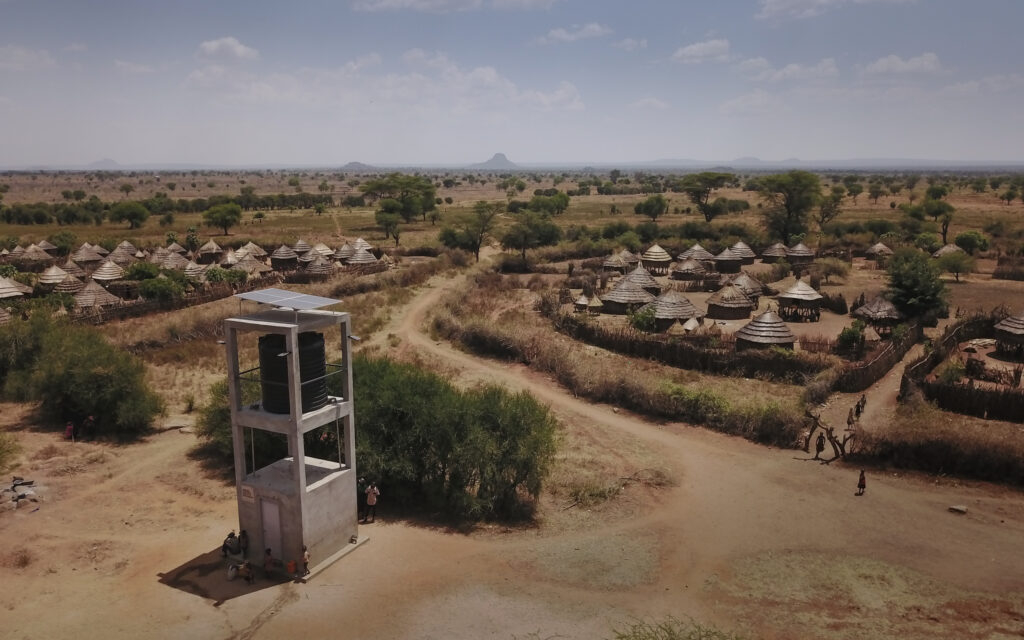
Innovation: Africa now uses solar energy to deliver clean water to remote communities across the continent. The first step involves drilling for usable groundwater. A solar-powered pump is installed and a 10-meter tower built to hold a 10,000-liter tank. From there, water flows by gravity to taps placed throughout the village.
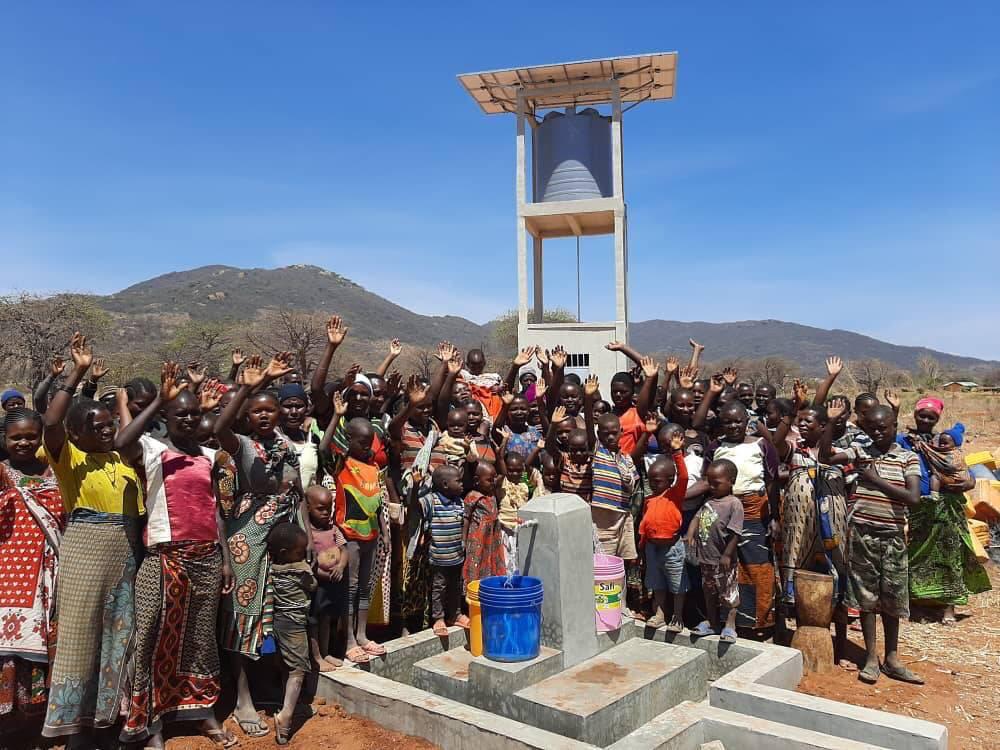
Since 2008, this model has brought electricity and clean water to an estimated 6 million people in more than 1,400 villages across 10 African countries.
Learning in the field
Yaari is the first to admit that the journey has been marked by steep learning curves. “I failed many times,” she says. Reaching the point where Innovation: Africa can now deliver hundreds of projects per year took persistence. “We understood that the outcome is much, much bigger than the challenges we’re facing.”
Some early challenges were cultural. In Bagamoyo, Tanzania, Yaari discovered that the solar-powered lights she had installed in a school were not being used. Children were not allowed to use the electricity because families feared the new technology would undermine local witchcraft — the traditional systems of belief and authority in the village.
The experience reshaped her approach. Today, every project begins with conversations with community leaders to understand local beliefs and build trust.
— Sivan Yaari, Founder and CEO of Innovation: Africa share
The environments in which Innovation: Africa operates present another layer of complexity. The organization prioritizes villages far beyond the reach of national grids and major aid programs — communities that governments may not be able to help for another 10 to 20 years.
Often many hours’ drive from the nearest capital, these projects can take months to complete, with poor roads and limited infrastructure presenting the logistical challenge of transporting equipment to each location.
In some regions, the work can mean operating in active conflict zones. At the request of UNICEF, Innovation: Africa deployed systems in northern Cameroon, where villages were absorbing refugees fleeing Boko Haram, escalating local tensions over scarce water and medical services. In such cases, the projects required security as well as engineering — a reminder that access to energy and water is often inseparable from broader issues of stability and peace.
Empowering local ownership
Over time, Yaari came to see that the long-term success of each project depended as much on the people responsible for it as on the durability of the technology.
Each installation is managed by the community through an elected water committee responsible for overseeing day-to-day usage and routine maintenance. This embeds the project within the village, making it far more likely to endure, while a remote monitoring system allows Innovation: Africa to track equipment performance over time, plan longer-term maintenance and respond to larger-scale technical issues.
Residents are employed to maintain the systems locally, gaining practical technical skills and a recognized certification in the process. For many, the training becomes a pathway to employment beyond their own village, extending the project’s impact from access to water and electricity to long-term economic opportunity.
“I’m pleased to say that today, we have over 80 employees, most of them engineers coming from the tribes where we operate,” she says.
Sustaining the work
Despite its reach, Innovation: Africa remains dependent on one of the most traditional mechanisms in the nonprofit world: donations. The financial realities of the regions she serves prevent the solar water systems to be self-sustaining.
“We have chosen to work in the poorest of the poor communities,” she says, where residents cannot repay the upfront capital required for drilling and construction. A constant cycle of fundraising ultimately determines how many villages the organization can reach each year — a challenge she now hopes to tackle in conversation with fellow YPO members.
That challenge has been compounded by geopolitical realities. As an Israeli-founded organization, Innovation: Africa lost invitations to international forums and saw some funding opportunities disappear following the events of 7 October 2023 — ultimately forcing a reduction in the number of communities it could serve. Yaari responded by continuing the work on the ground. “For me, it’s not about the politics,” she says. “It’s about the humanitarian work.” Despite the setbacks, Innovation: Africa delivered water to more than 200 villages in 2024.
The next village
And yet, the scale already achieved is only the beginning. Millions of people across the continent still cannot access the water beneath their feet. “There are 400 million people across Africa without access to clean water,” Yaari says.
According to Yaari, it is a challenge the YPO community is uniquely positioned to help address — through ideas, collaboration and long-term thinking about financing impact at scale.
The model is proven, the technology is simple and the demand is vast.
But the image that drives her forward is the one from Karamoja: a young mother, too weak to walk for water, cradling an infant she cannot feed. That reality has not disappeared. It exists in countless communities across an entire continent.
The work is still to reach the next village.