
On the final day of YPO EDGE in Sydney, the conversation turned from strategy and scale to something more fundamental: responsibility.
If the week explored how leaders harness artificial intelligence (AI), navigate geopolitical shifts and reinvent organizations, the closing sessions asked deeper questions: about truth, about character, about inclusion and about the future of human potential itself.
It was less about disruption. More about decision.
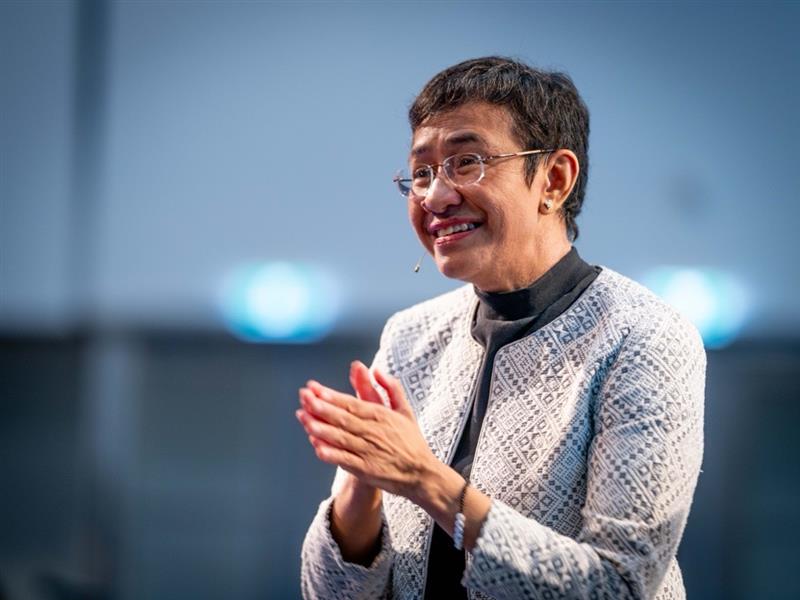
Maria Ressa: Truth Is a Leadership Asset
Nobel Peace Prize laureate Maria Ressa opened the day with a warning that felt both urgent and practical for leaders.
“Without facts, you can’t have truth. Without truth, you can’t have trust,” she says. “Without these three, we don’t have a shared reality.”
Drawing on her experience as a journalist in the Philippines — facing arrests, lawsuits and relentless digital attacks for insisting facts still matter — Ressa describes what she calls an “information Armageddon,” where platforms optimized for engagement allow lies to outpace truth.
“If you can make people believe lies are facts, then you can control them,” she warns.
Her message was not abstract. Markets run on trust. Brands run on trust. Institutions run on trust. When the information ecosystem fractures, everything built on top of it becomes unstable.
— Maria Ressa share
Ressa’s call to action was clear: Leaders cannot remain bystanders. Courage, she reminds the room, is not innate. “Courage isn’t something you just get. It’s like a muscle you develop,” she adds. In an era of deepfakes, algorithmic outrage and micro-targeting, business leaders must anchor decisions in facts and actively strengthen the environments their employees and customers inhabit.
Truth is no longer assumed. It must be defended.
Bill Heinecke: People Build Brands
From systems to substance, Bill Heinecke grounded the conversation in something enduring: people.
The founder of Minor International began at 17 with USD1,200 and a single restaurant. There was no grand five-year strategy. “We never set out to build a global restaurant operation,” he says. “We set out just to do one restaurant.”
More than five decades later, his philosophy remains unchanged: “People build brands. Brands don’t build people.”
In a week dominated by AI, Heinecke drew a clear line. “AI and systems can’t replicate that human touch. They’re just a way of making our people more effective,” he explains. Across 60-plus countries, empathy, respect and cultural sensitivity are nonnegotiables.
He spoke candidly about failure — including a costly business misstep that later informed a stronger relaunch. “If you’re going to fail, fail quickly and get up fast,” he says, reminding the audience that Minor is “an overnight success that just took 55 years.”
Scale, he implies, is not the goal. Purpose is.
“If you’re not passionate about what you’re doing, then do something else,” he says.
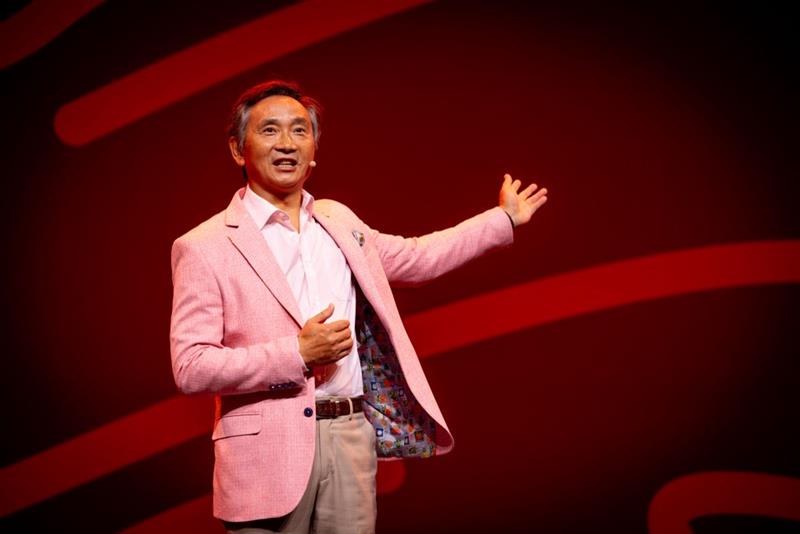
Li Cunxin: Climbing Out of the Well
Li Cunxin’s story transcended business entirely.
Born into poverty during China’s Great Famine, one of seven sons in a peasant family, Cunxin grew up carrying water for miles and often going to bed hungry. At 11, he was selected from millions of children to train in ballet — a discipline he initially despised.
Through perseverance and adaptability, he rose from the worst student in his class to one of the world’s leading dancers, later building a successful career in finance and transforming Queensland Ballet into a world-class company.
Throughout his life, one childhood fable stayed with him: a frog born in a deep well, taught that the small patch of sky above was all there was.
Cunxin refused that limitation, saying, “I dreamed … dreamed big … dreamed an opportunity would come my way.”
His question to the room was simple yet confronting: When you reach the final hour of your life, will you feel you maximized your potential or regret not being “more daring and courageous … more adaptable to change”?
The well, he suggests, is rarely the limit. Only belief is.
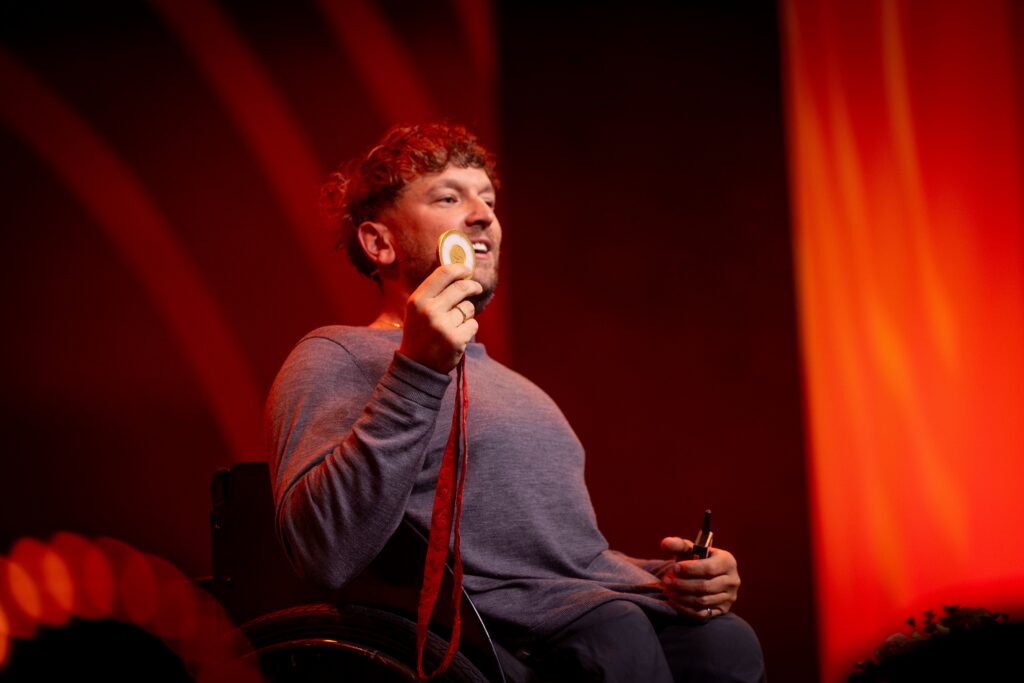
Dylan Alcott: From Inspiration to Expectation
Dylan Alcott brought urgency and optimism in equal measure.
The Paralympic gold medalist and 2022 Australian of the Year spoke not about medals, but about expectations.
“Do you know the hardest thing to get over?” he asks. “It’s the lack of expectation of what people think you can do.”
Growing up in a wheelchair, he faced stigma and insecurity. But through vulnerability, sport and advocacy, he reframed the narrative — not just for himself, but for 1.3 billion people worldwide living with disability.
— Dylan Alcott share
“Inclusion isn’t charity,” he makes clear. It’s opportunity. It’s strategy. It’s worth USD13 trillion in untapped economic potential.
“You cannot control everything that happens to you,” he says. “But you can control your reaction, your perception and your decisions.”
For CEOs in the room, the message was unmistakable: Challenge unconscious bias, listen to lived experience and provide real opportunity. Inclusion is not a side initiative. It is leadership.
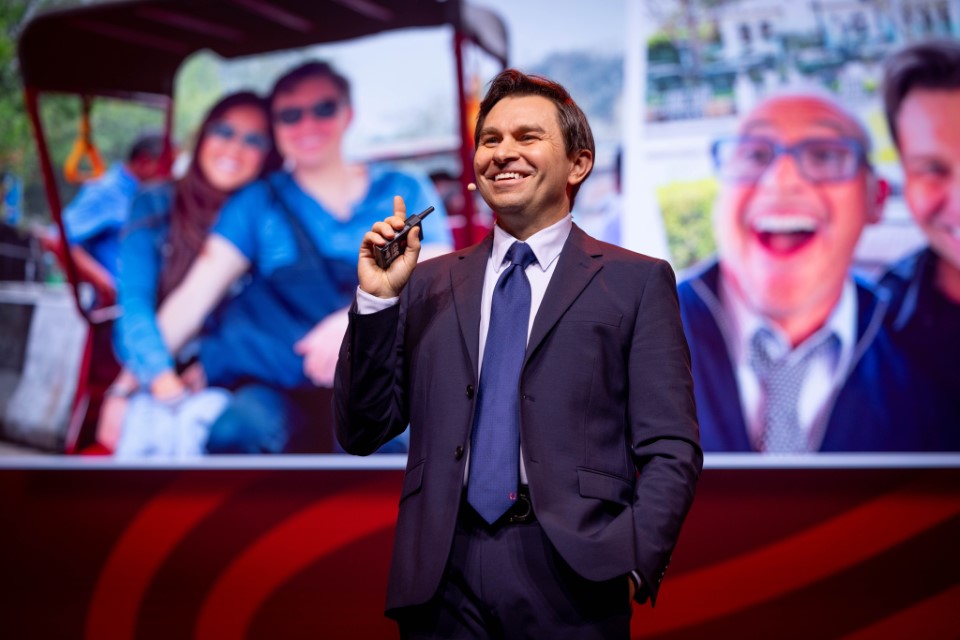
David Sinclair: The Future of Human Potential
Harvard geneticist Professor David Sinclair closed the day by stretching the horizon even further — to longevity itself.
“Aging is the major cause of all the diseases that we treat,” he says, reframing cancer, heart disease and dementia not as isolated conditions, but as consequences of biological aging.
The goal, he emphasized, is not to extend frailty. “What we’re working on … is prolonging youthfulness, not old age.”
Sinclair describes a future where aspects of biological aging may be slowed — even reversed — while urging leaders to act now on fundamentals: movement, recovery, resilience and connection.
In fact, he underscored something profoundly human amid all the science: “Loneliness kills humans.”
Longevity, he argued, is not simply about molecules or medicine. It is about community, purpose and sustained relationships.
The future of health may be longer — but only if it is lived well.
