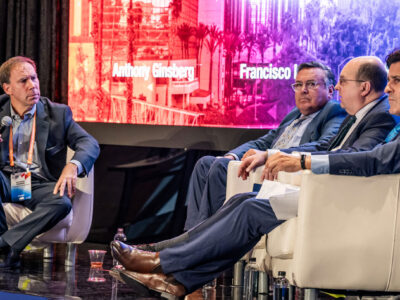
At YPO’s Global Business Summit, Alex Rodriguez spoke with unusual openness about reinvention — shaped by early hardship, public scrutiny and the long work of rebuilding. He described his journey from food-stamp beginnings to baseball fame to a suspension that forced him to rethink who he wanted to be. Today, as an investor and NBA/WNBA team owner, he frames leadership in simple terms: It isn’t the fall that defines you, but how you respond to it.
Own your failures
Rodriguez does not avoid the subject that reshaped his life — his suspension for performance-enhancing drugs. Instead, he addresses the issue head-on, describing it as it as the catalyst for the deepest work of his life. A year away from the game forced him into therapy, where he began, in his words, to “rewire” how he thought about responsibility, empathy and leadership.
Rebuilding trust meant being direct. In those early years, he began every meeting by addressing the suspension others avoided. He also called a dozen long-time supporters to acknowledge his mistakes personally. Several later said it made the partnership stronger.
The lesson, Rodriguez says, is simple: Leadership shows up when things are difficult. “When things are great, you can take a step back and let your team get all the credit,” he tells the audience. “But when things are bad, that’s when leadership stands up.”

Lead with generosity
Much of Rodriguez’s leadership playbook centers on relationships — not the transactional kind, but long-term alliances built on consistency and care. Before every meeting, he studies the person he’s about to face — their goals, challenges and what they’re trying to achieve. His first question is often: “How can I help you win?”
He shares two principles that shape his approach to partnership. The first is the “10 touches” rule. Leaders create 10 meaningful interactions before asking for anything. A coffee, a book, an introduction — small gestures that build trust long before any transaction is put on the table.
The second is the “90% rule.” If a deal is worth 10 dollars, he takes nine and lets the partner keep the rest, a gesture that builds trust across their network. Over time, he argues, that approach delivers more value than any single negotiation. “Integrity never takes a holiday,” he says. When stakes rise, values matter even more.
Keep swinging
Rodriguez speaks openly about failure, calling it the foundation of his success.
“I have a Ph.D. in failure,” he jokes, “and a master’s in getting back up.” It’s a line he often uses to describe a career defined not only by his 14 All-Star selections but also by the fifth-highest strikeout total in Major League Baseball history. For him, the contrast is not a contradiction but a credential. Resilience, he argues, is built through repetition — by showing up, learning and swinging again.
— Alex Rodriguez, Chair and CEO, A-Rod Corp, Co-Chair, Minnesota Timberwolves and Lynx share
That mindset now fuels his business life. He studies for five to six hours a day and treats learning as a lifelong discipline. When things go wrong — whether in business or in his personal life — he returns to the same principle: “You’re going to fall, you’re going to fail … but you have to keep getting back up.”
Shape the next chapter
Rodriguez’s journey is not a straight line from baseball to boardroom. It’s a story of reinvention — built on accountability, generosity and the willingness to rise after every fall. For him, resilience comes from showing up, learning from each miss and refusing to let a setback define the next moment. His reminder to YPO leaders was simple: Your next chapter starts with your next choice.